You don’t need a huge backyard to enjoy cozy evenings around a fire pit.
In fact, some of the most inviting outdoor spaces are the smaller ones. With the right layout, comfortable seating, and thoughtfully selected materials, even a compact backyard can become a relaxing place to unwind.
But when you’re working with limited square footage, every design decision matters.
A fire pit that’s too large can overwhelm the space, while bulky furniture or an awkward layout can make the patio feel cramped. And, of course, you’ll need to account for safe distances from your home, fencing, landscaping, and other nearby features.
The good news is that there are plenty of creative ways to incorporate a fire pit into a smaller outdoor living area without sacrificing comfort or style.
Whether you have a compact paver patio, a narrow backyard, or a cozy garden retreat, here are six fire pit ideas that can help you make the most of your space.
1. Choose a Compact Round Fire Pit
When space is limited, sometimes the simplest design is the best.
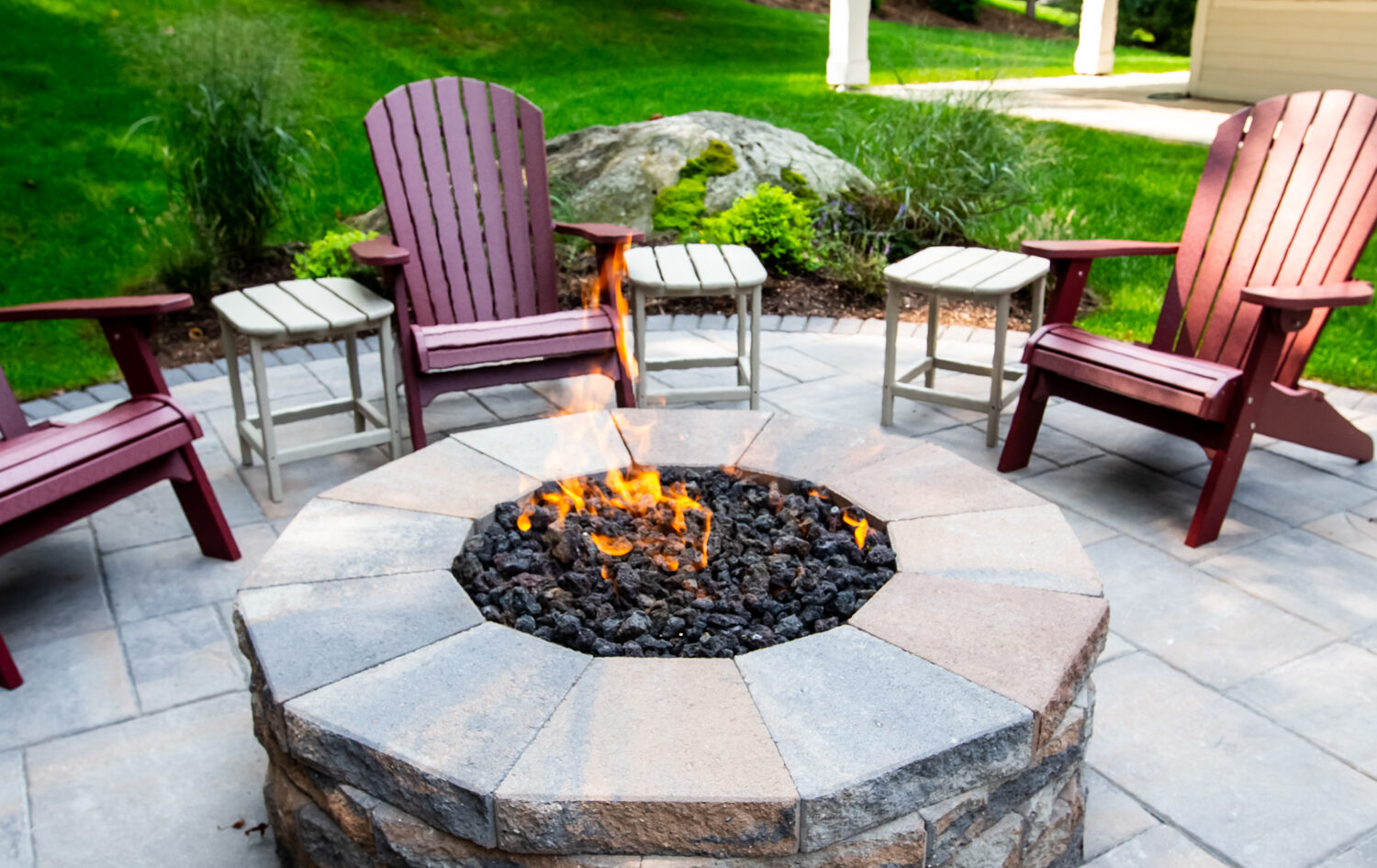
A compact round fire pit can create a welcoming gathering area without requiring a large, elaborate installation.
Round fire pits are especially popular because they naturally encourage conversation. Instead of arranging furniture around a rectangular feature, you can position a few chairs around the circular fire pit to create a cozy seating area.
For a traditional backyard, consider a fire pit with natural stone textures or manufactured wall materials designed for outdoor fire features.
If your home has a more contemporary style, a simple round gas fire pit with clean lines may be a better fit.
The key is choosing a size that works with your available patio space.
A smaller fire pit doesn’t automatically mean you can reduce the manufacturer’s required clearances. You’ll still need enough room for safe seating, circulation, and separation from combustible materials.
Small-space design tip: Choose two or three comfortable chairs rather than trying to fit a large seating set around the fire. A simpler furniture arrangement can make the area feel more open.
2. Incorporate a Fire Pit into a Corner Seating Area
If your backyard has an unused corner, you may be able to turn it into a dedicated fire pit retreat.
Instead of placing the fire pit in the center of the patio, consider creating a small seating area that takes advantage of the yard’s existing layout.
For example, a corner paver patio with a compact fire feature and a few lounge chairs can create a comfortable place to relax without taking over the entire backyard.
You could also incorporate a low seating wall to help define the space.
Manufactured concrete wall blocks or natural stone materials can create an attractive border that complements the surrounding patio.
However, the fire pit shouldn’t be placed too close to fencing, structures, vegetation, or other combustible materials simply to save space.
Corner locations can create additional clearance challenges, particularly when two fences or walls meet.
Before committing to the layout, confirm that the fire feature can be installed in the proposed location according to its manufacturer’s instructions and applicable local regulations.
Small-space design tip: Use a consistent color palette for the patio, seating wall, and fire feature. This can make a compact outdoor area feel more cohesive and less visually crowded.
3. Try a Narrow Rectangular Fire Feature
Not every small backyard is square.
If you have a long, narrow patio, a traditional round fire pit might not be the most practical option.
In these situations, a slim rectangular fire feature may work better with the layout.
Rectangular gas fire features are available in different sizes and can create a streamlined appearance that complements contemporary outdoor spaces.
For example, a narrow fire feature positioned in front of an outdoor sofa can create a cozy lounge area without requiring seating on every side.
This arrangement may be particularly appealing for homeowners who want their patio to feel like an outdoor living room.
You can also coordinate the fire feature with large-format concrete pavers or other suitable patio materials to create a clean, modern design.
Keep in mind that a rectangular fire feature still needs adequate clearance from furniture, structures, and other nearby materials.
The installation must also account for fuel connections, ventilation, and manufacturer requirements.
Small-space design tip: Choose furniture with slimmer frames and avoid oversized coffee tables. This can help preserve valuable walking space around the fire feature.
4. Use Built-In Seating to Reduce Furniture Clutter
One of the biggest challenges with a small fire pit area is finding enough room for comfortable seating.
Individual chairs can take up a surprising amount of space, especially when you account for the room needed to move around them.
Built-in seating walls may offer a practical alternative in some layouts.
For example, a low masonry seating wall along one side of a paver patio can provide additional places to sit without requiring several separate chairs.
You could also combine a seating wall with two movable lounge chairs to create a flexible gathering area.
Manufactured wall blocks and natural stone materials can be used to create seating features that complement the surrounding patio.
Adding compatible wall caps can give the seating area a more finished appearance.
However, built-in seating needs to be carefully positioned.
A permanent seating wall that’s too close to the fire may expose people or materials to excessive heat, and it can’t easily be moved if the layout doesn’t work.
Before installation, plan the fire feature, seating distances, and circulation space together.
Small-space design tip: Use a simple seating wall along the outer edge of the patio rather than surrounding the entire fire pit. This can help keep the area feeling open.
5. Create a Separate Mini Fire Pit Patio
If your main patio is already crowded with dining furniture, a grill, or other outdoor features, you might not have room to add a fire pit.
Instead of trying to squeeze everything into one space, consider creating a smaller, separate fire pit area elsewhere in the yard.
A compact paver patio can provide a dedicated spot for a fire feature and a few chairs.
You could connect it to your main patio with a simple walkway made from coordinating paving stones or natural stone.
This approach creates two distinct outdoor living areas without requiring one oversized patio.
For example, your main patio could remain a space for outdoor dining, while the smaller fire pit patio becomes a quiet retreat for relaxing in the evening.
You can also use landscaping to create a subtle separation between the two areas.
Low-growing plants, decorative stone, and garden beds can help define the space while maintaining an open appearance.
Just be sure to choose a location with appropriate clearances and safe access.
Small-space design tip: Repeat the same paver colors or border materials in both patio areas. This creates a visual connection and helps the backyard feel like one cohesive design.
6. Choose a Portable Fire Pit for More Flexibility
If you’re not ready to commit to a permanent fire pit, a portable option may be worth considering.
Portable fire pits are available in a variety of sizes and styles, including wood-burning and gas models.
For homeowners with smaller backyards, the main advantage is flexibility.
You can choose a compact model that suits your outdoor space without building a permanent masonry structure.
Some portable fire features can also be stored when not in use, depending on their design and manufacturer’s instructions.
However, portable doesn’t mean the fire pit can be placed anywhere.
You’ll still need to follow the manufacturer’s requirements for surface compatibility, clearances, ventilation, and safe operation.
Many portable fire pits aren’t approved for use on combustible decks or beneath covered structures.
It’s also important to confirm whether your municipality allows the type of fire pit you’re considering.
Small-space design tip: Choose a simple fire pit design that complements your patio furniture and surrounding materials. A smaller feature with a clean appearance can feel more intentional than a bulky model that dominates the space.
How to Make a Small Fire Pit Area Feel Bigger
Once you’ve chosen the right fire pit, the next step is designing the surrounding space.
A few thoughtful choices can make a compact patio feel more comfortable and visually open.
Keep the Color Palette Simple
Using too many colors and materials can make a small outdoor area feel busy.
Instead, choose two or three complementary tones for your patio pavers, fire feature, and furniture.
Neutral colors such as gray, beige, taupe, and charcoal can create a cohesive appearance that works with many home styles.
Choose Furniture That Fits the Space
Oversized outdoor furniture can quickly overwhelm a small patio.
Look for seating with appropriately scaled frames and avoid adding more chairs than you realistically need.
A few comfortable seats are often more practical than a large arrangement that leaves little room to move.
Use Landscaping to Define the Area
Low-growing plants, decorative stone, and compact garden beds can help create a sense of separation without making the yard feel enclosed.
Avoid placing combustible plants or landscaping materials within the fire feature’s required clearance area.
Add Subtle Outdoor Lighting
Landscape lighting can make a small fire pit area feel inviting after dark.
Consider low-voltage path lights, lighting along nearby garden beds, or fixtures that highlight surrounding architectural features.
Keep electrical components and fixtures appropriately separated from heat sources.
Coordinate Your Hardscape Materials
If your backyard already features a paver patio or walkway, try to coordinate the fire pit area with those materials.
You don’t need to match everything exactly, but complementary colors and textures can make the space feel more thoughtfully designed.
Can You Put a Fire Pit on a Small Paver Patio?
Yes, a fire pit can be incorporated into a small paver patio when the space and installation meet the necessary requirements.
However, there are several important factors to consider before moving forward.
First, the patio needs enough room for the fire feature, seating, and safe circulation.
Second, the fire pit must be suitable for the intended surface.
Standard concrete or porcelain pavers aren’t automatically rated for direct flame exposure or extreme heat.
Depending on the fire pit design, a dedicated foundation, heat-resistant components, or additional surface protection may be required.
Finally, you’ll need to account for the distance between the fire pit and nearby structures, fences, landscaping, and overhead features.
In a small backyard, these requirements may limit the types of fire features that can be installed safely.
Before purchasing materials, review the manufacturer’s installation instructions and check applicable local fire regulations.
If you’re unsure whether your patio can accommodate a fire pit, a qualified contractor can help evaluate the space.
What Type of Fire Pit Is Best for a Small Backyard?
The best fire pit depends on your backyard’s layout, how you plan to use the space, and the type of atmosphere you want to create.
A compact round fire pit may be a good choice for homeowners who enjoy casual gatherings.
A narrow rectangular gas feature might work better for a contemporary patio with limited depth.
If you prefer a more permanent design, a small built-in fire pit with coordinated pavers and seating can create a beautiful focal point.
For homeowners who want flexibility, a portable fire pit may be worth exploring.
Whichever option you choose, prioritize a layout that provides appropriate clearances and comfortable movement around the space.
A smaller fire pit area can still feel luxurious when the materials, furniture, and landscaping are thoughtfully coordinated.
Create a Cozy Backyard Retreat with Braen Supply
A small backyard doesn’t have to limit your outdoor living possibilities.
With the right fire pit design, appropriately scaled seating, and complementary hardscape materials, you can create a beautiful gathering space without overwhelming your yard.
Whether you’re planning a compact paver patio, a built-in fire feature, or a cozy seating area surrounded by landscaping, thoughtful planning can help you make the most of every square foot.
At Braen Supply, we offer a variety of patio pavers, natural stone, wall materials, and outdoor fire feature products to help homeowners create inviting outdoor spaces.
Our team can help you compare materials, explore design options, and find products that complement your backyard and project goals.
Frequently Asked Questions About Fire Pits for Small Backyards
1. What is the best fire pit for a small backyard?
A compact round fire pit or a narrow rectangular gas fire feature may work well in a smaller backyard, depending on the layout. Portable models can also offer flexibility. The best option is one that fits comfortably while meeting the manufacturer’s clearance requirements and applicable local regulations.
2. How much space do you need for a small fire pit area?
The amount of space depends on the fire pit’s size, fuel type, required clearances, and seating arrangement. You’ll need enough room for the fire feature, comfortable seating, safe circulation, and separation from combustible materials. There isn’t one universal minimum size that applies to every fire pit.
3. Can you put a fire pit in the corner of a backyard?
A corner fire pit may be possible if the location meets the required clearances from fences, structures, vegetation, and other combustible materials. However, corners can create additional safety challenges because nearby boundaries may limit the available space. Always review the fire pit manufacturer’s instructions and local requirements before choosing a location.
4. Are gas fire pits better than wood-burning fire pits for small spaces?
Gas fire pits can be appealing for smaller outdoor spaces because they don’t require firewood storage or ash cleanup and generally produce less smoke than wood-burning models. However, they still require appropriate ventilation, fuel connections, and clearances. The best choice depends on the available space, local regulations, and your personal preferences.
5. Can I build a fire pit directly on concrete pavers?
Not every fire pit can be installed directly on concrete pavers. Some fire features require dedicated foundations, heat-resistant components, or protective separation from the patio surface. Standard pavers may be damaged by excessive heat or direct flame exposure. Always follow the fire feature manufacturer’s installation instructions and use materials approved for the intended application.