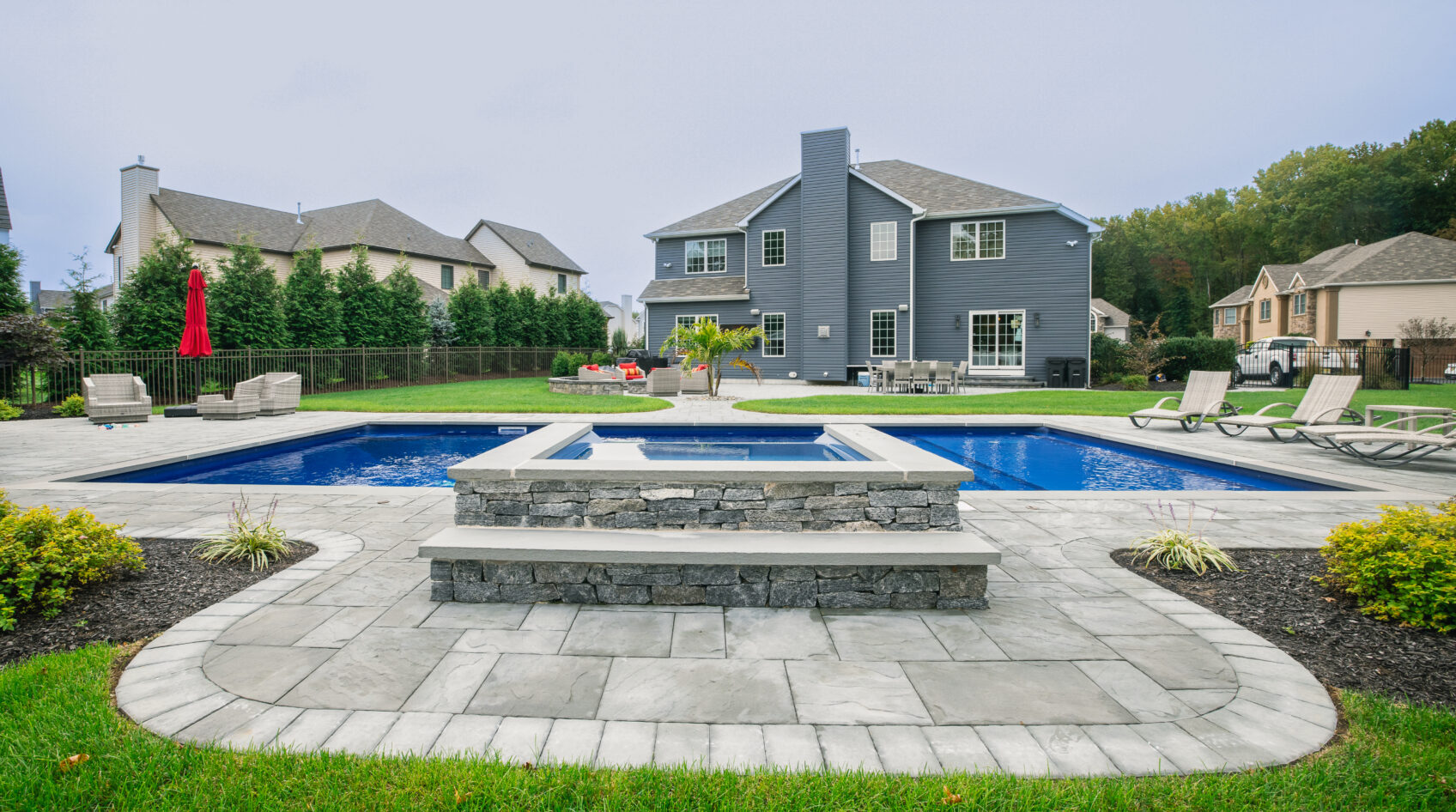
Pool coping may seem like a relatively small detail within a pool project, but it can have a significant impact on both the appearance and functionality of the finished space.
Installed along the top edge of the pool, coping creates the transition between the pool itself and the surrounding deck. Its color, material, texture, size, and edge profile can help define the overall character of the pool environment.
Like any material exposed to water, weather, foot traffic, and pool chemicals, however, coping needs to be selected and installed carefully.
Proper planning before installation and routine maintenance afterward can help keep your pool coping looking its best throughout the swimming season and for years to come.
Whether you are building a new pool, renovating an existing one, or replacing older coping, here are some important things to consider.
Choose the Right Coping Material
The first step is selecting a material appropriate for a pool environment.
Pool coping is available in a variety of materials, including natural stone, concrete, porcelain, and manufactured paver products. Each offers different colors, textures, profiles, and performance characteristics.
Appearance is important, but it should not be the only consideration.
Pool coping is regularly exposed to water, sunlight, changing temperatures, pool chemicals, and foot traffic. In Northern New Jersey, freeze-thaw conditions add another important factor.
Discuss the application with your supplier, pool professional, and installer to help determine which materials are appropriate for your project.
See Your Coping in Person
Whenever possible, look at coping materials in person before making a final selection.
Colors and textures can appear very different on a computer or phone screen. A small online image also makes it difficult to understand the actual scale and thickness of a coping unit.
Seeing the material firsthand allows you to evaluate its color, texture, edge profile, and overall appearance.
If you have already selected your pool decking or waterline tile, bring samples with you.
Comparing the materials side by side can make it much easier to create a cohesive pool design.
Coordinate the Coping With Your Pool Deck
One of the biggest design decisions is determining how the coping will relate to the surrounding pool deck.
Some homeowners prefer a seamless look where the coping and deck have similar colors and textures. Others use the coping to create intentional contrast around the perimeter of the pool.
Neither approach is necessarily better.
Consider the architecture of the home, pool finish, waterline tile, surrounding patio, and overall landscape when making your decision.
The coping should help visually connect these elements rather than feeling like an isolated border.
Coordinate With Your Waterline Tile
Do not forget about the materials inside the pool.
Waterline tile can introduce another color, texture, or pattern into the design. Coping should be considered alongside it before either selection is finalized.
Lay samples together whenever possible.
A coping material that looks beautiful by itself may feel very different when placed next to a strongly patterned tile. Likewise, a simple coping can provide balance when the waterline tile is intended to be the focal point.
Considering the complete material palette early can prevent competing colors and textures later.
Think About the Edge Profile
Pool coping does more than cover the top of the pool wall. It creates the physical edge people interact with when entering, exiting, or sitting beside the pool.
Different edge profiles can also create very different aesthetics.
Depending on the material, options may include rounded, eased, square, bullnose, or other finished edges.
A cleaner edge may complement contemporary pool designs, while a softer or more traditional profile may work better within other landscapes.
Consider both appearance and comfort when evaluating your options.
Consider Custom Fabrication
Not every pool can be completed using standard coping dimensions.
Curves, corners, spas, steps, raised walls, and other architectural details may require specially sized or fabricated pieces.
Natural stone can provide considerable flexibility for custom fabrication, depending on the material and project requirements.
If custom pieces will be necessary, identify them early.
Fabrication can affect measurements, quantities, cost, and project lead times, so it should be part of the initial planning process rather than addressed after installation has already begun.
Confirm Measurements Before Ordering
Accurate measurements are especially important for pool coping.
Unlike a large patio where additional square footage may provide some flexibility, coping follows a defined perimeter and may include corners, curves, radiuses, or other unique conditions.
Your pool builder or installer should confirm the final dimensions and quantities before the order is placed.
If the pool design changes during construction, verify that those changes have not affected the coping requirements.
Order Enough Material
Cuts, corners, fabrication, breakage, natural variation, and other jobsite conditions can influence how much coping is required.
Work with your installer and supplier to determine an appropriate quantity for the project.
It can also be beneficial to keep a few extra pieces once the installation is complete.
Products can be discontinued, colors can change, and natural stone can vary between shipments. Having original material available may make a future repair much easier.
Expect Variation in Natural Stone
If you select natural stone coping, remember that variation is part of the material.
Individual pieces can differ in color, veining, texture, mineral content, and other natural characteristics.
Seeing a sample is helpful, but it does not mean every piece delivered will look exactly like that sample.
Installers can often distribute different colors and characteristics around the pool to create a more balanced overall appearance.
Understanding and embracing this variation is an important part of selecting natural stone.
Plan for Proper Drainage
Water is obviously unavoidable around a pool, but it still needs somewhere appropriate to go.
The pool deck and surrounding hardscape should be designed so water does not consistently collect against the coping or create unnecessary drainage problems.
The relationship between coping, decking, drains, landscaping, and other nearby surfaces should be considered before installation.
Proper drainage becomes especially important in Northern New Jersey, where standing water can freeze during the winter.
Pay Attention to the Installation System
The long-term performance of pool coping depends heavily on how it is installed.
The appropriate setting materials, joints, movement accommodation, substrate preparation, and installation methods will depend on the coping product and pool construction.
Pools are dynamic environments that experience water exposure, temperature changes, and movement.
Your installer should follow the requirements of the coping manufacturer and the appropriate installation practices for the pool system.
Once installation is complete, regular maintenance can help protect the appearance of your coping.
Rinse and Clean Your Coping Regularly
Pool coping is exposed to more than ordinary outdoor dirt.
Sunscreen, body oils, pollen, leaves, pool water, food, beverages, and other materials can accumulate along the edge throughout the swimming season.
Regular rinsing and light cleaning can help prevent this buildup from becoming more difficult to remove.
Use cleaning methods appropriate for your specific coping material rather than assuming one cleaner will work for every surface.
Clean Spills Promptly
Food, drinks, sunscreen, oils, and other substances should be addressed as soon as practical.
Some natural stone and concrete products can be more porous than others, making prompt cleanup especially important.
Blot or clean spills according to the recommendations for the material.
If a stronger cleaner is necessary, make sure it is intended for your specific coping and test it in an inconspicuous location first.
Be Careful With Pool Chemicals
Pool chemicals are necessary for maintaining water quality, but concentrated chemicals should be handled carefully around coping and other hardscape materials.
Avoid allowing concentrated chemicals to sit directly on the coping.
If a chemical is spilled, follow the pool chemical manufacturer’s safety instructions and the coping manufacturer’s recommendations for the surface.
Maintaining balanced pool water is also important for the overall pool system.
If you have questions about how pool chemistry may interact with a particular coping material, consult your pool professional and material manufacturer.
Avoid Harsh Cleaning Products
More aggressive does not always mean cleaner.
Harsh chemicals, acidic cleaners, and products not intended for your coping can potentially discolor, etch, or otherwise affect certain materials.
Natural stone deserves particular attention because different stones can react very differently to cleaning products.
Start with the gentlest appropriate cleaning method and only move to stronger treatments when necessary and recommended.
Use Caution With Power Washing
Pressure washing may be appropriate for certain pool deck and coping materials, but excessive pressure can damage surfaces, mortar, joints, or surrounding materials.
Do not direct an aggressive concentrated spray at coping joints or edges.
Always follow the manufacturer’s recommendations for your specific product.
For stubborn staining or older installations, professional cleaning may be preferable to experimenting with higher pressure.
Inspect the Joints
Periodically inspect the joints between coping units and the transitions between the coping and surrounding deck.
Look for cracking, missing material, separation, or other noticeable changes.
Pools and their surrounding hardscapes can experience movement over time, so some areas may require maintenance.
Addressing a small joint issue early may help prevent water from entering areas where it does not belong.
If you notice significant or recurring movement, consult a qualified pool or hardscape professional.
Consider Sealing Carefully
Whether pool coping should be sealed depends on the material.
Some natural stone, concrete, and other coping products may benefit from an appropriate sealer in certain applications, while other materials may not require one.
Sealers can also change the appearance of a surface, sometimes making colors appear darker or adding a sheen.
If you are considering sealing, confirm that the product is appropriate for your coping material, pool environment, and intended application.
Test it first so you know how the finished surface will look.
Prepare Your Coping for Winter
In Northern New Jersey, winter maintenance is an important part of caring for any pool environment.
Follow your pool professional’s instructions for properly winterizing the pool itself.
Before winter arrives, clean leaves, dirt, and other debris from the coping and surrounding deck.
Inspect joints and look for obvious damage that may need attention.
Keeping the area clean going into winter can also make your spring opening easier.
Be Careful With Rock Salt and Deicers
Rock salt and other deicing chemicals should be used cautiously around pool coping.
Depending on the material, repeated exposure to salts can contribute to discoloration, surface deterioration, or other changes.
Before applying a deicing product, check whether it is approved for your specific coping.
Also remember that salt can reach the pool area indirectly from boots, nearby walkways, snow removal, or runoff.
When weather permits, clean away deicing residue rather than allowing it to remain on the coping for extended periods.
Inspect Your Coping Each Spring
When opening your pool for the season, give the coping a thorough inspection.
Look for:
- Loose or shifted pieces
- Cracked coping
- Damaged or missing joints
- Staining
- Winter debris
- Areas where water is collecting
- Changes around the transition to the pool deck
Spring is also a good time to thoroughly clean the coping and remove any winter grime or deicing residue.
If you notice loose pieces, significant cracking, or recurring movement, have the area evaluated before the pool enters regular use.
Protect Your Pool Coping for Years to Come
Pool coping may represent only a narrow band of material around the pool, but it plays an important role in the appearance and functionality of the entire space.
A successful installation begins with selecting a material appropriate for the application, seeing it in person, coordinating it with your decking and waterline tile, choosing the right edge profile, confirming measurements, and planning for drainage and installation requirements.
Afterward, routine maintenance is relatively straightforward.
Keep the surface clean, address spills promptly, use appropriate cleaning products, monitor joints, be careful with pool chemicals and deicers, and inspect the coping each spring.
With thoughtful planning and proper care, pool coping can provide a beautiful transition between the water and the surrounding outdoor living space for years to come.
Braen Supply can help homeowners, pool professionals, contractors, and landscape designers explore pool coping, natural stone, porcelain, pavers, waterline tile, and other materials for complete pool environments. Visit one of our Northern New Jersey showrooms to compare materials in person and create a pool design that works together from the water’s edge to the surrounding patio.
Frequently Asked Questions About Pool Coping Installation and Maintenance
1. What should I consider before choosing pool coping for my backyard?
Before selecting pool coping, consider the material, color, texture, edge profile, and how it will complement your pool deck and waterline tile. Popular coping materials include natural stone, concrete, porcelain, and manufactured pavers, each offering different appearances and performance characteristics. It’s also important to choose a material suitable for regular water exposure, pool chemicals, and local weather conditions. Visiting a showroom to compare materials in person can help you create a cohesive pool design.
2. What is the best material for pool coping?
The best pool coping material depends on your design preferences, budget, climate, and maintenance expectations. Natural stone offers timeless beauty and unique color variation, while concrete and manufactured paver coping provide a wide range of colors and styles. Porcelain coping can offer a contemporary appearance and relatively low maintenance. Regardless of the material, choose a product specifically suitable for pool applications, with an appropriate surface texture and edge profile for comfort and safety.
3. How do I clean and maintain my pool coping?
The best way to maintain pool coping is to regularly rinse away dirt, leaves, sunscreen, and other debris before buildup occurs. Clean spills promptly and use cleaning products recommended for your specific coping material. Avoid harsh chemicals and aggressive pressure washing, which may damage certain surfaces or joints. Periodically inspect the coping for cracks, loose pieces, and deteriorating joints, especially after winter or periods of heavy use.
4. Does pool coping need to be sealed?
Not all pool coping needs to be sealed. Whether sealing is recommended depends on the material, its porosity, and the manufacturer’s guidelines. Some natural stone and concrete coping products may benefit from an appropriate sealer to help resist staining, while other materials may not require additional treatment. Certain sealers can also change the color or sheen of the coping. Always select a product approved for your coping material and pool environment, and test it on a small area before application.
5. How do I protect my pool coping during winter?
Protecting pool coping during winter begins with properly winterizing your pool and cleaning the surrounding surfaces before freezing temperatures arrive. Remove leaves and debris, inspect joints, and address loose or damaged coping before winter. Avoid using rock salt or chemical deicers unless they’re approved for your specific material. When reopening your pool in spring, inspect the coping for cracks, movement, staining, or drainage problems and address any concerns before regular pool use begins.