Planning an outdoor renovation is exciting, but choosing the right materials can feel a little overwhelming. Between concrete pavers, natural stone, porcelain, and all the different colors, textures, and finishes available, there’s a lot to consider before making a final decision.
That’s where a stone showroom visit comes in handy.
Whether you’re planning a backyard patio, replacing an old walkway, updating your pool deck, or adding stone veneer to your home, visiting a showroom gives you the chance to see materials in person, compare your options, and talk with people who know the products.
But walking into a showroom without a plan can leave you with more questions than answers.
The good news? A little preparation can make your visit much more productive. Here are six simple things you can do before heading over for a stone showroom visit to make the most of your experience.
1. Know What You Want to Accomplish With Your Project
Before you start looking at materials, take some time to think about what you actually want from your outdoor space.
Are you building a patio where your family can spend summer evenings together? Replacing a cracked concrete walkway? Maybe you’re looking to upgrade your home’s curb appeal with natural stone veneer.
Knowing how you plan to use the space is just as important as knowing how you want it to look.
For example, if you’re planning a pool deck, you’ll want to consider factors like slip resistance, surface temperature, and maintenance. If you’re choosing pavers for a driveway, you’ll need something designed to handle vehicle traffic.
You don’t need to have every detail figured out, but having a general idea of your project’s purpose will help the showroom team point you toward materials that make sense.
And if you’re still in the early planning stages? That’s fine, too. Sometimes seeing the different options in person is exactly what you need to get started.
2. Bring Inspiration Photos and Design Ideas
I always recommend gathering a few inspiration photos before a stone showroom visit. Trust me, it’s a lot easier to explain what you’re looking for when you can show someone a picture.
Maybe you’ve saved a few patio designs on Pinterest, spotted a beautiful stone walkway on Instagram, or admired the outdoor kitchen in your neighbor’s backyard.
Whatever catches your eye, save it.
Pay attention to the colors, textures, patterns, and overall styles you’re drawn to. Are you leaning toward a modern look with large-format porcelain pavers? Or do you prefer the natural, rustic appearance of bluestone?
You don’t need to know the exact product names. A knowledgeable showroom representative can help you identify materials that create a similar look.
One thing I’d suggest is narrowing your inspiration down to five or ten photos before your visit. That way, you can focus on the styles you really like instead of getting distracted by dozens of different ideas.
3. Take Measurements and Photos of Your Project Area
Before heading to the showroom, grab a tape measure and get a rough idea of the space you’re working with.
If you’re planning a patio, measure the approximate length and width. For a walkway, note how long and wide you’d like it to be. If you’re considering stone veneer, measure the wall area as best you can, keeping windows and doors in mind.
These measurements don’t need to be exact. Your contractor should confirm the final dimensions and material quantities before placing an order.
I’d also recommend taking a few photos of your existing space from different angles.
Pictures of your home’s siding, landscaping, existing hardscaping, and surrounding features can help the showroom team recommend colors and materials that work well together.
For example, a warm-toned paver might look great on its own, but if your home has cool gray siding, you may prefer something that complements those colors.
Having photos handy makes it easier to picture how the materials you’re seeing in the showroom will look once they’re installed at home.
4. Set a Realistic Budget Before You Shop
Let’s talk about something that can make or break a home improvement project: your budget.
When you walk into a stone showroom, you’re going to see plenty of beautiful materials. And while it’s tempting to fall in love with the first product that catches your eye, it’s important to understand what fits within your price range.
Natural stone, concrete pavers, and porcelain pavers can vary quite a bit in cost. Even products that look similar may have different price points based on their manufacturer, thickness, finish, or installation requirements.
Before your visit, decide what you’re comfortable spending on the overall project. Remember to account for installation labor, base materials, excavation, drainage, and delivery, not just the decorative materials themselves.
You don’t need to have an exact number, but sharing a general budget with your showroom representative can help them narrow down your options.
And don’t be afraid to ask about alternatives. You might find that a different product offers a similar appearance at a price that works better for your project.
The goal isn’t necessarily to choose the cheapest material. It’s to find something that looks great, performs well, and makes sense for your investment.
5. Bring the Right People Along
Choosing materials for an outdoor renovation is a big decision, especially when it’s something you’ll be looking at and using for years to come.
If you’re planning the project with your spouse or another family member, try to visit the showroom together. Having everyone see the materials in person can make it easier to agree on colors, textures, and styles.
If you’re working with a contractor or landscape designer, consider inviting them along, too.
Your contractor can help answer questions about installation requirements, material suitability, and how different products might work within your project.
For example, you might love a particular porcelain paver, but your contractor will need to determine whether it’s appropriate for your planned installation.
Having those conversations early can prevent misunderstandings and help avoid last-minute changes once construction begins.
Of course, you don’t need to bring the whole crew. Just make sure the people who will be involved in making the final decisions have a chance to weigh in.
6. Take Your Time Comparing Materials and Asking Questions
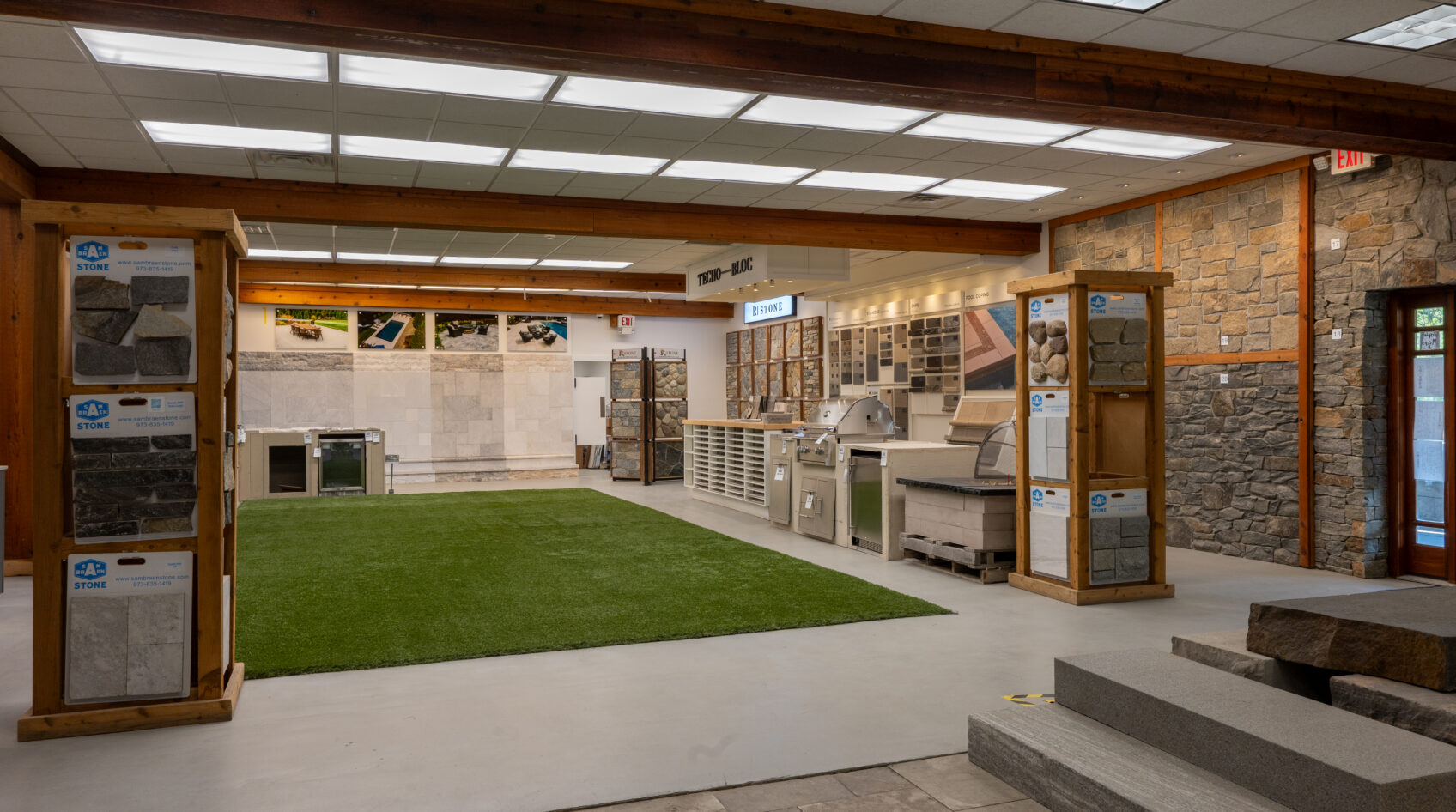
One of the biggest advantages of visiting a stone showroom is being able to see and touch the materials before buying them.
Photos online can only tell you so much. A paver that looks light gray on your computer screen might have warmer undertones in person. A natural stone product might have more texture or color variation than you expected.
Take your time walking through the displays and comparing your options.
If you’re choosing patio pavers, pay attention to the surface texture, size, and color. If you’re considering stone veneer, look at how different pieces work together and how the stone might complement your home’s exterior.
Don’t hesitate to ask about maintenance requirements, freeze-thaw durability, installation considerations, and product availability.
I’d also recommend taking photos of your favorite displays and writing down the product names and colors. After looking at a dozen different options, it’s surprisingly easy to forget which ones you liked best.
And remember, you don’t have to make every decision during your first visit. Sometimes it’s worth going home, reviewing your options, and talking things over with your contractor before committing.
Make Your Stone Showroom Visit Count
Visiting a stone showroom should be one of the more enjoyable parts of planning an outdoor renovation. After all, this is where you get to see the materials that could eventually become your new patio, walkway, pool deck, or outdoor kitchen.
The key is showing up prepared.
When you have a general idea of your project goals, a few inspiration photos, rough measurements, and a realistic budget, you’ll be in a much better position to make informed decisions.
Take advantage of the displays, ask plenty of questions, and don’t rush the process.
Choosing the right materials now can save you time, money, and frustration later. And with the right guidance, you can leave the showroom feeling confident about the direction of your project.
Frequently Asked Questions About Visiting a Stone Showroom
1. What should I bring to a stone showroom visit?
Bring inspiration photos, approximate measurements of your project area, pictures of your existing outdoor space, and a general idea of your budget. It’s also helpful to prepare a few questions about materials, maintenance, and installation. These details will help showroom representatives recommend products that fit your needs.
2. Do I need an appointment to visit a stone showroom?
Appointment requirements vary by supplier. Some stone showrooms welcome walk-in visitors, while others recommend scheduling an appointment for more personalized assistance. It’s always a good idea to check the showroom’s hours and appointment policies before visiting, especially if you’re planning a large or complex outdoor project.
3. Can I see different types of patio pavers and natural stone at a showroom?
Yes! Many hardscape showrooms feature a variety of materials, including concrete pavers, natural stone, porcelain pavers, retaining wall products, and stone veneer. Some also have outdoor displays that demonstrate how different products look when installed. Product selections vary by location, so contact the supplier ahead of time if you’re interested in something specific.
4. Should I bring my contractor to the stone showroom?
Bringing your contractor or landscape designer can be helpful, especially if you’re comparing materials with different installation requirements. They can provide input on product suitability, project dimensions, and installation considerations while you focus on choosing the appearance and style you prefer.
5. Can I take samples home from a stone showroom?
Some stone suppliers offer take-home samples, depending on the product and availability. Samples can be useful for comparing colors and textures against your home’s siding, landscaping, and existing hardscaping in natural light. Ask your showroom representative about sample availability and any associated costs or return requirements.
Make the Most of Your Mobile Showroom Experience
Choosing the right materials is an important part of any outdoor renovation. A stone showroom makes it easier to explore your options, ask questions, and find products that complement your home’s style. With a little preparation and guidance from an experienced stone supplier, you’ll be one step closer to bringing your outdoor vision to life.