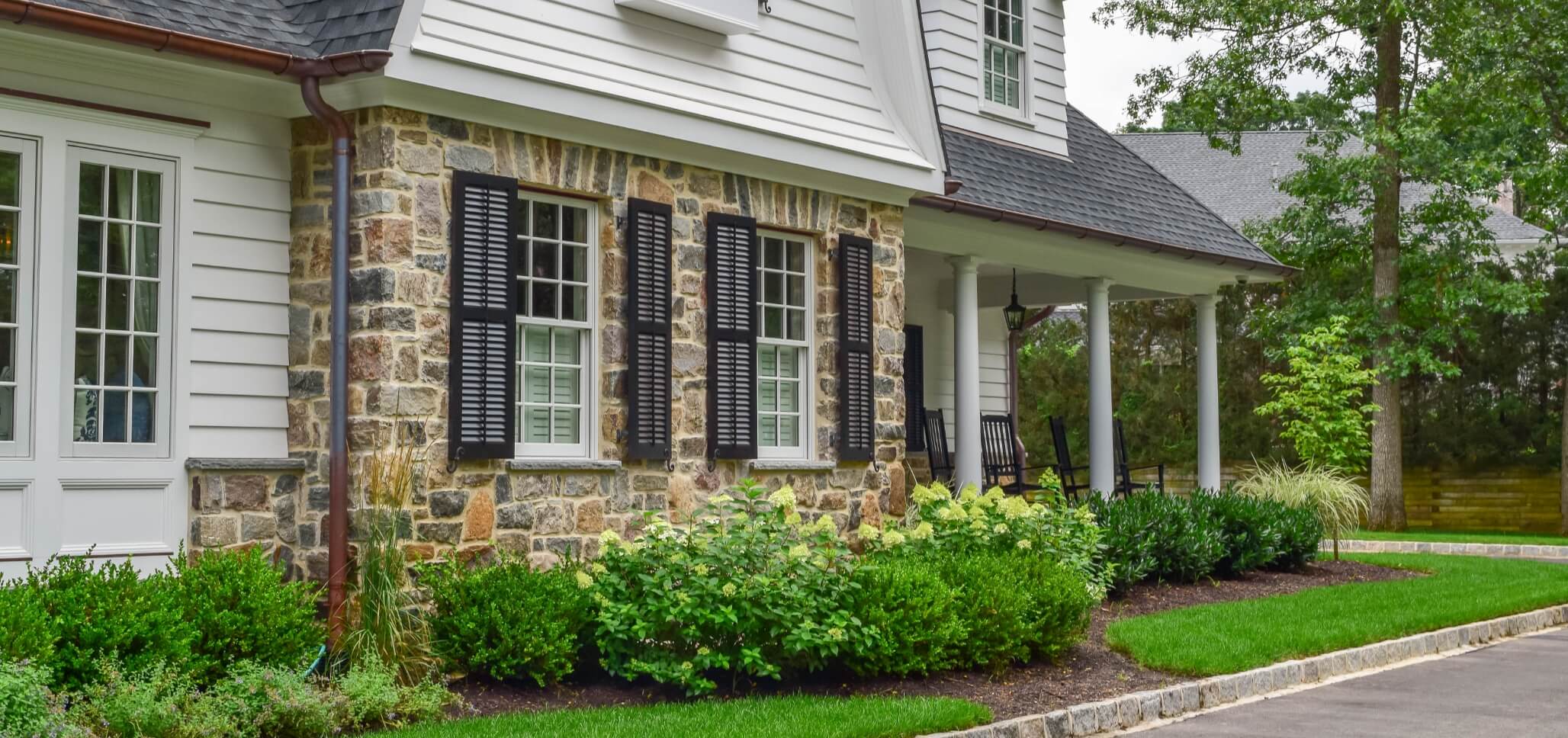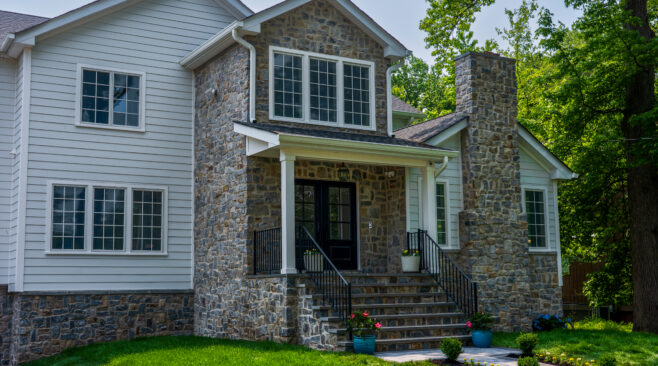

Love the look of stone on a home but aren’t ready to commit to a full stone veneer exterior renovation? You’re not alone.
Stone veneer can add beautiful texture, character, and architectural interest to a home’s exterior, but that doesn’t mean you need to cover every wall to enjoy those benefits.
In fact, some of the most attractive stone exteriors use stone as an accent rather than the main material. A little stone in the right place can help highlight your home’s best features, create contrast against siding, and give the entire property a more finished appearance.
For homeowners in New Jersey and throughout the Northeast, incorporating stone veneer into smaller areas can also be a practical way to update an exterior without taking on a complete renovation.
Whether your home is traditional, modern, farmhouse-inspired, or somewhere in between, here are five ways to incorporate stone veneer without covering your entire house.
1. Make Your Front Entryway a Focal Point
Your front entrance is one of the first things people notice about your home, making it a natural place to introduce stone veneer.
If your exterior currently features mostly siding, adding stone around the front door can create a beautiful contrast and give the entrance a more substantial appearance.
You might choose to cover the wall surrounding your front door, highlight a recessed entryway, or incorporate stone along the sides of your porch.
For traditional homes, natural stone veneer in warm beige, brown, or gray tones can create a welcoming appearance.
If your home has a more contemporary design, consider a linear stone profile with clean edges and subtle color variations.
You can also coordinate the stone with other exterior features, such as your front walkway, steps, or landscaping.
For example, a stone entryway paired with complementary concrete pavers can create a natural transition from the driveway to the front door.
The key is choosing a stone that complements your home’s existing colors and architectural details.
A thoughtfully designed stone entryway can make the front of your home feel more customized without requiring changes to the entire exterior.
2. Add Stone Veneer to Porch Columns
Porch columns might seem like a small architectural detail, but they can have a big impact on your home’s overall appearance.
If your porch currently has simple wood or composite columns, adding stone veneer to the lower portion can introduce texture and visual weight.
This approach is especially popular for farmhouse, craftsman, and traditional-style homes.
For example, a white farmhouse exterior with black windows and warm gray stone column bases can create a beautiful balance between modern and rustic design elements.
On a traditional home, textured natural stone in earth tones can complement wood trim and surrounding landscaping.
You can also use manufactured stone veneer to achieve a particular color or profile that coordinates with your home’s exterior.
When planning the design, think about the proportions of the columns.
Stone accents should feel balanced with the size of the porch and the overall architecture.
It’s also important to remember that stone veneer adds weight and requires a suitable supporting assembly. The existing columns and their enclosures must be evaluated before installation.
With the right materials and proportions, stone-wrapped columns can make an ordinary front porch feel more substantial and inviting.
3. Create a Stone Accent Wall
If your home’s exterior has a large section of uninterrupted siding, a stone accent wall can be a great way to introduce visual interest.
Rather than covering the entire facade, choose one architectural section to highlight.
This might be a wall surrounding a front window, a section that extends outward from the rest of the house, or an area near the garage.
Stone accent walls work particularly well when they follow the home’s existing architectural lines.
For example, if your home has a prominent front-facing section, covering that wall in stone veneer can create a focal point while allowing the surrounding siding to remain the dominant material.
If you have a modern homes, consider a more uniform stone profile with a simple color palette.
For traditional or rustic homes, irregularly shaped natural stone can add character and texture.
The most important thing is making the placement feel intentional.
Random patches of stone can make an exterior look disconnected, while a well-defined accent wall can help establish a cohesive design.
Before installation, make sure the wall assembly is suitable for the selected veneer system and includes the necessary moisture management details.
4. Highlight Your Chimney with Veneer
A chimney can be one of the most noticeable architectural features on a home, especially when it’s visible from the street.
If your chimney currently has a plain exterior or a finish that doesn’t complement the rest of your house, stone veneer may offer an opportunity to update its appearance.
Natural stone veneer can create a classic, timeless look, while manufactured stone veneer offers a variety of styles that can complement contemporary and traditional homes.
For example, a chimney finished with irregular natural stone can add character to a farmhouse or cottage-style exterior.
A more linear stone profile may complement a modern home with clean architectural lines.
You can also coordinate the chimney stone with smaller accents elsewhere on the property, such as porch columns or a front entryway.
This helps create visual consistency without repeating the material across every wall.
Keep in mind that chimney installations require special attention to the existing structure, flashing, water management, and exposure to weather.
Stone veneer is a decorative exterior finish and shouldn’t be confused with the structural masonry or lining components of a working chimney.
A qualified professional should evaluate the chimney and determine whether the selected veneer system is appropriate.
When installed correctly, a stone chimney can become a beautiful architectural feature that adds depth and character to your home’s exterior.
5. Add Veneer Along the Lower Portion of Your Home
One of the most popular ways to incorporate stone veneer without covering an entire exterior is to install it along the lower portion of the house.
Sometimes called a stone wainscot or stone skirt, this design uses stone along the base of the exterior walls while keeping siding, brick, or another material above.
The result is a layered appearance that can make the home feel more grounded and visually balanced.
For example, a home with light-colored siding might feature medium gray stone veneer along the lower walls.
A beige or cream-colored exterior could pair beautifully with warm earth-toned stone.
This approach works especially well for traditional, craftsman, and farmhouse-style homes, but it can also complement contemporary designs when the materials and proportions are carefully selected.
You can choose to install the stone along the entire front of the house or focus on certain sections to create a more subtle effect.
The height of the stone matters, too.
A lower stone accent may provide just enough texture to break up a large area of siding, while a taller installation can create a stronger architectural statement.
It’s important to plan the transition between the stone and siding carefully, including the necessary flashing and moisture management details.
With thoughtful proportions and complementary colors, a stone wainscot can create a polished exterior without requiring a full stone facade.
How to Choose the Right Stone Veneer for Your Home
Once you’ve decided where you’d like to incorporate stone, the next step is choosing the right material.
Both natural and manufactured stone veneer offer attractive options, but they have different characteristics worth considering.
Natural stone veneer is made from genuine stone, giving each piece its own texture and color variation.
It’s often a good fit for homeowners who prefer an organic appearance and want to incorporate authentic natural materials into their exterior design.
Manufactured stone veneer is designed to replicate the look of natural stone and is available in a wide range of colors, textures, and profiles.
It can be an appealing option for homeowners who want a particular style or a more consistent appearance.
Beyond the material itself, think about how the stone will complement your home’s existing exterior.
If your siding has warm undertones, consider stone colors with similar warmth. If your home features cool grays, black trim, or contemporary architectural details, a cooler stone palette may be a better fit.
Texture and shape also play an important role.
Irregular stones can create a rustic or traditional appearance, while linear profiles often work well with modern designs.
Whenever possible, compare samples outdoors against your home’s siding, roofing, and trim before making a final decision.
Tips for Making Stone Veneer Accents Look Intentional
One of the biggest challenges with partial stone veneer installations is making the finished design feel like it belongs on the home.
Fortunately, a few simple design considerations can make a big difference.
Follow your home’s architecture. Stone accents often look best when they highlight existing features, such as an entryway, chimney, column, or clearly defined wall section.
Keep your color palette consistent. Choose stone colors that complement your siding, roof, trim, and other exterior materials rather than introducing too many competing tones.
Pay attention to proportions. A small stone accent can look beautiful when it’s appropriately scaled. However an oversized or awkwardly placed section may feel out of balance.
Coordinate with surrounding hardscaping. Complementary walkway pavers, steps, garden walls, or landscaping materials can help connect the stone accents to the rest of the property.
Prioritize proper installation. Stone veneer requires compatible substrates, moisture protection, flashing, and installation methods. These details are especially important in New Jersey, where rain, snow, and freeze-thaw cycles can affect exterior building materials.
The goal is to make your stone accents feel like a natural part of the home’s original design rather than something added as an afterthought.
Is Adding Veneer to Part of Your Home Worth It?
If you love the look of stone but don’t want to take on a complete exterior renovation, a partial stone veneer installation can be a great option.
It allows you to introduce texture, contrast, and architectural character while keeping much of your existing exterior intact.
Depending on the size and complexity of the project, focusing on a smaller area may also help manage costs compared to covering the entire home.
However, it’s important to remember that the total cost depends on more than just the amount of stone used.
Wall preparation, installation labor, moisture management, trim details, and the selected veneer material can all affect the final price.
For many homeowners, the biggest benefit is the visual impact.
A stone entryway, chimney, accent wall, or lower exterior section can make the entire property feel more thoughtfully designed.
And because stone veneer is available in so many colors and styles, it’s possible to create a look that complements your home’s existing architecture rather than completely changing it.
Explore Stone Veneer Options for Your NJ Home
You don’t need to cover your entire house in stone to create a beautiful exterior.
Sometimes, highlighting just one or two architectural features can make all the difference.
Whether you’re considering a stone entryway, porch columns, an accent wall, a chimney, or a stone wainscot, the right material can add character and visual interest to your home.
At Braen Supply, we offer a variety of natural and manufactured stone veneer products in colors, textures, and profiles suited to different exterior styles.
Our team can help you compare materials and explore options that complement your home’s architecture, whether you’re planning a small accent project or a larger exterior renovation.
Frequently Asked Questions About Partial Stone Veneer Exteriors
1. Can you put stone veneer on only part of a house?
Yes. Stone veneer is commonly used as an accent material rather than covering an entire exterior. Popular applications include front entryways, porch columns, chimneys, accent walls, and the lower portion of exterior walls. The best placement depends on your home’s architectural style and the condition of the existing wall assembly.
2. Where does stone veneer look best on a house?
Stone veneer often looks best when it highlights an existing architectural feature. Front entrances, porch columns, chimneys, and clearly defined wall sections are popular choices because they naturally draw attention. The goal is to create a balanced design that complements the rest of the exterior.
3. Is it cheaper to add stone veneer to just part of your home?
A partial stone veneer installation will often require less material than a full exterior renovation, which may help reduce overall costs. However, pricing also depends on wall preparation, labor, material selection, and installation complexity. Smaller projects with complicated architectural details can still require significant labor.
4. What siding looks best with stone veneer?
Stone veneer can complement vinyl, fiber cement, wood, and other siding materials when the colors and textures are thoughtfully coordinated. Light siding often pairs well with gray or earth-toned stone, while darker siding can create beautiful contrast with lighter stone veneer. The best combination depends on your home’s architecture and overall color palette.
5. Does adding stone veneer increase home value?
Stone veneer may improve curb appeal and make a home more attractive to potential buyers, but an increase in resale value isn’t guaranteed. The financial return depends on factors such as project cost, installation quality, local market conditions, and how well the finished design complements the home.