A sloped backyard can be beautiful, but it can also come with its fair share of challenges. Maybe rainwater keeps washing soil away from your garden beds, or perhaps there’s a section of your yard that’s too steep to use for anything practical. If this sounds familiar, a retaining wall might be exactly what your landscape needs.
Retaining walls do more than hold soil in place. When thoughtfully designed, they can help manage erosion, create level areas for outdoor living, and add structure and visual interest to your property.
For homeowners in New Jersey and throughout the Northeast, Cambridge retaining wall stones offer a combination of durability, versatility, and attractive design options. Whether you’re looking to create a raised patio, improve your landscaping, or address an uneven yard, Cambridge has several wall systems worth considering.
Before starting your project, it helps to understand what makes these materials appealing, where they work best, and what it takes to keep them looking great over time.
Benefits of Cambridge Retaining Wall Stones
Choosing the right retaining wall material is about more than appearance. Your wall needs to complement your landscape while providing the strength and functionality required for its intended purpose.
Here are some of the biggest advantages of using Cambridge retaining wall stones.
Natural Stone Appearance
If you love the look of natural stone but prefer a manufactured material, Cambridge offers wallstones designed with textured surfaces and blended colors that create a natural appearance.
Collections like Cambridge MaytRx and Sigma feature split-face textures that can complement traditional homes, rustic landscapes, and contemporary outdoor spaces.
These materials can blend into existing landscaping while adding definition to garden beds, patios, and other outdoor features.
Consistent Sizes and Shapes
Unlike natural stone, which can vary considerably in shape and thickness, Cambridge retaining wall stones are manufactured to specific dimensions.
This consistency can make installation more predictable and help create a uniform finished appearance.
Many Cambridge wall systems also include coordinating caps, corners, and other components that make it easier to achieve a polished design.
Variety of Styles and Colors
Every landscape is different, and the materials you choose should reflect the overall style of your home.
Cambridge offers several retaining wall collections, including MaytRx, Sigma, Omega, and Olde English. Each provides a different combination of shapes, textures, and design possibilities.
You can also choose from a range of colors, including neutral grays, warm earth tones, and blended shades.
Whether you’re designing a traditional garden wall or a more contemporary raised patio, there are options that can complement your existing hardscape materials.
Strength and Durability
Retaining walls need to withstand pressure from the soil behind them, along with changing weather conditions and the effects of water.
Cambridge manufactures concrete wallstones for a variety of landscape applications, including retaining walls, freestanding walls, and raised outdoor living areas.
However, the strength of the wall depends on more than the blocks themselves.
Proper base preparation, drainage, reinforcement, and installation are essential to long-term performance. Taller retaining walls or those supporting additional loads may require engineering and specialized construction techniques.
Suitable for Northeast Weather
New Jersey homeowners know that outdoor materials need to handle a wide range of weather conditions.
From hot, humid summers to freezing winter temperatures, retaining walls are exposed to changing conditions throughout the year.
Cambridge concrete wallstones are designed for outdoor applications, making them a practical choice for the Northeast.
A properly constructed wall with adequate drainage is especially important in areas where freeze-thaw cycles and saturated soil can contribute to movement or damage.
Long-Term Value
A retaining wall can improve both the appearance and functionality of your property.
By creating usable space, defining landscaping, and helping manage soil movement, a well-designed retaining wall may make your yard more enjoyable and attractive to future buyers.
Cambridge’s selection of wallstones also allows homeowners to coordinate retaining walls with patios, walkways, and other outdoor features.
The result can be a cohesive landscape design that adds lasting appeal to your home.
Popular Uses for Cambridge Retaining Wall Stones
Retaining walls can solve practical landscaping problems, but they can also open the door to new design possibilities.
Here are a few ways homeowners can incorporate Cambridge wallstones into their outdoor spaces.
1. Erosion Control and Slope Management
One of the most common reasons to install a retaining wall is to help manage soil on a sloped property.
When rainwater flows down a steep hill, it can gradually carry soil away, leaving behind exposed roots, uneven ground, and damaged landscaping.
A properly designed retaining wall can help stabilize soil and create a more manageable landscape.
Cambridge retaining wall systems, such as MaytRx and Sigma, can be used for appropriate soil-retaining applications when installed according to the manufacturer’s specifications.
Keep in mind that a retaining wall doesn’t automatically solve every drainage problem. Water management is an important part of the design, and additional drainage improvements may be necessary to control runoff.
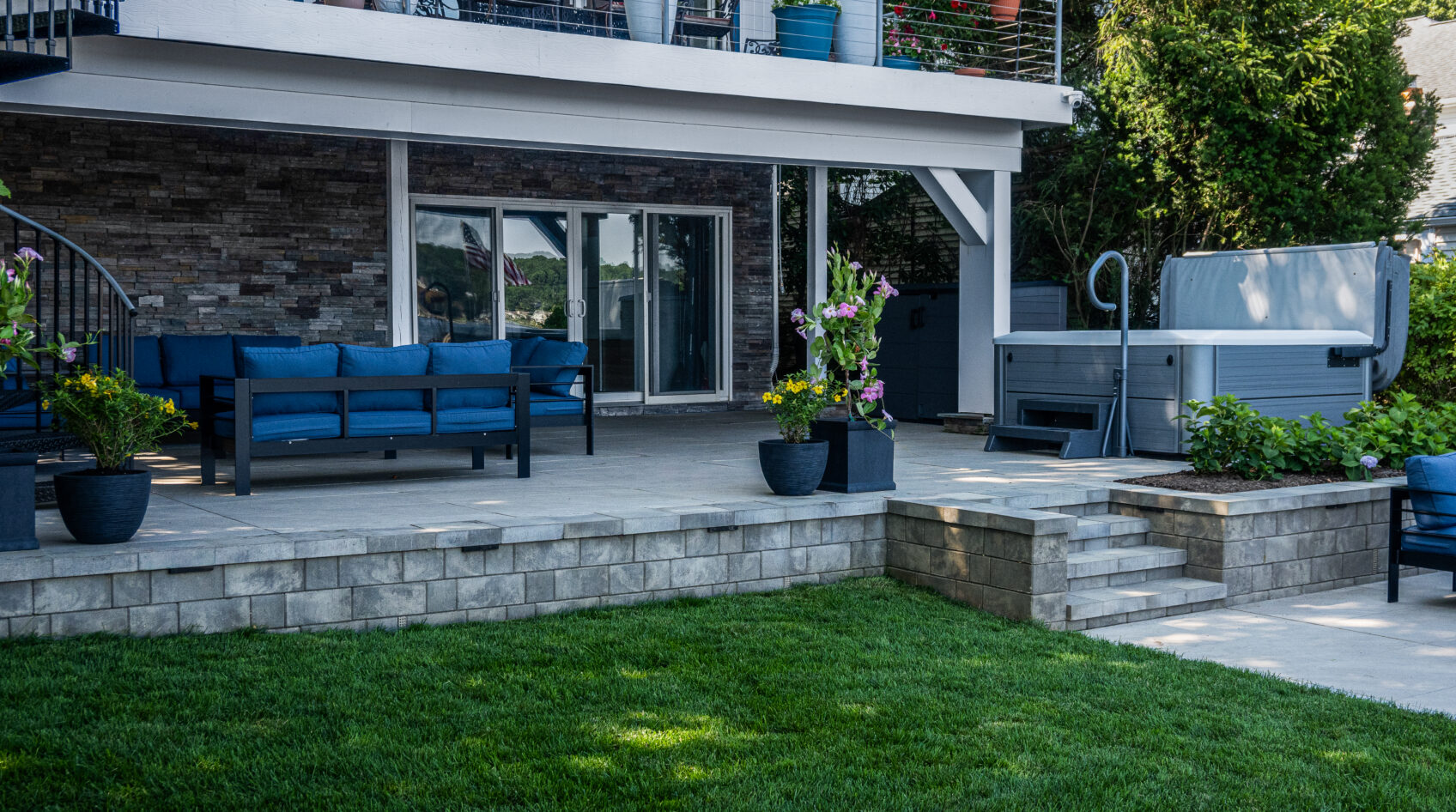
2. Raised Patios and Outdoor Living Areas
If your backyard has a noticeable slope, you may feel limited in how you can use the space.
A retaining wall can help create a level area for a patio, outdoor dining space, or seating area without requiring the entire yard to be regraded.
This is especially useful for homeowners who want to add an outdoor living area to a property with uneven terrain.
Cambridge wallstones can also be paired with coordinating Cambridge paving stones to create a consistent design.
Depending on the layout, you might incorporate steps, landscape lighting, or a seating wall to make the space feel more connected to the rest of your backyard.
For elevated patios, the retaining wall must be designed to support the additional loads associated with the patio and its intended use.
3. Raised Garden Beds
Retaining walls aren’t just for large hillsides.
Smaller landscape walls can be used to create raised garden beds, define planting areas, and add dimension to otherwise flat landscapes.
For homeowners who enjoy gardening, raised beds can make planting and maintaining flowers, shrubs, and other greenery more convenient.
Cambridge Olde English wallstones can be an attractive choice for traditional garden designs, while other Cambridge wall systems can provide a more structured appearance.
Consider incorporating multiple planting levels or using a low wall to separate a garden bed from an adjacent patio.
For vegetable gardens, be sure to select appropriate soil and verify that the wall materials and any associated treatments are suitable for the intended application.
4. Terraced Landscaping
A steep backyard doesn’t always need one large retaining wall.
In some situations, a series of smaller retaining walls can create terraced levels that make the property easier to navigate and maintain.
Each level can serve a different purpose, such as a garden bed, lawn area, or outdoor seating space.
Terraced landscaping can also add visual interest by breaking up a large slope into smaller, more defined sections.
However, walls built close together can affect one another structurally. Proper spacing, drainage, and engineering considerations are important when planning a terraced design.
5. Decorative Landscape Features
Not every wall needs to retain a large amount of soil.
Cambridge wallstones can also be used to create decorative landscape features, such as freestanding seating walls, garden borders, and outdoor living space dividers.
These features can help define different areas of your backyard without making the space feel closed off.
For example, a low seating wall surrounding a patio can provide additional places for guests to gather while creating a clear separation between the patio and lawn.
Coordinating wall caps and paving stones can help tie the entire design together.
Choosing the Right Cambridge Retaining Wall System
With several Cambridge wallstone collections available, choosing the right material depends on the style of your landscape and the structural requirements of your project.
Here are a few options worth exploring:
- Cambridge MaytRx: Features multiple face sizes and a textured, split-face appearance. This versatile wall system can be used for retaining walls, freestanding walls, and other landscape features when designed appropriately.
- Cambridge Sigma: Offers larger wallstone options with a substantial appearance, making it useful for retaining walls and other structural landscape applications.
- Cambridge Omega: Provides a selection of wallstone shapes and finishes that can create visually interesting patterns in landscape walls.
- Cambridge Olde English: Offers a traditional appearance that works particularly well with garden walls, decorative landscape features, and classic outdoor designs.
When comparing materials, think about the height of your wall, the amount of soil it needs to retain, the appearance you want, and how the wall will connect with other landscape features.
Not every Cambridge wallstone is suitable for every retaining wall application, so it’s important to review the manufacturer’s specifications before making a final selection.
For taller walls, steep slopes, poor soil conditions, or areas supporting additional weight, consult a qualified retaining wall contractor or engineer.
How to Maintain Cambridge Retaining Wall Stones
One of the advantages of manufactured concrete wallstones is that routine surface maintenance is generally straightforward.
However, keeping your retaining wall in good condition involves more than just cleaning the blocks.
Here are a few maintenance practices homeowners should follow:
- Remove Dirt and Debris: Sweep or gently rinse away leaves, soil, and other debris that accumulate along the wall.
- Clean Stains Promptly: Use cleaning products approved for Cambridge concrete wallstones and follow the manufacturer’s instructions. Avoid harsh chemicals or abrasive cleaning methods that could damage the surface.
- Monitor Drainage: Watch for water collecting behind the wall, flowing over the top, or emerging from unexpected locations. Drainage issues should be addressed promptly.
- Inspect for Movement: Periodically check for bulging, leaning, separation, or shifting blocks. These changes may indicate a structural or drainage problem that needs professional attention.
- Maintain Nearby Landscaping: Keep tree roots, excessive soil buildup, and other landscape changes in mind, particularly when they could affect drainage or place additional pressure on the wall.
While Cambridge wallstones are designed for outdoor use, no retaining wall is completely maintenance-free.
If you notice significant movement, cracking, or drainage problems, contact a qualified professional rather than attempting a cosmetic repair.
A little routine attention can help you identify small issues before they become larger problems.
Planning a Cambridge Retaining Wall Project in NJ
A retaining wall can make a significant difference in how your property looks and functions, especially if you’re working with a sloped or uneven landscape.
Whether your goal is to control erosion, create more usable backyard space, or add dimension to your garden, Cambridge retaining wall stones offer a variety of design possibilities.
Before beginning your project, consider the height and location of the wall, existing drainage conditions, soil characteristics, and the overall layout of your property.
You should also check local building requirements, as permits or engineered plans may be necessary depending on the wall’s height, location, and structural demands.
Taking the time to choose the right materials and plan the installation properly can help create a retaining wall that complements your landscape and performs as intended for years to come.
Frequently Asked Questions About Cambridge Retaining Wall Stones
1. Are Cambridge wallstones good for retaining walls?
Yes. Cambridge offers several wallstone systems designed for retaining wall applications, including MaytRx and Sigma. These manufactured concrete products provide a variety of styles, colors, and configurations. However, the appropriate wall system depends on factors such as wall height, soil conditions, drainage, and structural loads. Proper installation is essential for long-term performance.
2. How tall can a Cambridge retaining wall be?
The maximum height depends on the Cambridge wall system, site conditions, and whether the wall is engineered. For example, Cambridge provides installation guidance for certain MaytRx landscape retaining walls up to three feet high, with taller engineered applications possible using appropriate reinforcement. Always consult the current manufacturer specifications and local building requirements before construction.
3. Do Cambridge retaining walls need drainage?
Yes. Proper drainage is essential for retaining walls because water accumulating behind the wall can increase pressure and contribute to movement or failure. Depending on the design, drainage features may include clean stone backfill, drainage pipes, and other measures to direct water away from the wall. The drainage system should be appropriate for the site’s conditions.
4. How long do Cambridge retaining wall stones last?
Cambridge concrete wallstones are manufactured for long-term outdoor use and can provide decades of service when properly designed, installed, and maintained. The actual lifespan of a retaining wall depends on factors such as drainage, soil conditions, wall height, installation quality, and exposure to weather. Routine inspections can help identify potential problems early.
5. Can Cambridge retaining wall stones be used for garden beds and seating walls?
Yes. Certain Cambridge wallstone collections can be used for decorative garden walls, raised planting areas, and freestanding seating walls. These applications can help define outdoor spaces while adding visual interest. Be sure to select a wall system appropriate for the intended use, since a decorative freestanding wall and a soil-retaining wall have different construction requirements.