
Patio design continues to evolve as homeowners look for outdoor spaces that feel just as intentional, comfortable, and refined as the interiors of their homes. As we approach 2027, the emphasis is moving beyond simply choosing an attractive paver or creating enough space for a dining table.
Today’s patios are being designed as complete outdoor environments. This includes thoughtful material selections, defined living areas, integrated amenities, and a stronger connection to the surrounding landscape.
Across Northern New Jersey, several patio design trends are emerging that I expect will have a significant influence on residential projects in 2027.
Large-Format Pavers and Porcelain
Large-format materials continue to play an important role in contemporary patio design, and I expect their popularity to carry well into 2027.
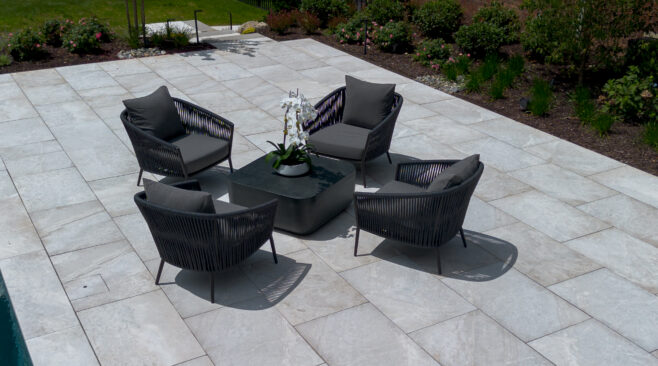
Large-format pavers and porcelain slabs create fewer visual interruptions across the patio surface, resulting in a cleaner, more expansive appearance. They work particularly well in contemporary landscapes, around pools, and in outdoor living areas designed to transition naturally from the interior of the home.
Porcelain is especially interesting from a design perspective because of the variety of appearances now available. Homeowners can achieve the look of natural stone, wood, concrete, and other materials while benefiting from a surface designed for outdoor performance.
The key is selecting a scale that complements the architecture of the home rather than choosing a large format simply because it is on trend.
Warmer, More Natural Color Palettes
The cool grays that dominated hardscape design for years are increasingly being balanced or replaced by warmer, earth-inspired colors.
For 2027 patios, expect to see more creams, taupes, warm grays, beiges, browns, and subtle variations inspired by natural stone.
These colors help soften large hardscape areas and allow patios to blend more naturally into surrounding landscapes. They also pair beautifully with wood, natural stone veneer, greenery, and other organic materials.
Rather than relying heavily on contrasting colors, many designs are becoming more tonal, using subtle variations in color and texture to create depth.
Mixing Materials and Textures
One of the more interesting directions in patio design is the use of multiple complementary materials within the same space.
Instead of constructing an entire outdoor environment from one paver, designers can combine materials such as porcelain, concrete pavers, natural stone, gravel, and stone veneer.
A porcelain patio, for example, might transition into a natural stone walkway or incorporate a contrasting paver border. Stone veneer can then be carried onto an outdoor kitchen, fireplace, or retaining wall to connect vertical and horizontal elements.
The objective should not be to use as many materials as possible. Successful mixed-material patios depend on restraint. Each material should have a purpose and contribute to the overall composition.
Defined Outdoor Rooms
The idea of the patio as one large, open surface is also changing.
Homeowners increasingly want outdoor spaces organized into distinct areas for cooking, dining, entertaining, and relaxing. Much like the rooms inside a home, each area can serve a specific purpose while remaining connected to the larger design.
Changes in paving patterns, borders, furniture placement, landscape beds, walls, or structures can subtly define these outdoor rooms without physically separating them.
For larger patios in particular, this approach can make the space feel more intimate and intentional.
Integrated Fire Features and Outdoor Kitchens
Fire features and outdoor kitchens have become established elements of outdoor living, but their integration is becoming more sophisticated.
Rather than appearing as accessories added after the patio is complete, these features are increasingly considered during the earliest stages of design.
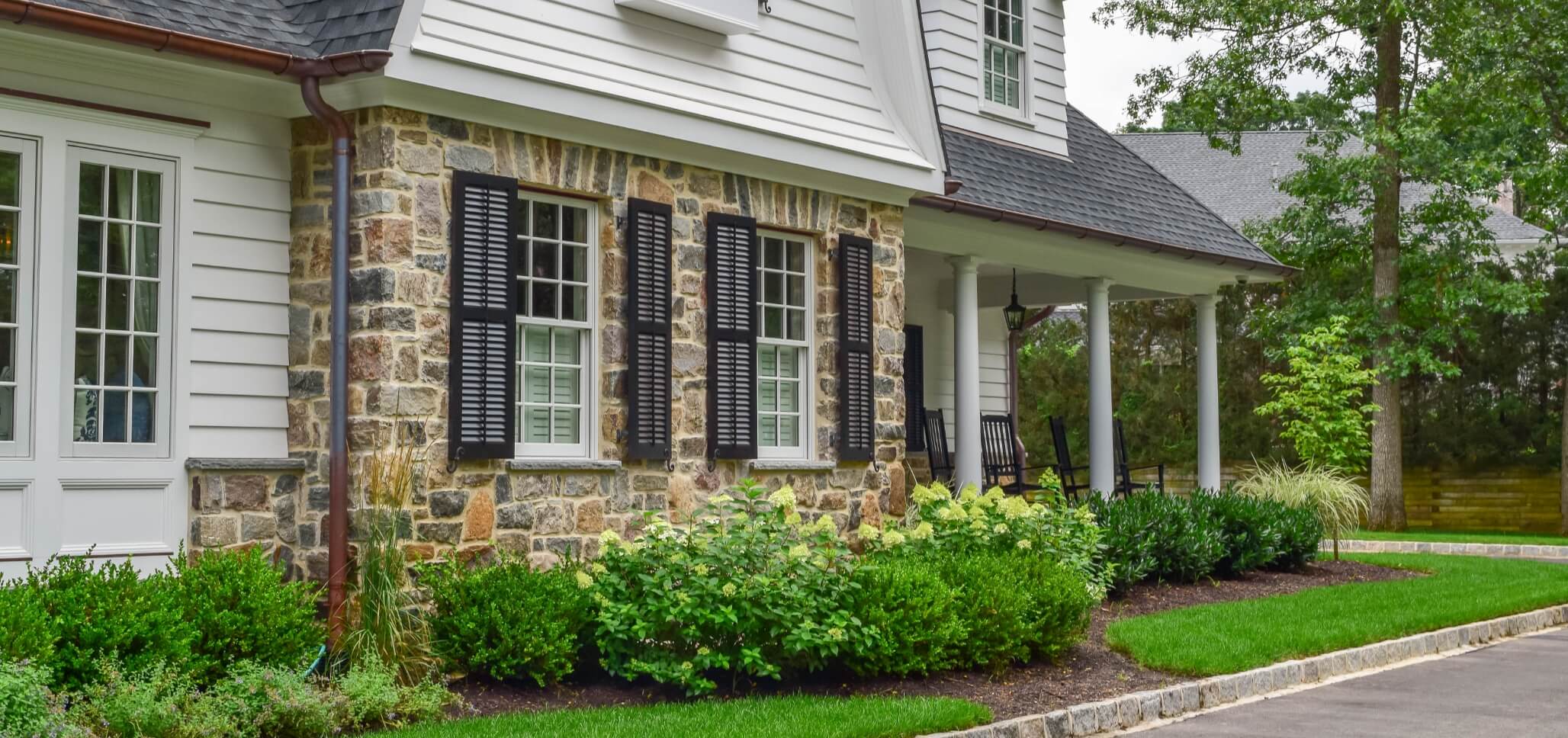
Built-in grills, outdoor appliances, fireplaces, fire pits, seating walls, and counters can become architectural elements within the patio itself. Materials used elsewhere on the property can also be repeated on these structures to create continuity.
For 2027, I expect the emphasis to be less on simply having these amenities and more on making them feel like they have always belonged within the space.
Seamless Indoor-Outdoor Transitions
The relationship between interior and exterior spaces will remain an important consideration in patio design.
Large doors and expansive windows have made the patio increasingly visible from inside the home. As a result, exterior materials need to complement interior finishes rather than exist independently from them.
Porcelain can be particularly effective in these applications because similar aesthetics can often be carried from indoor spaces into outdoor environments.
Even when the exact same material is not used, coordinating color, scale, and texture can make the transition feel considerably more natural.
Permeable Pavers and Performance-Focused Design
Appearance will always be important, but homeowners and designers are paying greater attention to how patios perform over time.
Permeable paving systems can help manage stormwater by allowing water to infiltrate through the pavement system rather than immediately becoming runoff. For properties where drainage is a concern, incorporating permeability into the initial design can provide both functional and aesthetic benefits.
Material selection should also account for the realities of the Northeast climate, including freeze-thaw cycles, snow, rain, and seasonal temperature changes.
A beautiful patio is only successful if it continues to function as intended.
More Organic Patio Layouts
While clean geometric patios will remain popular, 2027 may also bring a stronger interest in layouts that feel connected to the natural landscape.
Gentler curves, softened edges, planting pockets, natural stone accents, and transitions into lawn or garden areas can help break up large expanses of hardscape.
This approach is particularly effective when the goal is to make a newer patio feel established within an existing property.
Rather than treating the patio and landscape as separate elements, the two should be designed together.
Designing a Patio for 2027 and Beyond
Trends can provide inspiration, but they should never dictate an entire project.
Large-format porcelain, warmer colors, mixed materials, permeable paving, outdoor kitchens, and integrated fire features can all contribute to a modern patio. However, the most successful designs will continue to depend on fundamentals such as proportion, material compatibility, circulation, functionality, and a connection to the architecture of the home.
A patio should not simply reflect what is popular in 2027. It should feel appropriate for the property and continue to serve the homeowner well for years to come.
Working with a knowledgeable supplier like Braen Supply can also help homeowners and landscape professionals explore materials, compare colors and textures, and select products that support both the design vision and long-term performance of the patio.
Frequently Asked Questions About 2027 Patio Trends
What are the biggest patio design trends for 2027?
The biggest patio trends for 2027 include large-format pavers and porcelain, warmer earth-toned color palettes, mixed materials, outdoor spaces divided into defined rooms, built-in fire features and outdoor kitchens, smooth indoor-outdoor transitions, permeable pavings, and softer, more organic layouts.
Are porcelain pavers a good choice for New Jersey patios?
Porcelain pavers made for exterior use can be a strong choice in Northern New Jersey. Outdoor-rated porcelain in dense and absorbs very little water, which helps it handle the freeze-thaw cycles common in the Northeast. As with any patio material, long-term performance depends on a properly prepared, well-draining base and an installation that follows the manufacturer’s recommendations.
Are gray pavers going out of style?
Gray pavers are not disappearing, but the cool grays that dominated hardscape design for years are increasingly being balanced or replaced by warmer tones. For 2027, expect more creams, taupes, beiges, browns, and warm grays inspired by natural stone.
What are permeable pavers, and do I need them?
Permeable pavers are part of a paving system that lets water pass through the joints and into a specially designed base instead of running off the surface. They are worth considering for properties where drainage or stormwater runoff is a concern, and they are easiest to incorporate during the initial design.
How do I design a patio that won’t look dated in a few years?
Use trends for inspiration, but build the design around fundamentals: proportion, material compatibility, circulation, functionality, and a connection to the architecture of the home. A patio that suits the property will continue to look right long after any single trend fades.