Your swimming pool is probably one of your favorite places to spend time during the summer. Whether you’re cooling off on a hot afternoon, relaxing poolside with a good book, or hosting friends and family for a backyard barbecue, the area surrounding your pool plays a big role in how much you enjoy it.
But when it comes to designing your pool patio, there’s more to consider than just choosing something that looks beautiful.
Unlike a traditional backyard patio, a pool deck is constantly exposed to water, direct sunlight, and wet foot traffic. That means the materials you choose need to be appropriate for these conditions while still complementing your home’s exterior and surrounding landscaping.
You also want a surface that feels comfortable under bare feet, fits your maintenance preferences, and can handle New Jersey’s changing seasons.
So, what are the best pavers for a pool patio?
From versatile concrete pavers to elegant natural stone and modern porcelain, let’s explore some popular pool patio materials and what homeowners should know before making a decision.
1. Concrete Pavers: Versatile and Stylish
Concrete pavers are one of the most versatile materials available for pool patios.
With so many colors, textures, shapes, and sizes to choose from, they can complement nearly any backyard design.
For example, large-format concrete pavers in light gray or beige can create a clean, contemporary pool deck.
If you prefer a more traditional appearance, textured pavers with subtle color variation can give your pool patio a warm, welcoming feel.
Concrete pavers can also be arranged in different patterns, allowing you to introduce decorative borders or create visual separation between the pool deck and surrounding outdoor living areas.
Another advantage is the availability of coordinating hardscape materials.
You may be able to select matching or complementary pavers, wall blocks, steps, and coping products to create a cohesive backyard design.
However, not every concrete paver is ideal for use around a swimming pool.
Look for products recommended for pool deck applications, with appropriate wet slip-resistance characteristics and a surface texture that’s comfortable for barefoot use.
Proper installation, drainage, and joint maintenance are also important for long-term performance.
Why homeowners love them: Concrete pavers offer a wide range of design options and can complement both modern and traditional pool areas.
Best for: Homeowners who want flexibility in color, texture, pattern, and overall pool patio design.
2. Porcelain Pavers: A Modern Poolside Favorite
If you’re looking for a sleek, sophisticated pool patio, porcelain pavers are worth considering.
Outdoor-rated porcelain pavers are available in a variety of finishes, including styles that resemble natural stone, concrete, and wood.
This makes them a beautiful option for homeowners who want a specific aesthetic with relatively consistent color and patterning.
For example, a light-colored porcelain paver with a limestone-inspired finish can create an elegant, resort-style pool deck.
Large-format porcelain pavers can also help create a streamlined appearance with fewer visible joints.
One of porcelain’s advantages is its low water absorption, which can make appropriately selected products suitable for wet outdoor environments.
Porcelain is also relatively easy to clean, although maintenance requirements depend on the product and installation.
However, it’s important to remember that not all porcelain tile is designed for outdoor pool patios.
Choose products specifically rated for exterior use, with appropriate wet slip-resistance characteristics and installation requirements.
Certain porcelain paving systems also require specialized bases, setting materials, or jointing methods.
Why homeowners love them: Porcelain pavers offer a refined appearance, a wide variety of designs, and relatively straightforward routine maintenance.
Best for: Contemporary pools, modern outdoor living spaces, and homeowners who prefer a polished appearance.
3. Granite Pavers: Natural Beauty and Strength
Granite is a natural stone known for its strength and distinctive appearance.
Available in a variety of gray, tan, pink, and other color blends, granite can create an elegant pool patio that complements both traditional and contemporary homes.
Depending on the product, granite may be available in different sizes and surface finishes.
For poolside applications, the finish is especially important.
A polished granite surface may not provide appropriate traction when wet, while certain textured finishes may be more suitable for exterior walking surfaces.
Granite can also become hot in direct sunlight, particularly in darker colors.
Because surface temperature varies by color, finish, exposure, and other conditions, it’s helpful to evaluate samples before making your selection.
While granite is generally a strong and durable stone, specific products should still be evaluated for exterior suitability, slip resistance, and maintenance requirements.
Why homeowners love it: Granite provides natural color variation and an elegant appearance that can complement a wide range of pool designs.
Best for: Homeowners who prefer natural stone and want a distinctive, sophisticated pool patio.
4. Travertine Pavers: A Warm, Natural Appearance
Travertine is a type of limestone that’s frequently used in outdoor living designs.
Its natural texture and warm color palette make it a popular choice for pool patios.
Travertine is commonly available in shades of ivory, cream, beige, tan, and gray.
These softer colors can create a beautiful contrast against blue pool water while complementing surrounding landscaping.
Certain travertine products and finishes may feel relatively comfortable underfoot in sunny conditions, but no stone stays cool in every environment.
Surface temperature depends on color, finish, sunlight, and weather conditions.
Similarly, slip resistance varies by the specific product and surface treatment.
Travertine is also naturally porous, so homeowners should understand the product’s absorption characteristics, maintenance needs, and suitability for their climate.
For New Jersey pool patios, it’s especially important to select travertine products approved for freeze-thaw exposure and follow the recommended installation methods.
Why homeowners love it: Travertine offers soft, natural colors and a timeless appearance that works beautifully with resort-inspired pool designs.
Best for: Mediterranean-inspired landscapes, traditional pool patios, and homeowners who love warm natural stone.
5. Sandstone, Limestone, and Quartzite: Distinctive Natural Stone Options
If you’re looking for a pool patio with unique character, several other natural stone materials may be worth exploring.
Each offers different colors, textures, and performance characteristics.
Sandstone
Sandstone is a sedimentary rock available in a variety of earth tones, including tan, brown, red, gray, and other color blends.
Its natural texture can create a relaxed, organic appearance that complements garden-style pools and rustic landscapes.
However, sandstone varies considerably in density, porosity, and durability.
Some varieties may be appropriate for pool patios, while others may not be suitable for repeated moisture exposure or freezing conditions.
Choose a product specifically recommended for the intended application.
Limestone
Limestone is a sedimentary rock available in colors ranging from cream and beige to gray and darker shades.
It can create a refined, understated appearance that works well with contemporary and traditional pool designs.
Certain limestone products are suitable for exterior paving, but others may be more vulnerable to moisture-related deterioration or freeze-thaw damage.
Limestone can also react to acidic cleaning products, making proper maintenance important.
For poolside applications, select a suitable exterior-rated product with an appropriate surface finish.
Quartzite
Quartzite is a metamorphic rock formed when quartz-rich sandstone undergoes heat and pressure.
It’s known for its hardness and can feature beautiful natural color variation.
Depending on the product, quartzite may be available in shades of gray, silver, tan, gold, and other blends.
Its distinctive texture can create an attractive natural-looking pool patio.
However, quartzite products vary, and the specific stone should be evaluated for slip resistance, surface temperature, exterior durability, and maintenance requirements.
Why homeowners love these stones: Sandstone, limestone, and quartzite offer unique colors and textures that can make a pool patio feel distinctive.
Best for: Homeowners who appreciate natural materials and want a pool deck with individual character.
6. Clay Brick Pavers: Traditional Charm
If your home has a classic architectural style, clay brick pavers can create a beautiful pool patio.
Brick offers rich, warm colors and a timeless appearance that works especially well with colonial, farmhouse, and traditional homes.
Clay paving brick is available in different shades of red, brown, tan, and other natural color blends.
It can also be arranged in decorative patterns, including herringbone and running bond.
Brick borders can be particularly attractive when paired with natural stone or concrete pavers.
However, it’s important to choose brick specifically manufactured for paving applications.
Not all clay brick products are suitable for pool decks or New Jersey’s freeze-thaw conditions.
Surface texture, wet slip resistance, drainage, and maintenance should all be considered.
Brick may also become warm in direct sunlight, especially in darker colors.
Why homeowners love it: Clay brick provides classic character and decorative pattern options.
Best for: Traditional homes, classic pool designs, and homeowners who want a warm, timeless appearance.
Comparing the Best Pool Patio Materials
| Material | Design Appeal | Key Considerations |
|---|---|---|
| Concrete pavers | Versatile, modern or traditional | Surface finish, drainage, joint maintenance |
| Porcelain pavers | Sleek, refined, contemporary | Outdoor rating, wet slip resistance, installation |
| Granite | Elegant, natural, distinctive | Finish, heat retention, product suitability |
| Travertine | Warm, natural, resort-inspired | Porosity, maintenance, freeze-thaw suitability |
| Sandstone, limestone, quartzite | Organic, unique, textured | Stone-specific durability and maintenance |
| Clay brick pavers | Traditional, classic, warm | Paving rating, surface temperature, drainage |
What Should You Look for in Pool Patio Pavers?
Choosing the best pool patio material involves more than appearance.
Before making your final decision, consider a few important factors.
Slip Resistance
Because pool decks are frequently wet, traction should be one of your top priorities.
Some textured surfaces provide additional grip, but visible texture alone doesn’t guarantee slip resistance.
Always review the manufacturer’s recommendations and applicable wet slip-resistance testing information for the specific product.
Surface Temperature
Nobody wants to step out of the pool onto a patio that’s uncomfortable to walk on.
Some materials and colors can become very hot in direct sunlight.
Light-colored products may absorb less solar energy than darker alternatives, but actual surface temperatures depend on several factors.
If possible, view material samples in direct sunlight and ask about any available heat-performance information.
Comfort Under Bare Feet
Pool patios are different from many other outdoor spaces because people frequently walk barefoot.
A heavily textured surface may provide a rustic appearance but feel uncomfortable underfoot.
A smoother-looking surface may feel more pleasant, provided it meets the appropriate wet traction requirements.
Drainage
Proper drainage is essential around swimming pools.
The patio should be designed to manage surface water and direct it appropriately without creating standing water or interfering with the pool structure.
Drainage requirements depend on the site, patio materials, and local regulations.
Maintenance
Different materials have different care requirements.
Certain porcelain pavers may require relatively simple routine cleaning, while some natural stones may need periodic sealing or specialized maintenance.
Concrete pavers and brick may also require occasional joint maintenance.
Consider how much upkeep you’re comfortable with before choosing a material.
Don’t Forget About Pool Coping
While the pool patio is important, pool coping is another detail that deserves attention.
Pool coping forms the finished edge around the swimming pool and helps create a transition between the pool structure and surrounding deck.
Depending on the design, coping may be available in natural stone, concrete, porcelain, or other materials specifically intended for the application.
Some homeowners prefer coping that closely matches their patio pavers.
Others choose a contrasting color or texture to define the pool’s edge.
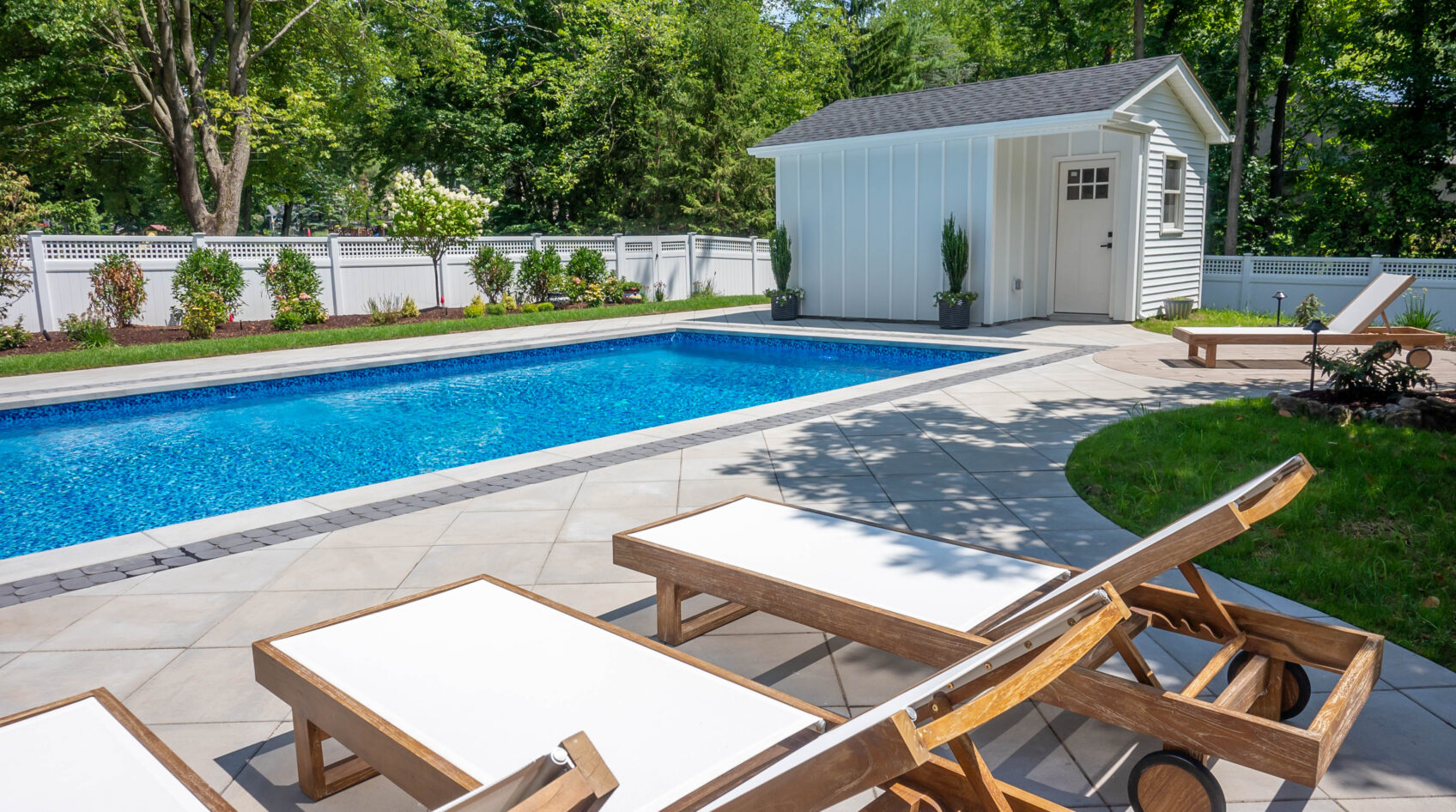
For example, light-colored coping paired with slightly darker patio pavers can create an attractive border.
However, coping selection involves more than appearance.
The material, edge profile, installation system, and compatibility with the pool structure should all be considered.
Working with an experienced pool contractor can help ensure the selected coping is appropriate for the pool design.
Choosing Pool Patio Materials for New Jersey Weather
For homeowners in Northern New Jersey, seasonal weather should play an important role in material selection.
Pool patios experience exposure to water during the summer, followed by rain, snow, and freezing temperatures throughout the colder months.
These conditions make exterior suitability and proper installation especially important.
Select products designed for freeze-thaw exposure and the intended poolside application.
Proper base preparation, drainage, and manufacturer-recommended installation methods can help support long-term performance.
Natural stone products should be evaluated individually because different stone types and varieties have different absorption rates and weathering characteristics.
It’s also important to consider winter maintenance.
Certain deicing products and cleaning chemicals may not be appropriate for every pool patio material.
Following the manufacturer’s recommendations can help protect the appearance and performance of the surface.
Create a Beautiful Pool Patio with Braen Supply
The right pool patio can make your backyard feel like a personal retreat.
Whether you prefer the versatility of concrete pavers, the modern appearance of porcelain, or the timeless beauty of natural stone, there are plenty of ways to create a poolside space that complements your home.
The key is choosing materials that look beautiful while meeting your expectations for comfort, maintenance, and outdoor performance.
At Braen Supply, we offer a variety of concrete pavers, porcelain pavers, natural stone, pool coping, and other hardscape materials to help homeowners create beautiful outdoor living spaces.
Our team can help you explore colors, textures, and product options to find materials that complement your pool patio design.
Frequently Asked Questions About Pool Patio Pavers
1. What is the best material for a pool patio?
The best material depends on your design preferences, budget, maintenance expectations, and climate. Concrete pavers, outdoor-rated porcelain pavers, and certain natural stones can all be good options when they’re suitable for wet poolside conditions and installed properly.
2. What pool patio pavers stay the coolest in the sun?
No pool patio material stays cool in every condition. Lighter-colored surfaces may absorb less solar energy than darker options, but temperature also depends on the material, finish, sunlight, and weather. Ask suppliers about available product-specific heat-performance information and evaluate samples when possible.
3. Are porcelain pavers slippery around pools?
Not necessarily. Outdoor-rated porcelain pavers are available with different surface finishes and slip-resistance characteristics. Some products are specifically designed for wet exterior applications. Always verify the manufacturer’s recommendations and relevant slip-resistance information before selecting porcelain for a pool deck.
4. Can natural stone be used around a swimming pool?
Yes, certain natural stone products can be suitable for pool patios. However, different stones vary in porosity, weather resistance, surface texture, and maintenance requirements. Choose products approved for the intended exterior application and local climate.
5. What is the difference between pool coping and pool patio pavers?
Pool coping forms the finished edge around the swimming pool, while patio pavers create the surrounding walking and entertaining surface. The two materials can match or complement each other, but coping must also meet the pool structure’s specific design and installation requirements.