
When you think about improving your home’s curb appeal, a new driveway design probably isn’t the first thing that comes to mind.
You might picture fresh landscaping, a new front door, or updated exterior lighting. But your driveway takes up a significant amount of space in front of your home, which means its appearance can have a big impact on the way your entire property looks.
And if your current driveway is cracked, faded, or simply lacking character, a few thoughtful design changes could make a noticeable difference.
The good news? You don’t necessarily need an elaborate design or a complete exterior renovation to create a beautiful driveway.
From decorative paving stones to eye-catching borders and coordinated walkways, there are plenty of ways to give your driveway a more polished appearance.
If you’re planning a driveway renovation or building a new home, here are five driveway design ideas that can help take your curb appeal to the next level.
1. Upgrade to Decorative Concrete Pavers
If you’re looking for a driveway that offers more design flexibility than traditional asphalt or poured concrete, manufactured concrete pavers are worth considering.
Unlike a continuous paved surface, concrete pavers are individual stones that can be arranged in different colors, textures, sizes, and patterns.
This gives homeowners the opportunity to create a driveway that complements their home’s architectural style.
For example, a traditional colonial home might look beautiful with warm gray or earth-toned pavers arranged in a classic pattern.
A modern home could benefit from larger-format paving stones with clean lines and subtle color variations, provided the selected products are rated for vehicular use.
For farmhouse-style homes, textured pavers in neutral shades can create a welcoming appearance that coordinates with natural wood accents, stone veneer, and surrounding landscaping.
Brands such as Cambridge and Techo-Bloc offer a variety of paving stone collections, including products designed for residential driveways.
Beyond their appearance, concrete pavers offer practical benefits.
If an individual paver becomes damaged, it can often be removed and replaced without disturbing the entire driveway.
However, proper installation is essential. Driveway pavers require an appropriately designed and compacted base, suitable edge restraints, and materials capable of supporting vehicle traffic.
Design tip: Choose a paver color that complements your home’s siding, roofing, and trim rather than trying to match every exterior material exactly. A little contrast can make the driveway stand out without competing with the house.
2. Add a Contrasting Driveway Border
Sometimes, the smallest design details make the biggest difference.
If you like the overall appearance of your driveway but want something that feels a little more customized, a decorative border can be a great place to start.
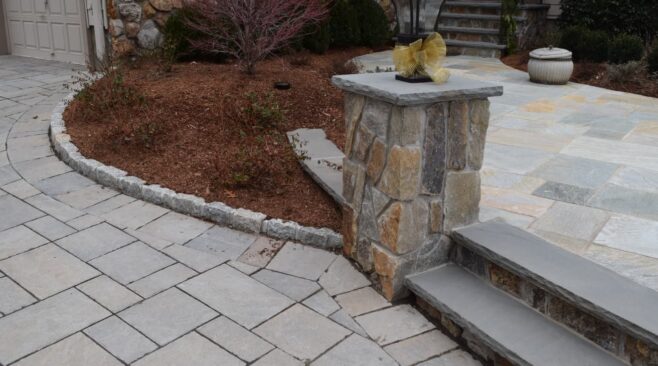
A driveway border creates a defined edge between the paved surface and the surrounding lawn, garden beds, or landscaping.
It can also introduce contrast and help frame the driveway as an intentional part of your home’s exterior design.
For example, a driveway made from light gray pavers could feature a charcoal-colored border for a clean, contemporary appearance.
A traditional home might pair warm beige paving stones with a darker brown border to create a softer, more classic look.
You could also incorporate a decorative paver border alongside an asphalt driveway, provided the installation is properly designed to accommodate the different materials.
Borders can be simple or more detailed depending on your preferences.
A single row of contrasting pavers can create a subtle outline, while a wider border may make a stronger statement.
The important thing is choosing colors and proportions that work with the size of your driveway.
Design tip: If your front walkway already features decorative paving stones, consider repeating one of those colors in your driveway border. This can help connect the two areas and create a more cohesive exterior.
3. Experiment with Different Paver Patterns
Color isn’t the only way to make your driveway more interesting.
The pattern you choose can completely change the appearance of a paved surface, even when you’re using the same material throughout.
Concrete pavers can be arranged in a variety of patterns, depending on their shape, size, and the manufacturer’s installation recommendations.
One popular option is the herringbone pattern.
With its interlocking arrangement, herringbone creates a classic appearance that works well with many architectural styles. It is also commonly used for vehicular applications when the selected paver system and installation meet driveway requirements.
A running bond pattern creates a more linear appearance, making it an attractive option for certain traditional and contemporary designs.
For homeowners who prefer a more natural look, a multi-size paver pattern can introduce variation without requiring multiple colors.
The direction of the pattern can also affect the way your driveway looks.
For example, a carefully selected layout may help visually emphasize the length or width of the space.
However, not every paver shape or laying pattern is suitable for vehicle traffic.
Before choosing a design, confirm that the paving stones and installation pattern are approved for driveway use.
Design tip: If your home has a lot of architectural detail, consider keeping the driveway pattern relatively simple. If your exterior is more understated, a decorative paver pattern can provide visual interest without overwhelming the design.
4. Coordinate Your Driveway with Your Front Walkway
One of the easiest ways to make your home’s exterior feel more polished is to create a visual connection between your driveway and front walkway.
These two areas are often right next to each other, yet homeowners sometimes choose their materials and colors independently.
When the designs don’t complement one another, the front of the property can feel disconnected.
Coordinating your driveway and walkway can help create a more intentional appearance.
That doesn’t mean both surfaces need to use the exact same paving stones.
In fact, using complementary materials can sometimes produce a more interesting design.
For example, you might choose medium gray driveway pavers and use a lighter gray blend for the walkway.
Or you could install a decorative border around the driveway and repeat that same color along the edges of your front path.
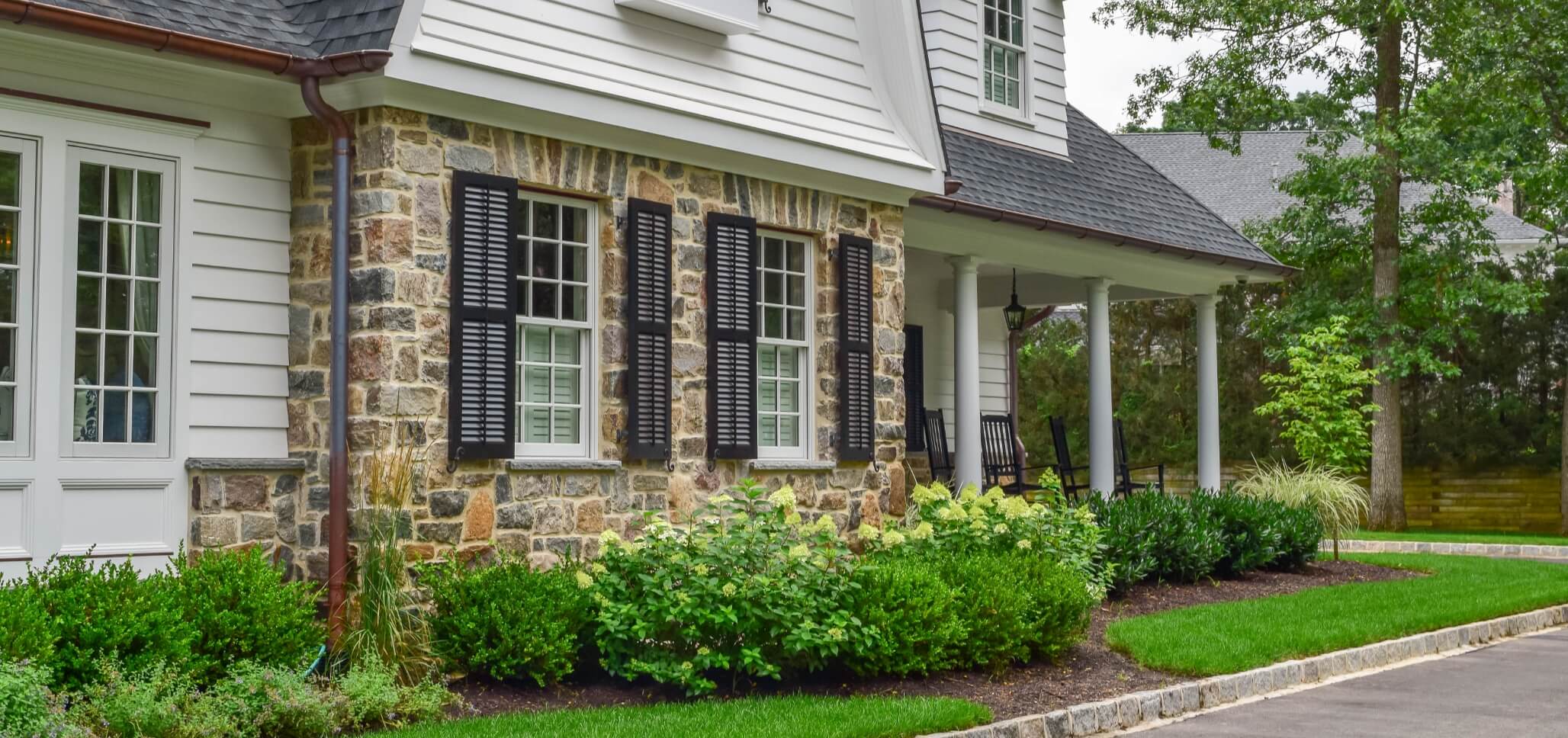
If your home features natural stone veneer, consider choosing paving stones with similar undertones to connect the driveway, walkway, and exterior walls.
The goal is to create a consistent color palette that carries through the different areas of your property.
You can also coordinate the shape and style of the paving stones.
A traditional home might benefit from smaller, textured pavers, while a contemporary home could feature clean lines and larger-format walkway materials.
Just remember that walkway products and driveway products may have different load requirements, so confirm that each material is appropriate for its intended use.
Design tip: Limit your hardscape color palette to two or three complementary tones. This can help create a cohesive appearance without making the exterior feel overly busy.
5. Incorporate Landscaping and Lighting Along the Driveway
A beautiful driveway doesn’t have to rely on paving materials alone.
The landscaping surrounding it can make just as much of a difference in the overall appearance.
If your driveway currently meets the lawn without much definition, consider adding planting beds, decorative stone, or low-growing shrubs along the edges.
These features can soften the appearance of the paved surface and create a more welcoming transition between the driveway and the rest of your yard.
For example, a driveway bordered by neatly maintained garden beds can feel more finished than one surrounded by patchy grass.
Decorative gravel or natural stone edging can also introduce texture and complement nearby hardscape materials.
If you have a longer driveway, carefully placed plantings can help guide the eye toward the home.
Outdoor lighting is another feature worth considering.
Low-voltage landscape lights can highlight driveway edges, nearby plantings, and architectural features after dark.
For a more subtle appearance, some driveway designs may incorporate compatible lighting systems into adjacent hardscape features.
Whatever lighting style you choose, make sure fixtures are positioned to avoid interfering with vehicles, snow removal, and everyday driveway use.
It’s also important to consider drainage and maintenance when planning landscaping near a driveway.
Plant roots, soil movement, and water runoff can affect paved surfaces over time, so choose plantings and edging materials that are appropriate for the location.
Design tip: Coordinate your driveway landscaping with the plants and materials around your front entrance. Repeating similar colors and textures can help make the entire property feel professionally designed.
How to Choose the Right Driveway Design for Your Home
With so many driveway design options available, it can be difficult to know where to begin.
A good starting point is your home’s architectural style.
A traditional colonial home may look best with classic paver colors and understated patterns, while a contemporary home might benefit from cleaner lines and a more minimal color palette.
Next, think about the size and shape of your driveway.
A large driveway may provide room for decorative borders or pattern changes, while a smaller driveway might look best with a simpler design.
Your existing exterior materials should also influence your choices.
Consider the colors of your siding, roofing, trim, front walkway, and any natural stone or brick accents.
Choosing driveway materials that complement these features can create a more balanced appearance.
Finally, think about your practical needs.
A driveway needs to do more than look beautiful. It also needs to support vehicle traffic, provide appropriate drainage, and hold up to everyday use.
In New Jersey, that includes exposure to rain, snow, ice, and seasonal freeze-thaw cycles.
Proper base preparation, material selection, and installation are essential for long-term performance.
Do You Need to Replace Your Entire Driveway to Improve Curb Appeal?
Not necessarily.
If your existing driveway is structurally sound, there may be smaller improvements you can make without starting from scratch.
For example, adding landscaping along the edges can help soften the appearance of an otherwise plain driveway.
Updating the front walkway, improving nearby lighting, or installing compatible decorative edging may also create a more polished look.
However, if your driveway has extensive cracking, sinking, potholes, or persistent drainage problems, cosmetic upgrades alone may not be enough.
In those situations, replacing the driveway may offer an opportunity to address underlying issues while introducing a new design.
Before investing in decorative improvements, have any structural or drainage concerns evaluated by a qualified contractor.
That way, you can make sure your curb appeal upgrades are built on a solid foundation.
Give Your Driveway Design a Fresh Look with Braen Supply
Your driveway is one of the first features people see when approaching your home, so why not make it part of your exterior design?
Whether you prefer the timeless appearance of decorative paving stones, the clean look of a contrasting border, or a coordinated driveway and walkway, thoughtful material choices can make a noticeable difference.
The best driveway designs balance appearance with everyday functionality, creating an entrance that looks beautiful and performs well for years to come.
At Braen Supply, we offer a variety of manufactured concrete paving stones and hardscape materials to help homeowners plan attractive, functional driveways.
Our team can help you compare colors, textures, and product options so you can choose materials that complement your home’s exterior and fit your project goals.
Frequently Asked Questions About Driveway Design
1. What type of driveway design looks the most expensive?
Decorative concrete pavers and certain natural stone driveway systems can create an upscale appearance because of their textures, patterns, and design flexibility. However, a driveway doesn’t need premium materials to look attractive. Coordinating the colors with your home’s exterior, adding clean borders, and maintaining the surrounding landscaping can make a significant difference.
2. What driveway color is best for curb appeal?
Neutral colors such as gray, charcoal, beige, and warm earth tones are popular choices because they complement a wide range of home exteriors. The best color depends on your siding, roof, trim, and surrounding hardscaping. Choosing complementary undertones often creates a more cohesive appearance than matching everything exactly.
3. Are paver driveways better than asphalt driveways?
Both materials have advantages. Asphalt is often more affordable upfront and provides a continuous paved surface, while concrete pavers offer greater flexibility in colors, textures, and patterns. Individual pavers can also often be replaced if damaged. The best choice depends on your budget, design preferences, maintenance expectations, and site conditions.
4. Can you add a paver border to an existing asphalt driveway?
Yes, a paver border may be added to an existing asphalt driveway if the installation is properly planned. The project needs to account for excavation, base preparation, edge restraints, drainage, and the transition between materials. A qualified contractor can determine whether the existing driveway is suitable for this type of improvement.
5. How can I improve my driveway’s appearance without replacing it?
If your driveway is in good structural condition, consider adding landscaping, decorative edging, outdoor lighting, or a coordinated front walkway. Appropriate cleaning and maintenance may also improve the appearance of the existing surface. However, significant cracking, settlement, or drainage issues should be addressed before making cosmetic upgrades.