
If you live in New Jersey, you know that the weather can be pretty unpredictable.
One day, you’re enjoying a beautiful sunny afternoon. The next, you’re dealing with heavy rain, freezing temperatures, or a surprise snowstorm.
And while you might be used to these seasonal changes, your outdoor hardscaping needs to be prepared for them, too.
Your front walkway is exposed to the elements year-round, which means the materials you choose need to do more than simply look beautiful.
From freezing winter temperatures to heavy spring rainfall and hot summer days, your walkway needs to handle a variety of weather conditions while remaining functional and attractive.
The good news? There are several walkway paver materials that can perform well in New Jersey’s climate when properly selected and installed.
Whether you’re replacing an old walkway or planning a brand-new entrance, here’s what to consider when choosing pavers that can stand up to New Jersey weather.
Why Does New Jersey Weather Matter When Choosing Walkway Pavers?
New Jersey experiences four distinct seasons, and each one brings different challenges for outdoor paving materials.
During the winter, freezing temperatures and snow can expose walkways to repeated freeze-thaw cycles.
This happens when moisture freezes, expands, and eventually thaws as temperatures rise.
If water becomes trapped within certain paving materials or beneath the walkway, repeated freezing and thawing can contribute to cracking, surface deterioration, or movement.
Spring and summer can bring heavy rainfall, making drainage another important consideration.
If water collects on your walkway or underneath the pavers, it can contribute to settling, erosion, and other problems.
Even routine winter maintenance can affect your walkway.
Snow shovels, deicing products, and repeated exposure to moisture can influence how paving materials look and perform over time.
That’s why choosing walkway pavers for New Jersey involves more than selecting your favorite color or pattern.
You also need to consider durability, water absorption, surface texture, maintenance requirements, and proper installation.
1. Concrete Pavers: A Versatile Choice for New Jersey Walkways
Concrete pavers are one of the most popular options for residential walkways, and they’re a practical choice for many New Jersey homeowners.
They’re available in a wide range of colors, textures, sizes, and patterns, making it easy to complement different architectural styles.
For example, textured concrete pavers in warm neutral shades can create a traditional front entrance.
Large-format concrete pavers in gray or charcoal can provide a more contemporary appearance.
Beyond their design flexibility, quality concrete pavers manufactured for exterior use can offer excellent durability in climates that experience freezing temperatures.
Many interlocking concrete paving products are manufactured to meet performance standards that address strength and resistance to freeze-thaw exposure.
However, not every concrete product is intended for every application.
It’s important to choose pavers designed for exterior pedestrian surfaces and follow the manufacturer’s installation recommendations.
Why Concrete Pavers Are Worth Considering
Durability: Properly manufactured concrete pavers can withstand repeated exposure to changing weather conditions.
Design flexibility: A wide variety of styles makes it easy to coordinate your walkway with your driveway, patio, or home’s exterior.
Repairability: With certain interlocking systems, individual pavers can be lifted and replaced if repairs are necessary.
Versatility: Concrete pavers can be used for straight walkways, curved paths, decorative borders, and other custom designs.
For homeowners looking for a balance of appearance, durability, and design flexibility, concrete pavers are an excellent option to explore.
2. Natural Stone: Timeless Beauty with the Right Material Selection
If you love the look of natural materials, a stone walkway can create a beautiful, welcoming entrance.
Natural stone offers unique colors, textures, and patterns that can add character to your property.
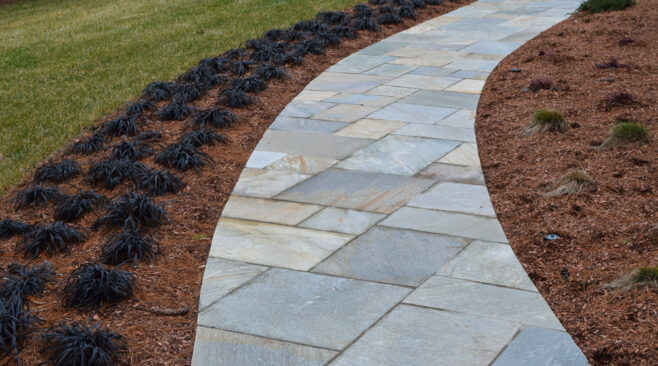
Bluestone, for example, is a popular choice for walkways throughout the Northeast.
Its classic blue-gray tones can complement traditional homes, while certain finishes and layouts can work beautifully with contemporary architecture.
Granite and other suitable natural stone products may also be used for exterior walkways.
However, natural stone requires careful selection.
Different stone types have different absorption rates, strengths, and weathering characteristics.
Some materials are better suited to repeated freezing and thawing than others.
Even within the same general stone category, performance can vary depending on the specific product.
That’s why it’s important to choose natural stone that is appropriate for exterior pedestrian applications in a freeze-thaw climate.
Why Natural Stone Is Worth Considering
Timeless appearance: Natural stone can complement a wide variety of home styles.
Unique character: Each piece features natural variations in color and texture.
Design flexibility: Depending on the product, stone can be installed in formal patterns or more organic layouts.
Long-term potential: Appropriately selected and installed natural stone can provide years of outdoor performance.
When selecting natural stone, consider its thickness, surface finish, water absorption, and suitability for New Jersey’s climate.
Design Tip: If you’re considering bluestone, ask about the differences between available finishes and thicknesses. The right choice depends on your walkway’s design and installation method.
3. Porcelain Pavers: A Contemporary Option for Outdoor Walkways
If you prefer a modern, low-maintenance appearance, outdoor-rated porcelain pavers may be worth considering.
Porcelain pavers are available in a variety of colors and finishes, including options that resemble natural stone.
They can create a clean, sophisticated appearance that complements contemporary and transitional homes.
One of porcelain’s advantages is its generally low water absorption.
Because porcelain absorbs very little moisture, appropriately manufactured exterior products can offer strong resistance to certain moisture-related issues.
However, not all porcelain tiles or pavers are suitable for outdoor walkways.
The specific product needs to be rated for exterior pedestrian use, including the expected climate and installation conditions.
Surface traction is another important consideration, particularly during wet weather.
Outdoor-rated porcelain products are available with different surface finishes, so it’s important to review the manufacturer’s recommendations.
Installation methods can also differ from those used for traditional concrete pavers.
Why Porcelain Pavers Are Worth Considering
Low water absorption: Properly manufactured porcelain can offer excellent resistance to moisture penetration.
Contemporary appearance: A variety of colors and finishes makes porcelain appealing for modern walkway designs.
Maintenance considerations: Many exterior porcelain products are relatively easy to clean when maintained according to manufacturer recommendations.
Design versatility: Porcelain can complement modern landscaping, natural stone accents, and other outdoor living features.
For homeowners who want a sleek appearance, porcelain can be an attractive option when the selected product and installation system are suitable for New Jersey weather.
4. Look for Pavers Designed to Handle Freeze-Thaw Cycles
One of the most important factors when choosing walkway pavers in New Jersey is freeze-thaw durability.
During colder months, moisture can enter certain paving materials or accumulate within the walkway’s foundation.
When temperatures drop below freezing, that moisture can expand.
Repeated cycles of freezing and thawing may contribute to cracking, surface damage, or movement if the materials and installation aren’t suitable.
That’s why it’s important to select products intended for exterior use in climates that experience freezing temperatures.
For concrete pavers, manufacturers may provide performance information related to applicable standards, including ASTM C936 and associated freeze-thaw testing.
Absorption characteristics, strength, and weathering performance are important considerations for natural stone.
For porcelain, verify that the product is rated for the intended outdoor application and climate.
What to look for: Ask your supplier or contractor whether the specific paver product is recommended for freeze-thaw exposure and what installation methods are required.
5. Choose a Surface Texture That Works in Wet Weather
New Jersey walkways don’t just experience snow and ice.
They also need to handle rain, morning dew, and other wet conditions throughout the year.
That’s why surface texture matters.
A walkway with an appropriate surface finish can provide better traction than certain polished or highly smooth materials under wet conditions.
Textured concrete pavers, natural-cleft stone, and appropriately rated outdoor porcelain finishes are all options worth exploring.
However, no walkway material is completely slip-proof.
Even textured surfaces can become slippery when covered with ice, snow, algae, or other debris.
The best approach is to choose materials with suitable traction characteristics and maintain the walkway throughout the year.
If your entrance includes steps or a slope, surface traction becomes especially important.
Design Tip: Don’t choose walkway pavers based on appearance alone. Ask about their suitability for wet pedestrian conditions before making your final decision.
6. Don’t Overlook Drainage and Base Preparation
Even the most durable walkway pavers can develop problems if the installation underneath them isn’t properly designed.
Your walkway needs a stable foundation that can support the pavers while managing moisture.
For many concrete paver installations, this involves excavating the area, preparing and compacting the subgrade, installing a properly specified aggregate base, and placing the appropriate bedding material.
Edge restraints and joint materials also help the system function as intended.
However, the exact installation method depends on the paver product, soil conditions, and intended use.
Drainage is equally important.
A walkway should be designed to direct surface water away from areas where it could cause problems, including your home’s foundation.
Water should not be allowed to collect in low spots or become trapped within the pavement system.
On properties with challenging soil conditions or significant slopes, additional drainage measures may be necessary.
For New Jersey homeowners, proper base preparation and water management are essential to helping a walkway perform through seasonal temperature changes.
Design Tip: When comparing walkway installation quotes, ask contractors how they plan to prepare the base and manage drainage. These details can be just as important as the pavers themselves.
7. Consider How You’ll Maintain Your Walkway During Winter
Winter maintenance is another important factor when choosing walkway pavers.
Snow, ice, and deicing products can affect outdoor paving materials differently.
For example, certain deicers may contribute to surface deterioration or discoloration when used improperly.
The safest product for one paving material may not be recommended for another.
That’s why it’s important to follow the specific manufacturer’s winter maintenance guidelines.
For concrete pavers, using excessive deicing chemicals can increase the risk of damage.
Natural stone and porcelain products may have different restrictions depending on their composition, finish, and installation system.
Snow removal methods also matter.
Metal shovel edges or snow-removal equipment can scratch or chip certain paving surfaces, especially when pavers have become uneven.
Plastic-edged shovels or other appropriate equipment may help reduce the risk of surface damage.
Winter Walkway Maintenance Tips
- Remove snow promptly before it becomes compacted or turns to ice.
- Use deicing products only when appropriate for the specific paving material.
- Avoid applying more deicer than necessary.
- Repair uneven or displaced pavers before winter.
- Keep drainage areas clear so melting snow can move away from the walkway.
A little preventive maintenance can help protect your walkway and keep it looking beautiful throughout the year.
8. Think About Your Walkway’s Layout and Location
The location of your walkway can also influence which materials and installation methods make the most sense.
For example, a front walkway that receives direct sunlight may experience different conditions than a shaded path along the side of your home.
Shaded walkways may remain damp longer, potentially encouraging moss or algae growth.
Walkways beneath trees may collect leaves and other organic debris.
A sloped walkway may require additional attention to drainage, traction, and erosion control.
You should also consider how frequently the walkway will be used.
A main entrance that experiences daily foot traffic may have different requirements than a decorative garden path.
For heavily used areas, prioritize durable materials, comfortable walking surfaces, and straightforward maintenance.
For garden paths, you may have more flexibility in layout and appearance, provided the surface remains suitable for its intended use.
Concrete vs. Natural Stone vs. Porcelain: Which Is Best for New Jersey?
All three materials can work well for New Jersey walkways when the products are appropriately selected and installed.
Here’s how they compare.
| Feature | Concrete Pavers | Natural Stone | Porcelain Pavers |
|---|---|---|---|
| Appearance | Traditional to modern | Natural and timeless | Clean and contemporary |
| Freeze-thaw suitability | Many exterior products are suitable | Depends on stone type and quality | Exterior-rated products may be suitable |
| Water absorption | Varies by product | Varies significantly by stone | Generally very low |
| Maintenance | Routine cleaning and joint care | Depends on stone and finish | Often straightforward |
| Design flexibility | Wide variety of sizes and patterns | Unique textures and layouts | Modern colors and finishes |
| Installation | Commonly uses an aggregate base | Depends on stone and system | Requires product-specific methods |
The best option ultimately depends on your home’s style, budget, maintenance preferences, and the specific conditions of your property.
Rather than assuming one material is always better, compare products based on their intended application and performance characteristics.
How to Choose the Right Walkway Pavers for Your Home
Once you’ve narrowed down your material options, it’s time to think about the overall design.
Start by considering your home’s exterior.
For a traditional brick or stone home, natural bluestone or textured concrete pavers may create a beautiful, cohesive entrance.
For a contemporary home, large-format concrete or outdoor-rated porcelain pavers may be a better fit.
Next, consider your walkway’s color.
Light gray, beige, and other neutral shades can create a welcoming appearance and complement many architectural styles.
Darker pavers can add contrast and create a more dramatic look.
You can also incorporate decorative borders or subtle pattern changes to give your walkway a custom appearance.
Think about how your walkway will connect to nearby features, too.
Coordinating your walkway pavers with your driveway, front steps, retaining walls, or patio can help create a more unified landscape design.
Finally, consider long-term maintenance.
A beautiful walkway should be something you can enjoy throughout the year, not a feature that requires constant attention.
Common Mistakes to Avoid When Choosing Walkway Pavers
When planning a new walkway, it’s easy to focus on the finished appearance and overlook important practical details.
One common mistake is selecting materials without confirming their suitability for New Jersey’s climate.
A paver that looks beautiful in a showroom may not be appropriate for an exterior walkway exposed to freezing temperatures.
Another mistake is overlooking drainage.
If water collects on or beneath your walkway, even durable paving materials may experience problems over time.
Choosing a surface that’s too smooth for the intended conditions can also create traction concerns, particularly near steps or sloped areas.
Finally, don’t underestimate the importance of professional installation.
Improper base preparation, inadequate compaction, and unsuitable joint materials can contribute to shifting, settling, and other issues.
Taking the time to plan these details can help you avoid costly repairs later.
Find Weather-Ready Walkway Pavers at Braen Supply
New Jersey weather can be unpredictable, but your walkway doesn’t have to be.
With the right materials and proper installation, you can create a beautiful front entrance that handles changing seasons while complementing your home’s exterior.
Whether you prefer the versatility of concrete pavers, the timeless character of natural stone, or the contemporary appearance of porcelain, there are plenty of options to explore.
At Braen Supply, we offer a wide selection of concrete pavers, porcelain pavers, natural stone, bluestone, aggregates, and other hardscape materials to help homeowners create beautiful, functional outdoor spaces.
Visit one of our showrooms to explore different colors, textures, and material options in person. Our team can help you compare products and find walkway materials suitable for your project and design preferences.
Frequently Asked Questions About Walkway Pavers for New Jersey Weather
1. What are the best walkway pavers for New Jersey winters?
Concrete pavers manufactured for freeze-thaw exposure, appropriately selected natural stone, and exterior-rated porcelain pavers can all be suitable options. The best choice depends on the specific product, installation method, drainage conditions, and maintenance requirements.
2. Do concrete pavers crack during freezing temperatures?
Quality concrete pavers designed for exterior use can resist repeated freeze-thaw exposure. However, damage may occur if products are unsuitable for the climate, water is poorly managed, or installation conditions are inadequate. Proper material selection and installation help reduce these risks.
3. Is bluestone a good choice for a walkway in New Jersey?
Yes, appropriately selected bluestone can be a beautiful and durable choice for New Jersey walkways. Its natural appearance complements many home styles. However, thickness, surface finish, stone quality, and installation method should be evaluated for the intended application.
4. Can you use rock salt on paver walkways?
It depends on the paving material and manufacturer’s recommendations. Some concrete paver systems permit limited use of sodium chloride, while certain natural stone, porcelain, and installation systems may have different restrictions. Always follow product-specific guidance and avoid excessive deicer application.
5. How do you prevent a paver walkway from shifting during winter?
Proper base preparation, compaction, drainage, edge restraints, and installation are essential. A stable walkway foundation helps reduce movement associated with moisture, settlement, and freeze-thaw conditions. If pavers begin to shift or become uneven, address the underlying cause before making repairs.