
When you’re planning a new patio, there are plenty of exciting decisions to make. What color should the pavers be? How big should the patio be? Should you add a fire pit, outdoor kitchen, or built-in seating?
But there’s one detail homeowners sometimes overlook: the texture of their patio pavers.
You might love the clean, modern appearance of smooth pavers, or maybe you’re drawn to the natural character of a more textured finish. While both can create a beautiful outdoor living space, the differences go beyond appearance.
The surface finish of your patio pavers can influence how they feel underfoot, how easy they are to clean, and how they perform when wet.
So, which option is better for your backyard?
Let’s compare smooth and textured patio pavers to help you find the right fit for your outdoor living space.
What Are Smooth Patio Pavers?
Smooth patio pavers have a relatively even, refined surface with minimal visible texture.
They’re especially popular in contemporary outdoor living designs because they create a clean, streamlined appearance.
Smooth pavers are available in a variety of materials, including concrete and certain outdoor-rated porcelain products.
They also come in different shapes, sizes, and colors, making them versatile enough to complement many architectural styles.
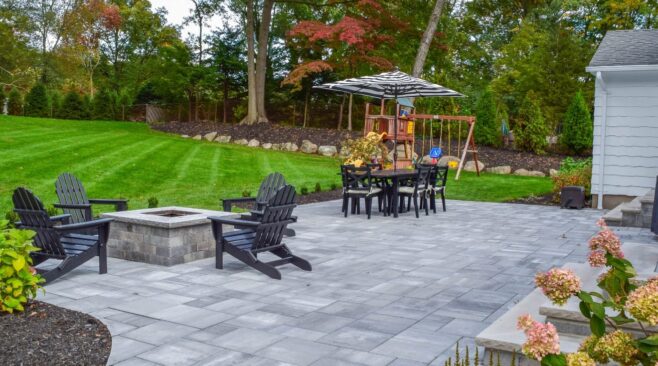
For example, large-format smooth concrete pavers in a light gray or beige can create an elegant patio that feels like an extension of a modern home.
Smooth pavers can also work beautifully with traditional homes when paired with complementary colors, borders, and landscaping.
One important thing to remember is that a smooth-looking paver isn’t necessarily slippery.
Many products designed for outdoor use feature subtle surface treatments that provide traction without creating a heavily textured appearance.
The actual slip resistance depends on the specific product and its tested surface properties.
Benefits of Smooth Patio Pavers
A clean, modern appearance. Smooth pavers create a polished look that works especially well with contemporary homes and minimalist outdoor designs.
A comfortable surface for everyday use. Depending on the finish, smooth pavers can feel pleasant underfoot and may be more comfortable for barefoot walking than heavily textured alternatives.
Easier routine cleaning. Relatively even surfaces often have fewer crevices where dirt and debris can collect, although cleaning requirements vary by material.
Versatile design options. Smooth pavers can complement outdoor kitchens, dining areas, pool decks, and modern backyard retreats.
Potential Drawbacks of Smooth Patio Pavers
Some smooth finishes may provide less traction when wet than certain textured alternatives.
However, this isn’t a universal rule. A smooth-looking outdoor-rated paver may offer better tested slip resistance than another product with a visibly rough surface.
Smooth surfaces may also make certain stains, scuffs, or surface imperfections more noticeable, depending on the material and color.
For these reasons, it’s important to compare specific products rather than choosing based on appearance alone.
What Are Textured Patio Pavers?
Textured patio pavers feature a more pronounced surface finish designed to create visual depth and character.
Depending on the product, the texture may resemble natural stone, weathered surfaces, slate, or other materials.
Some textured pavers have subtle variations that are barely noticeable from a distance.
Others feature more prominent ridges, clefts, or irregularities that create a rustic appearance.
Textured pavers are available in concrete, natural stone, and certain outdoor-rated porcelain products.
They’re especially popular in traditional, rustic, and natural-looking outdoor living spaces.
For example, a patio featuring textured concrete pavers in warm earth tones can create a welcoming atmosphere around a fire pit.
A slate-inspired porcelain paver may provide a more contemporary interpretation of natural texture.
Textured pavers can also help create visual interest in large patios by introducing subtle variation across the surface.
Benefits of Textured Patio Pavers
Natural-looking character. Textured finishes can create an organic appearance that complements landscaping, stone veneer, and other hardscape features.
A wide range of design styles. From lightly textured contemporary pavers to rustic stone-inspired finishes, there are options for many home styles.
Potential traction benefits. Some textured surfaces provide additional grip under wet conditions, although performance must be evaluated using product-specific slip-resistance information.
Visual depth. Surface variation can make a patio feel more dimensional and may help disguise certain minor marks or everyday debris.
Potential Drawbacks of Textured Patio Pavers
More pronounced textures may collect dirt, pollen, or debris in surface recesses, requiring additional attention during cleaning.
Some heavily textured products may also feel less comfortable for barefoot walking.
Uneven surfaces can affect how patio furniture sits and may make it more difficult to slide chairs across the patio.
For homeowners who frequently entertain or use rolling furniture, it’s worth considering how the selected texture will function in everyday situations.
Smooth vs. Textured Patio Pavers: What’s the Difference?
Both smooth and textured pavers can create attractive, functional outdoor living spaces.
The biggest differences come down to appearance, comfort, cleaning, and the specific performance characteristics of each product.
| Feature | Smooth Pavers | Textured Pavers |
|---|---|---|
| Appearance | Clean, refined, streamlined | Natural, dimensional, rustic or contemporary |
| Common design styles | Modern, minimalist, transitional | Traditional, rustic, natural, transitional |
| Barefoot comfort | Often comfortable, depending on finish | Varies with texture depth |
| Cleaning | Relatively even surfaces may be easier to clean | Deeper textures may hold more debris |
| Slip resistance | Depends on the specific product | Depends on the specific product |
| Furniture placement | Even surfaces can simplify placement | Pronounced textures may affect stability |
| Maintenance | Depends on material and finish | Depends on material and finish |
Neither option is automatically better. The right choice depends on how you want your patio to look and function.
Which Patio Pavers Are Better Around a Pool?
If your patio will surround a swimming pool, surface selection becomes especially important.
Pool decks are frequently exposed to water, and homeowners often walk barefoot around these areas.
For this reason, it’s important to choose pavers specifically recommended for poolside applications.
Certain textured concrete pavers, natural stone products, and outdoor-rated porcelain pavers may be suitable options.
However, don’t assume that a visibly textured surface is automatically safer.
Slip resistance should be evaluated using the manufacturer’s testing information and recommendations for wet outdoor applications.
Comfort is another consideration.
Some heavily textured surfaces may feel rough on bare feet, while certain smooth-looking products can offer a more comfortable walking surface with appropriate traction.
You should also consider surface temperature.
Dark-colored pavers and certain materials may become uncomfortable in direct sunlight, although actual heat buildup depends on several factors, including color, material, finish, and exposure.
Our recommendation: For pool patios, prioritize tested wet slip resistance, barefoot comfort, and exterior suitability before deciding whether you prefer a smooth or textured appearance.
Are Smooth or Textured Pavers Easier to Clean?
If low-maintenance outdoor living is a priority, the surface finish of your patio pavers is worth considering.
Smooth pavers often have fewer pronounced grooves or recesses where dirt can accumulate.
This can make routine sweeping and cleaning relatively straightforward.
Textured pavers may require additional attention to remove debris from uneven areas.
However, the material itself also makes a difference.
For example, certain outdoor-rated porcelain pavers have low water absorption and can be relatively easy to maintain, even when they feature a textured finish.
Concrete pavers and natural stone may have different cleaning and sealing recommendations depending on the product.
Regardless of which finish you choose, it’s important to follow the manufacturer’s care instructions.
Using inappropriate cleaners or aggressive pressure-washing techniques can damage certain surfaces or disturb joint materials.
Do Smooth or Textured Patio Pavers Cost More?
There’s no universal rule that smooth pavers cost less than textured pavers, or vice versa.
The price depends on several factors, including the material, manufacturer, dimensions, finish, and installation requirements.
For example, a premium smooth concrete paver may cost more than a standard textured option.
Likewise, a specialty textured porcelain paver may have a higher price point than certain smooth concrete products.
Installation can also affect the overall budget.
Large-format pavers, specific laying patterns, cutting requirements, and site conditions may influence labor costs.
When comparing options, consider the total installed cost rather than focusing only on the price per square foot of material.
How to Choose the Right Patio Paver Texture for Your Home
Still unsure which finish is right for your backyard? Start by thinking about these four factors.
1. Consider Your Home’s Architectural Style
Your patio should feel like a natural extension of your home.
If your house features clean lines, large windows, and contemporary finishes, smooth pavers may complement the architecture beautifully.
If your home has a traditional exterior with stone accents, textured pavers may help create a more cohesive appearance.
Of course, you can also mix styles.
A lightly textured paver can provide a contemporary appearance while adding a little more visual depth than a completely uniform finish.
2. Think About How You’ll Use the Patio
A patio designed primarily for outdoor dining may benefit from a relatively even surface that supports tables and chairs comfortably.
If you’re creating a casual fire pit area surrounded by landscaping, textured pavers may help achieve the warm, natural atmosphere you’re looking for.
For pool decks, prioritize wet slip resistance and barefoot comfort.
For heavily used walkways, consider traction, maintenance, and how easily people can move across the surface.
3. Compare Colors and Textures Together
Color and texture can influence each other.
A light gray smooth paver may create a very different appearance from a light gray paver with a stone-inspired texture.
Similarly, darker pavers can look dramatic in a contemporary design, while warm earth tones may emphasize the rustic character of a textured surface.
Try viewing material samples in natural daylight before making your final decision.
If possible, compare them next to your home’s siding, stone veneer, or other existing hardscape materials.
4. Consider New Jersey’s Changing Weather
For homeowners in Northern New Jersey, selecting patio materials suitable for freeze-thaw conditions is especially important.
Both smooth and textured pavers can be appropriate for exterior use when the specific products are designed for the application.
Proper base preparation, drainage, and installation also play an important role in long-term performance.
Remember that surface texture alone doesn’t determine how a paver will perform during winter weather.
Product specifications, material composition, installation methods, and maintenance practices all matter.
Can You Mix Smooth and Textured Pavers on the Same Patio?
Absolutely! Mixing finishes can be a beautiful way to create contrast and define different areas of your outdoor living space.
For example, you might use smooth, large-format pavers for the main patio and introduce a textured border for added definition.
Another option is to use one finish for a dining area and a complementary finish for a nearby seating space.
However, it’s important to make sure the selected products are compatible with the intended installation.
Differences in thickness, installation systems, and surface elevations can create complications if they’re not considered during the design process.
A qualified hardscape contractor can help determine whether the products can be combined while maintaining appropriate drainage and transitions.
For a cohesive appearance, consider choosing finishes that share similar color undertones.
This allows the textures to provide contrast without making the patio feel overly busy.
Create a Patio That Looks Beautiful and Fits Your Lifestyle
When it comes to smooth vs. textured patio pavers, there’s no single right answer.
Smooth pavers can create a refined, contemporary appearance, while textured pavers offer natural character and visual depth.
Both can work beautifully in outdoor living spaces when they’re selected for the intended application and installed correctly.
The key is finding a finish that complements your home, feels comfortable for everyday use, and meets your expectations for maintenance and performance.
At Braen Supply, we offer a wide variety of concrete pavers, porcelain pavers, natural stone, and other hardscape materials to help homeowners create outdoor living spaces they’ll love.
Our team can help you compare colors, textures, and product options to find the right materials for your patio project.
Frequently Asked Questions About Smooth and Textured Patio Pavers
1. Are textured patio pavers less slippery than smooth pavers?
Not necessarily. Some textured surfaces provide additional traction, but appearance alone doesn’t determine slip resistance. Certain smooth-looking outdoor-rated pavers are designed to provide suitable grip in wet conditions. Always review product-specific slip-resistance information, especially for pool decks and other frequently wet areas.
2. Are smooth patio pavers better for modern homes?
Smooth pavers are popular in modern patio designs because of their clean lines and streamlined appearance. However, lightly textured pavers can also complement contemporary architecture. The best choice depends on the overall design, color palette, and surrounding materials.
3. Do textured patio pavers require more maintenance?
Textured pavers may require additional cleaning if dirt and debris collect in pronounced grooves or surface variations. However, maintenance also depends on the material, surrounding environment, and manufacturer recommendations. Some lightly textured products can be relatively easy to maintain.
4. Can smooth patio pavers be used around a swimming pool?
Yes, provided the specific pavers are approved for poolside use and meet the applicable wet slip-resistance requirements. Smooth appearance doesn’t automatically mean a surface is slippery. Barefoot comfort, surface temperature, drainage, and proper installation should also be considered.
5. Which is more expensive: smooth or textured patio pavers?
Neither finish is consistently more expensive. Pricing depends on the material, brand, size, surface treatment, and installation requirements. Comparing specific products and their complete installed costs will provide a more accurate picture of the budget.