In well-composed landscape architecture, the most compelling spaces rarely rely on dramatic gestures. Instead, their success lies in subtle continuity and the careful alignment of materials, edges, and proportions that allow one element to flow naturally into the next.
Nowhere is this more evident than at the edge of a swimming pool. The transition between pool coping and the surrounding decking represents a critical design moment. When handled thoughtfully, it creates a seamless visual relationship between water and hardscape. When neglected, it can introduce awkward breaks that interrupt the space.
For designers and architects, achieving this cohesion requires both aesthetic sensitivity and technical precision.
Understanding the Role of the Pool Coping
Pool coping is often viewed as a protective cap for the pool shell, but from a design standpoint it serves a much broader purpose The coping establishes the visual boundary of the water while mediating the transition between the pool structure and the surrounding patio.
A cohesive transition ensures this bridge feels seamless. The materials and joint patterns should align in a way that allows the pool to appear naturally integrated into the broader outdoor living space.
Aligning Material Palettes
One of the most effective ways to achieve visual cohesion is through careful material selection. The relationship between coping and decking materials should feel considered rather than coincidental.
Some designers prefer matching materials, using the same stone or paver across both the coping and deck to create a monolithic appearance. This approach is most effective in modern landscapes where visual simplicity is desired.
Others introduce subtle contrast, selecting contemporary materials that highlight the pool’s perimeter while still maintaining harmony with the patio.
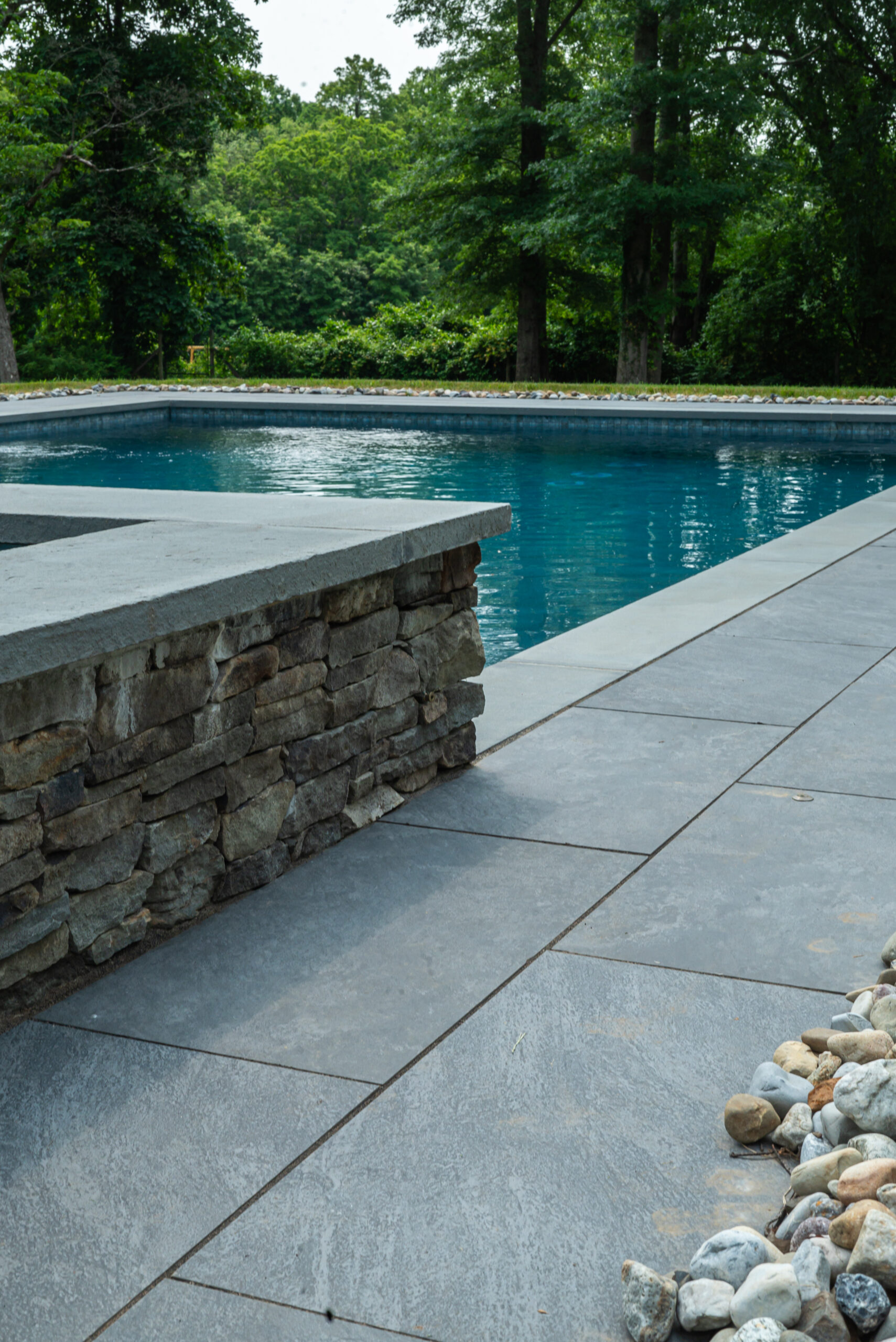
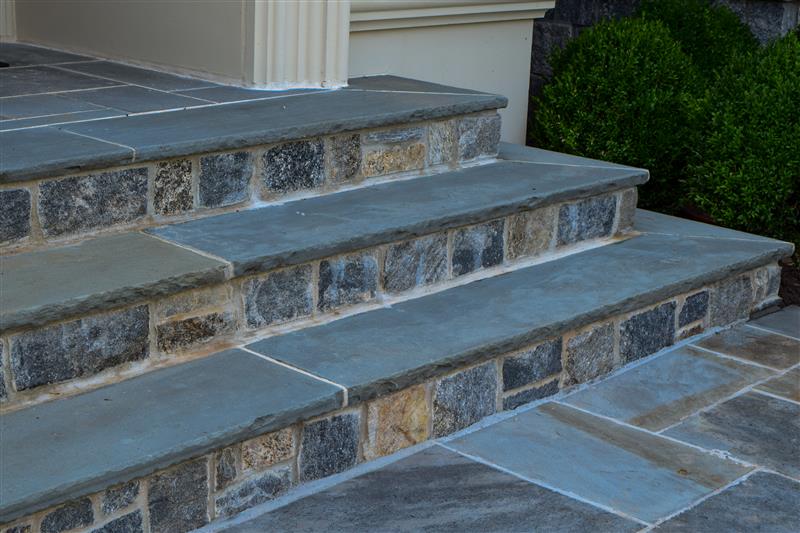
For example, bluestone coping paired with a slightly lighter patio surface can define the water’s edge without disrupting the overall palette. The key is ensuring that colors, textures, and finishes remain compatible.
Maintaining Consistent Elevation
Precision during installation is essential.
Even the most beautiful materials can appear disjointed if their elevations are misaligned. A smooth transition between coping and decking typically requires that the surfaces sit nearly flush with one another, with only a subtle drip edge or overhand at the coping.
This alignment allows foot traffic to move effortlessly between the pool perimeter and the surrounding patio while preserving the clean architectural lines of the design,
Small inconsistencies in height can create visual distractions or uncomfortable walking surfaces, particularly in areas where people frequently move between the pool and seating areas.
Managing Joint Spacing and Alignment
Joint layout is another detail that significantly affects the visual cohesion of the pool edge. When patio pavers meet coping stones, inconsistent joint spacing can disrupt the rhythm of the surrounding hardscape.
Ideally, the joint pattern of the deck should be planned so that it terminates cleanly at the coping band. This often requires coordination during the design phase to ensure the module size of the decking material works well with the dimensions of the coping.
Maintaining consistent joint widths also helps the materials read as part of a unified system rather than separate installations.
In projects where large-format stone slabs are used, aligning the deck joints with coping corners or pool geometry can further reinforce the architectural clarity of the space.
Balancing Structure and Aesthetics
While visual continuity is important, the transition between coping and decking must also account for structural realities. Pools and patios can move differently over time due to temperature fluctuations, soil conditions, and seasonal moisture changes.
For this reason, the joint between coping and decking often incorporates flexible materials or expansion joints that allow subtle movement without cracking the surrounding surfaces.
These technical considerations should be integrated carefully so they remain visually discreet while protecting the long-term performance of the installation.
A successful design balances these structural requirements with the aesthetic goal of a seamless transition.
The Importance of Collaboration
Achieving truly cohesive transitions requires coordination between designers, fabricators, and installers. Coping dimensions, edge profiles, and patio layout all influence how the materials meet.
Early communication allows fabricators to produce coping pieces that align precisely with the planned deck pattern. Installers, in turn, can ensure that joint spacing, elevations, and edge conditions reflect the design intent.
Designing the Pool as a Unified Space
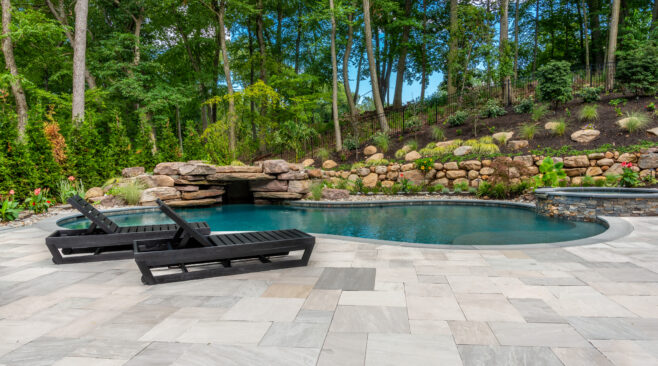
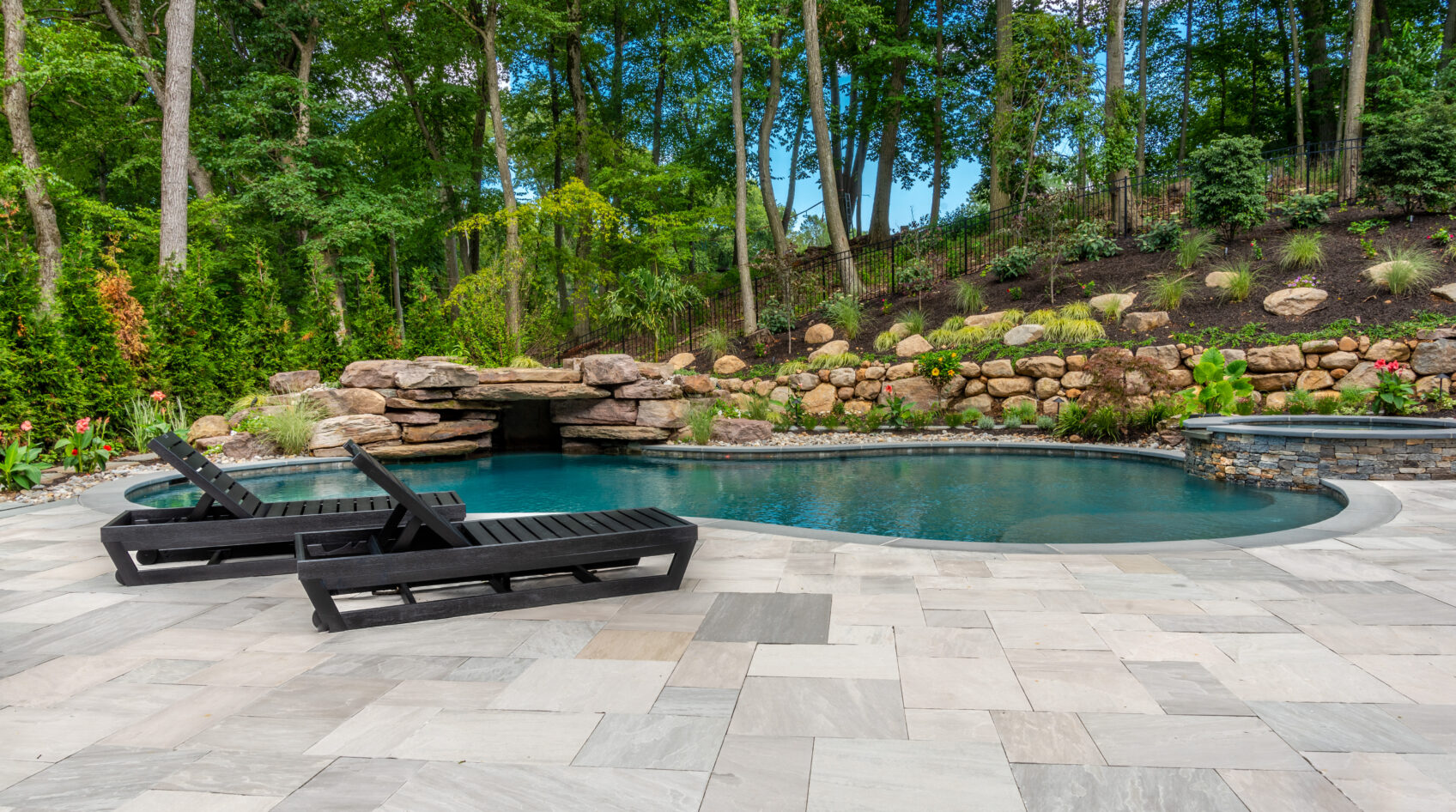
At its best, the transition from coping to decking should feel almost invisible. The eye should move effortlessly from water to stone, without interruption or visual tension.
This sense of cohesion does not happen by accident. It emerges from thoughtful material selection, careful dimensional planning, and precise installation.
When these elements come together successfully, the pool becomes more than a standalone feature. It becomes an integrated component of the landscape.
Quality design deserves quality materials. Partner with Braen Supply to source reliable stone, veneer, and pavers tailored to your project requirements.
About the Author
Written in the voice of Braen Supply’s in-house expert persona, Gabriel Shaw. Shaw embodies the collective knowledge of our team and shares practical, straightforward tips to help landscape professionals make the most of their landscaping and masonry projects – drawing on decades of experiences serving New Jersey and the tri-state area.