There is a common misstep I have observed across well-conceived outdoor spaces; heating is often designed for how a space should be used, rather than how it will be used. To design an outdoor heater strategy that performs well, one must begin not with layout plans, but with lived behavior.
How Will the Outdoor Heater Be Used?
Architectural drawings tend to imply symmetry, balance, and idealized circulation. Clients, on the other hand, live asymmetrically. They gather in corners, gravitate towards views, cluster around food, and retreat from wind.
A thoughtfully specified outdoor heater begins with observation and inquiry:
- Where do you naturally sit when you step outside on a cool evening?
- Do you entertain frequently, or is this space primarily for quiet family use?
- At what times of year, and more importantly, at what times of day, will the space be occupied?
An outdoor heater positioned according to furniture plan alone may miss the mark entirely if it fails to account for habitual movement, prevailing winds, or the gravitational pull of a fire feature or kitchen.
Designing Around Micro-Environments
Outdoor spaces are rarely uniform. Even within a single patio, there are microclimates shaped by:
- Overhead structures (pergolas, roofs, partial coverings)
- Adjacent walls and vertical surfaces
- Exposure to wind corridors
- Solar gain throughout the day
An effective outdoor heater strategy acknowledges these subtle environmental variations.
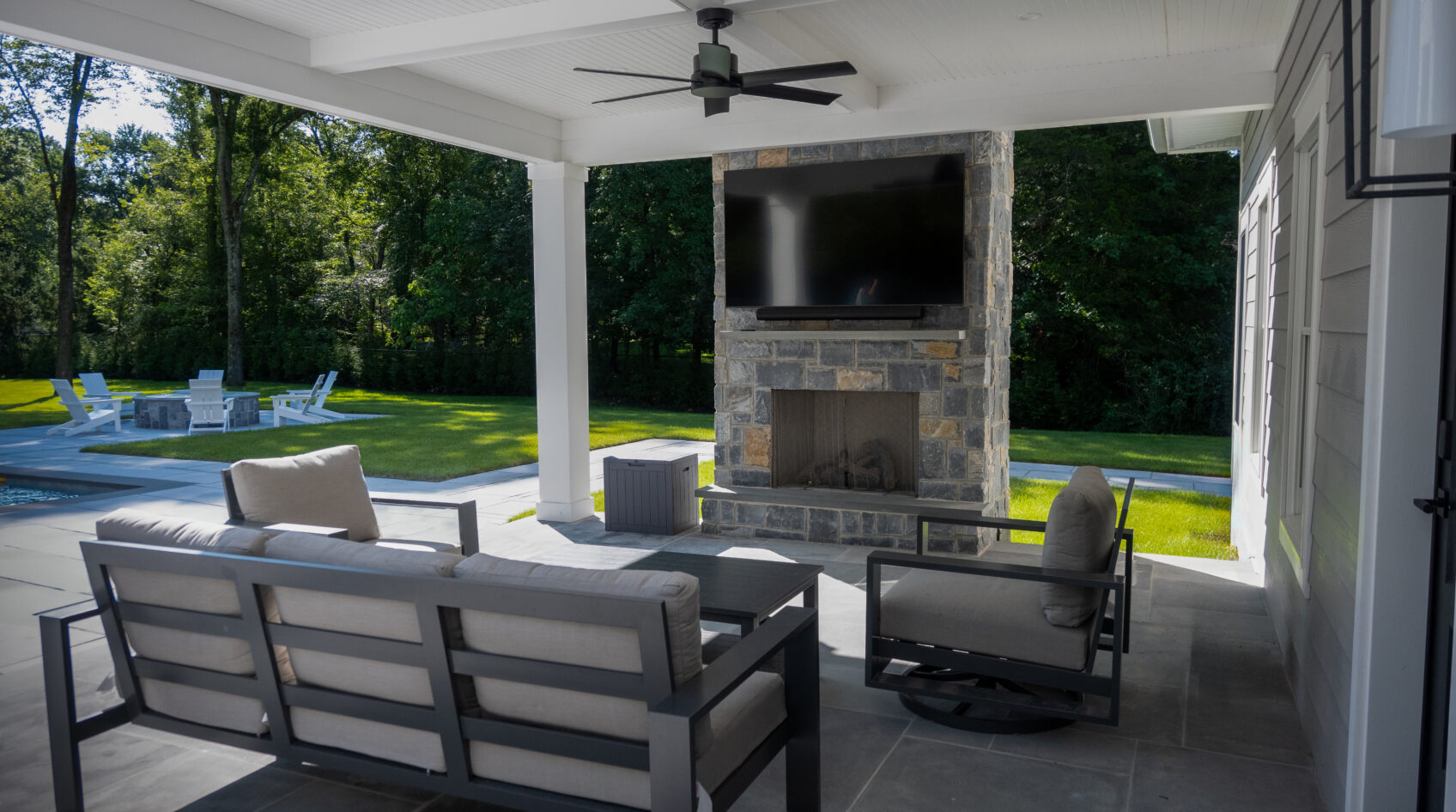
For instance, a covered lounge area may retain heat efficiently with a mounted infrared heater, while an exposed dining space may require a more concentrated, directional source. Treating the entire patio as a single thermal zone is a common oversight that leads to inconsistent comfort.
Instead, segment the space. Design each zone with intention.
The Role of Behavioral Mapping
One of the most valuable exercises in outdoor heater planning is behavioral planning- an intentional review of how clients move through and occupy their space.
This can be done through:
- Walking the property with the client at different times of day
- Reviewing past entertaining habits and seasonal use patterns
- Identifying “default zones” where people instinctively gather
Often, this process reveals that the most-used areas are not the ones emphasized in the original design. It is tempting, particularly in early design phases, to arrange outdoor heaters according to symmetry or visual balance. Yet a perfectly centered heater is of little value if no one occupies that zone. A secondary seating wall, a step-down patio, or even a transitional walkway may become the true focal point of activity.
Integration with the Broader Design Language
While performance should lead, you still want the outdoor heater to integrate seamlessly into the overall design.
To this extent, material selection, mounting strategies, and visual scale all matter. A poorly integrated unit, no matter how effective, can disrupt the cohesion of an otherwise elegant space.
Consider:
- Concealing or recessing heaters within architectural elements
- Aligning finishes with surrounding materials (metal tones, wood stains, masonry palettes)
- Maintaining appropriate scale relative to ceiling height and seating arrangements
The objective is subtlety. The best outdoor heater solutions are often the least visually assertive.
A Measured Approach to Comfort
Designing for lifestyle requires a certain discipline. It asks the designer to resist assumptions and instead engage in dialogue. Sometimes revisiting decisions as new insights emerge.
Quality design deserves quality materials. Partner with Braen Supply to source reliable stone, veneer, and pavers tailored to your project requirements.
About the Author
Written in the voice of Braen Supply’s in-house expert persona, Gabriel Shaw. Shaw embodies the collective knowledge of our team and shares practical, straightforward tips to help landscape professionals make the most of their landscaping and masonry projects – drawing on decades of experience serving New Jersey and the tri-state area.