
Outdoor kitchens have become one of the most sought-after features in residential landscape architecture. Done properly, they offer far more than a place to cook, they create a seamless transition between indoor and outdoor living. In my experience, the most successful outdoor kitchen designs are those that feel like a natural extension of the home itself. Here are some things to keep in mind when working on your outdoor kitchen:
Start with Spatial Planning
Before selecting materials or appliances, it’s essential to consider the layout of the outdoor space and how it’ll function.
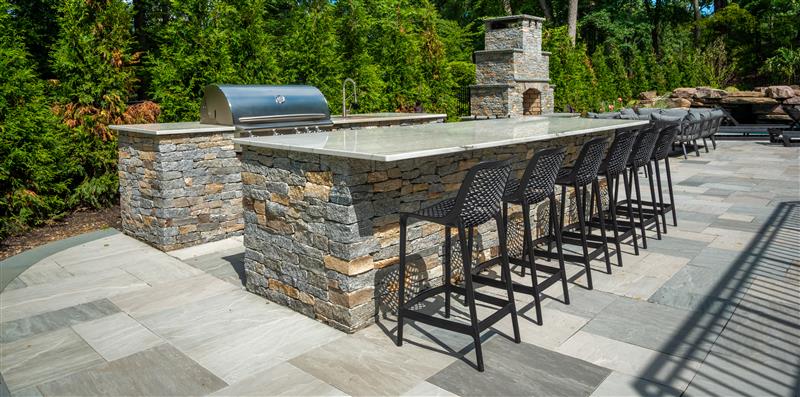
An outdoor kitchen should integrate naturally with:
- The patio or terrace
- Nearby seating areas
- Circulation paths through the landscape
Thoughtful placement ensures that cooking, dining, and socializing can occur comfortably within the same environment, rather than feeling disconnected.
Material Continuity
One of the most effective ways to create cohesion between home and landscape is through material continuity.
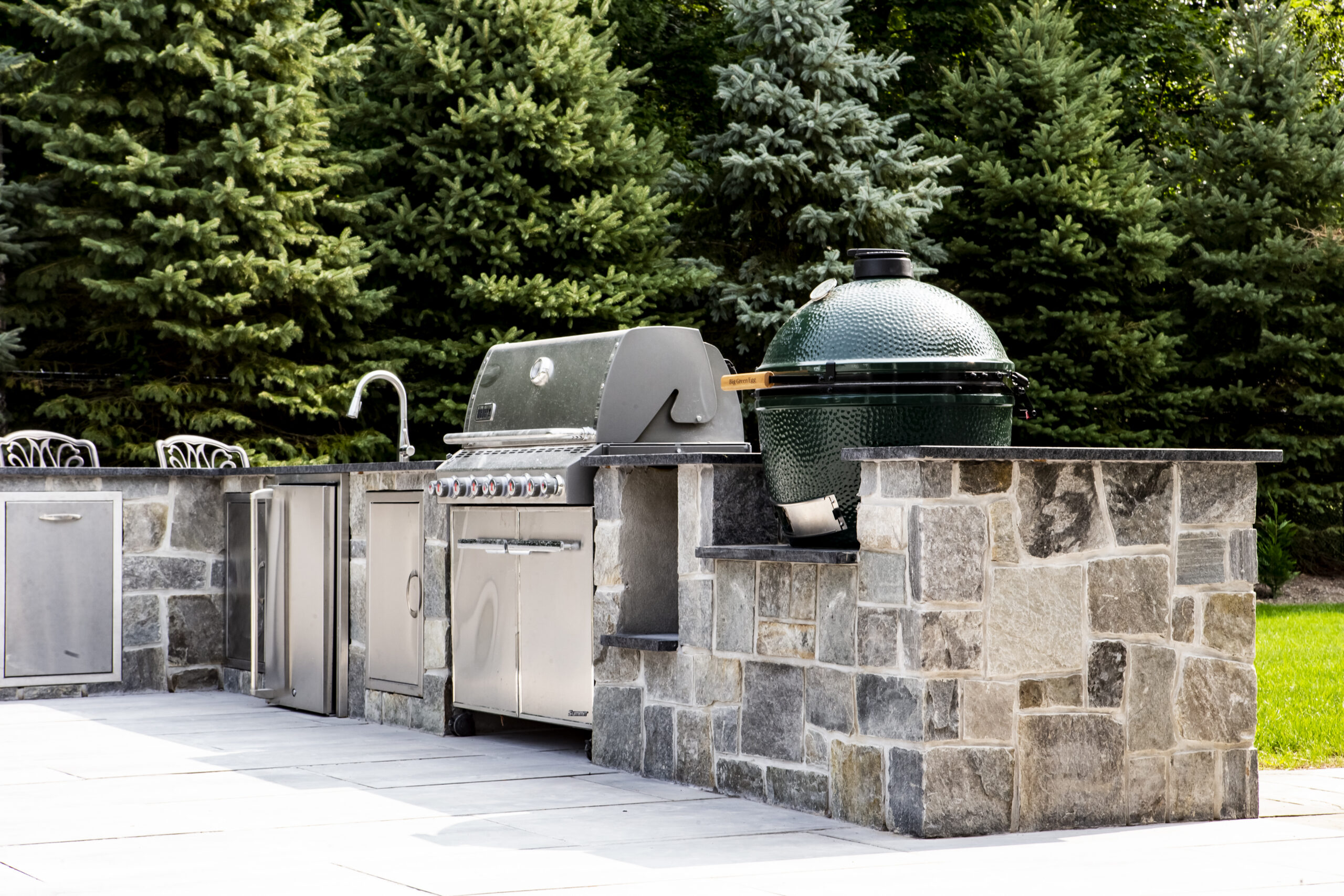
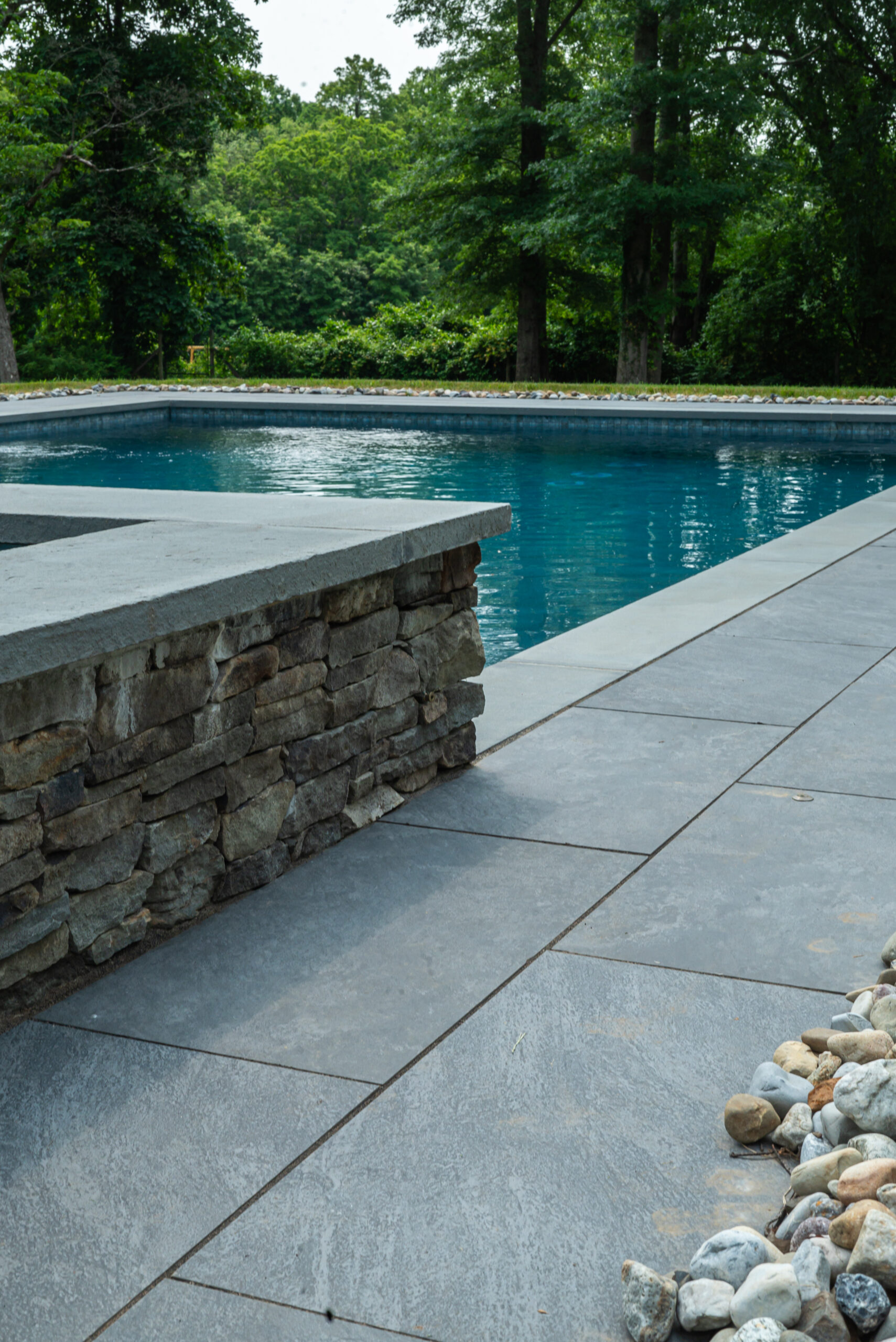
Using complementary materials, such as natural stone veneer, pavers, or architectural stone, helps visually connect the outdoor kitchen with the house.
For example:
- Stone veneer can echo the façade of the home
- Paver patios can extend interior flooring patterns
- Natural stone countertops can provide durability and elegance
These subtle connections make the outdoor kitchen feel integrated rather than added on.
Functional Considerations
An outdoor kitchen should function as efficiently as an indoor one.
Key elements often include:
- Grill or cooking station
- Counter space for preparation
- Storage cabinets
- Refrigeration or beverage coolers
Adequate lighting is also essential for evening use.
Comfort and Atmosphere
Landscape architecture plays a critical role in making outdoor kitchens inviting.
Elements such as pergolas, fire features, and landscape lighting can dramatically enhance the ambiance.
Well-placed plantings can also soften the space, adding texture and privacy.
Designing for Longevity
Outdoor kitchens must withstand weather exposure year-round. This makes durable materials particularly important.
Stone, concrete pavers, and stainless steel appliances tend to perform best in climates like Northern New Jersey’s.
Proper installation and drainage are equally critical to ensure long-term performance.
When thoughtfully designed, an outdoor kitchen becomes one of the most enjoyable and valuable features a landscape can offer. Working with a trusted supplier like Braen Supply can also help ensure the materials you choose not only complement your design, but perform reliably over time.