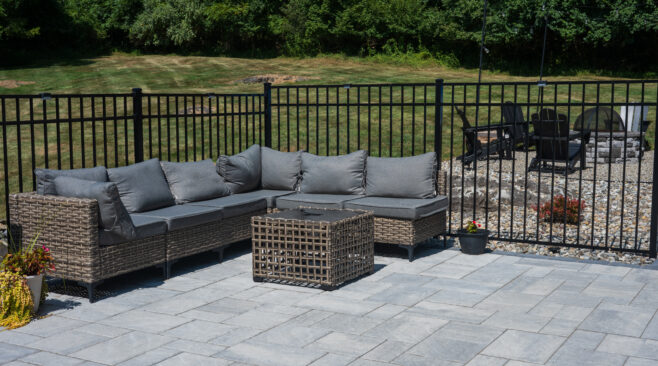
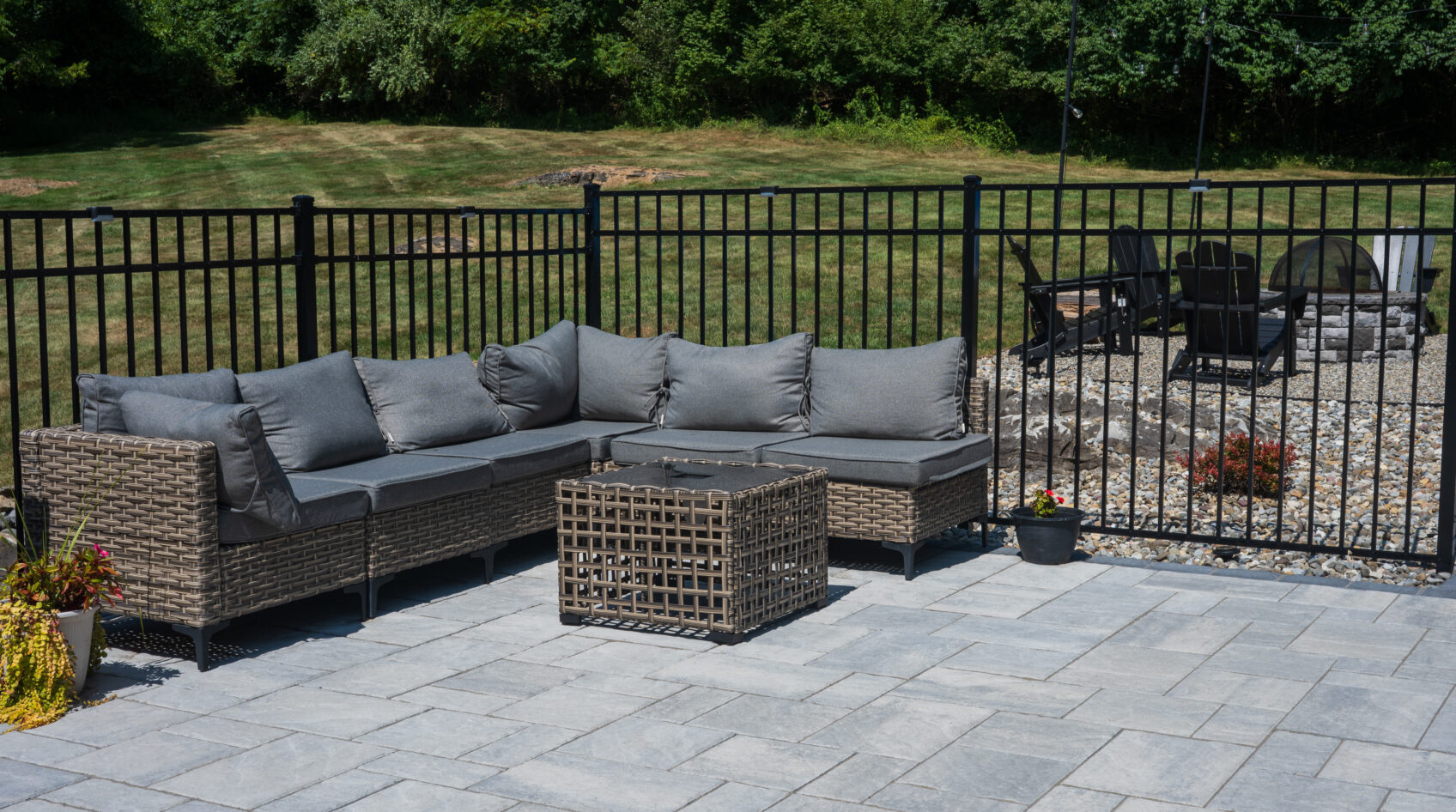
Porcelain pavers have become an increasingly popular choice for patios, pool decks, walkways, outdoor kitchens, and other outdoor living spaces.
Their clean appearance, wide variety of designs, and relatively straightforward maintenance make them particularly appealing for homeowners looking to create a refined outdoor environment. Porcelain can recreate the look of natural stone, concrete, wood, and other materials while providing its own unique performance characteristics.
However, a successful porcelain project begins well before installation.
Choosing a product appropriate for exterior use, planning the layout, preparing the site, selecting the correct installation system, and working with an installer experienced with porcelain can all contribute to the finished result.
Once installed, routine cleaning and appropriate seasonal care can help keep your porcelain looking its best.
Whether you are considering porcelain for an upcoming project or already have it installed, here is what you should know.
Choose Porcelain Specifically Designed for Outdoor Use
Not every porcelain tile or slab is intended for an outdoor patio.
Exterior porcelain pavers are manufactured for outdoor applications and are typically thicker and designed differently than traditional indoor porcelain tile.
Before selecting a product, confirm that it is appropriate for the intended application and installation method.
Consider where the porcelain will be used.
A pool deck, pedestrian patio, walkway, rooftop, and other outdoor spaces can have different requirements. In Northern New Jersey, the product also needs to be appropriate for exterior conditions and seasonal freeze-thaw cycles.
Discussing your application with your supplier and contractor can help you narrow down the appropriate options.
See Porcelain in Person
Porcelain can be particularly difficult to appreciate from an online photograph.
Many products are designed to recreate natural materials such as limestone, travertine, bluestone, marble, concrete, or wood. Subtle variations in color, texture, and pattern are what make these products convincing.
Seeing a larger display in person allows you to understand how the individual pieces work together.
It also gives you an opportunity to feel the surface texture and better understand the scale of the paver.
Bring photos or samples of your home’s exterior materials so you can compare porcelain with siding, stone veneer, coping, countertops, and other hardscape products.
Understand Pattern and Face Variation
Depending on the collection, porcelain may include multiple different printed faces designed to create a more natural appearance.
Instead of every paver displaying exactly the same pattern, individual pieces can feature variations in veining, coloring, or texture.
This is particularly important with porcelain designed to resemble natural stone or wood.
Ask how much variation you should expect within your selected collection and look at several pieces rather than making a decision based on one sample.
During installation, different faces should be distributed thoughtfully so obvious repetitions are minimized.
Consider the Size and Scale
One of porcelain’s major design advantages is the availability of large-format pavers.
Large pieces can create a clean, contemporary appearance with fewer visible joints, but their scale should make sense for the area.
A large-format paver may look beautiful across an expansive pool deck or patio but feel very different within a small walkway.
Consider the dimensions of the space, surrounding architecture, furniture placement, and desired pattern before finalizing the size.
Seeing full-size samples in person can make this decision much easier.
Plan Your Layout Before Installation
Porcelain offers a great deal of design flexibility, so establish the general layout before materials are ordered.
Think about the direction of the pattern, joint placement, borders, cuts, and transitions into surrounding surfaces.
If the porcelain has directional veining or a wood-inspired appearance, orientation becomes even more important.
The layout should also consider permanent features such as:
- Outdoor kitchens
- Pools
- Fireplaces
- Steps
- Retaining walls
- Columns
- Drains
- Doorways
Planning these relationships beforehand can help create a more intentional finished space.
Order Enough Material
The measured square footage of the patio is not necessarily the exact amount of porcelain required.
Cuts, layout, pattern, breakage, and jobsite conditions can all influence material quantities.
Large-format porcelain can also require specific cuts around edges, drains, pool features, and other details.
Your contractor should confirm the final quantity based on the selected product and project layout.
It is also worth keeping several extra pieces after installation.
Porcelain collections can change or be discontinued over time. Having original material available can be helpful if a paver needs to be replaced or the project is modified later.
Handle Porcelain Carefully
Porcelain is a durable finished surface, but individual pavers still need to be handled correctly before and during installation.
Edges and corners can be vulnerable to chipping if pieces are dropped or handled improperly.
Keep the material appropriately stored and protected until installation.
Contractors should also use tools and cutting equipment intended for porcelain.
This becomes particularly important with large-format products, where accurate cuts and careful handling can have a significant impact on the finished appearance.
Choose the Right Installation Method
Outdoor porcelain can be installed using different systems depending on the product, application, and site conditions.
Potential installation methods may include installations over appropriate aggregate bases, mortar-set applications, pedestal systems, or other manufacturer-approved assemblies.
There is no single installation method that is appropriate for every porcelain project.
The correct approach depends on factors such as the substrate, application, elevations, drainage, expected use, and selected product.
Your installer should follow the porcelain manufacturer’s specifications and appropriate installation practices for the project.
Prepare the Base Properly
As with pavers and natural stone, much of the long-term performance of an outdoor porcelain project depends on what is underneath the finished surface.
The site may need to be excavated and prepared with an appropriate base or substrate for the selected installation method.
Proper grading and preparation help create a stable surface and support appropriate drainage.
Northern New Jersey’s freeze-thaw conditions make correct installation particularly important.
Trying to compensate for poor base preparation after the porcelain is installed can be much more difficult than doing the work correctly from the beginning.
Plan for Drainage
Porcelain itself absorbs very little water, but that does not mean drainage can be ignored.
Water still needs to move appropriately across and away from the finished patio.
The layout and installation should account for slope, drains, downspouts, surrounding landscaping, pools, walls, and other features.
Avoid creating low areas where water consistently collects.
For pool decks in particular, the relationship between porcelain, coping, drains, and the surrounding landscape should be planned together.
Pay Attention to Transitions
Think carefully about where porcelain meets other materials.
Your project may transition from porcelain into lawn, natural stone, pavers, pool coping, steps, gravel, or indoor flooring.
Finished elevations should be established before installation so these transitions feel intentional and comfortable.
Porcelain is also frequently used to create indoor-outdoor visual continuity.
When coordinating indoor and exterior materials, remember that the products may need different technical characteristics even if they share a similar appearance.
Once installation is complete, porcelain is generally relatively easy to maintain.
Sweep Your Porcelain Regularly
Routine cleaning starts with removing loose debris.
Sweep or blow away leaves, dirt, pollen, twigs, and other materials before they accumulate.
This is particularly important in fall, when wet leaves can sit on outdoor surfaces for extended periods.
Regular sweeping also helps prevent dirt and organic material from accumulating in joints.
Rinse and Wash When Needed
For general outdoor dirt, rinsing with clean water may be enough.
Occasional washing can help remove pollen, dust, footprints, and everyday grime.
For more significant buildup, use a cleaner appropriate for exterior porcelain and follow the product manufacturer’s recommendations.
Avoid assuming that the strongest cleaner will provide the best result.
Routine cleaning is typically easier when dirt is addressed before it becomes heavily built up.
Clean Spills Promptly
Porcelain’s low absorption can make it easier to maintain than some more porous outdoor materials, but spills should still be addressed promptly.
Food, grease, beverages, sunscreen, and residue from outdoor cooking can accumulate on the surface.
Clean spills using a method appropriate for the porcelain and type of stain.
Outdoor kitchens and dining areas may require more frequent attention than other parts of the patio.
Pay Attention to the Joints
The porcelain itself is only one part of the finished installation.
Joint material should also be inspected periodically.
The appropriate jointing material depends on the installation system, so maintenance should follow the requirements of that specific system.
If you notice missing material, deterioration, or unusual movement around the joints, address it rather than simply filling the area with an unrelated product.
Your installer or supplier can help identify the appropriate maintenance approach.
Power Wash With Care
Porcelain can be relatively easy to clean, but that does not mean maximum pressure is necessary.
If pressure washing is appropriate for the installation, use a controlled approach and pay particular attention to the joints.
Aggressive pressure can remove or damage certain jointing materials even when the porcelain itself is unaffected.
Always follow the manufacturer’s recommendations and start with the least aggressive cleaning method necessary.
Address Moss and Algae
Shaded or consistently damp areas may occasionally develop moss, algae, or other organic growth.
Clean these areas using a product and method appropriate for outdoor porcelain.
If the same location repeatedly develops growth, consider the underlying conditions.
Standing water, nearby vegetation, poor drainage, and limited sunlight may all contribute.
Correcting the source of excessive moisture can reduce how frequently the area needs to be cleaned.
Be Mindful Around Outdoor Kitchens
Porcelain is frequently used around outdoor kitchens because it can complement a wide variety of countertops, stone veneers, and cabinetry.
These spaces also tend to experience more grease, food, beverages, and foot traffic than other parts of a patio.
Clean cooking-related spills promptly and consider using appropriate mats or other protective measures where recommended around grills and food preparation areas.
Avoid placing extremely hot objects directly on the patio surface unless the manufacturer specifically indicates that doing so is appropriate.
Use Care Around Fire Features
Fire pits and fireplaces are popular additions to porcelain patios, but heat-producing features should be planned appropriately.
Follow all manufacturer and installer requirements for clearances and surrounding materials.
Portable fire pits, grills, and other heat sources should not simply be placed anywhere on a finished patio without considering heat exposure.
When designing the project, discuss the planned location of fire features with your contractor so appropriate materials and separations can be incorporated.
Consider Whether Sealing Is Necessary
One advantage of many porcelain products is that the surface generally does not require the same sealing routine associated with some porous natural stones.
However, the entire installation may contain other materials—such as grout or certain jointing products—that have their own maintenance requirements.
Do not automatically apply a sealer intended for concrete pavers or natural stone to porcelain.
Check the manufacturer’s recommendations before applying any coating, enhancer, or sealer to the surface.
Take Care During Winter
Outdoor porcelain can be well suited to climates with changing seasons when the correct product and installation system are used.
Winter maintenance should still be approached carefully.
Remove snow with tools that will not unnecessarily chip or scratch edges. Avoid aggressively striking the surface when breaking up ice.
Pay particular attention to raised edges, steps, and transitions where snow-removal equipment may make contact.
Be Careful With Deicing Products
Before applying rock salt or another deicer, confirm that the product is appropriate for your porcelain and, importantly, for the surrounding jointing and installation materials.
Even if the porcelain surface itself is highly resistant, adjacent materials may respond differently to repeated chemical exposure.
Use only as much deicer as necessary and remove residue when conditions allow.
Spring cleaning can help remove remaining salt, dirt, and winter grime from the patio.
Inspect Your Porcelain Each Spring
Spring is a good time to evaluate the patio after winter.
Look for:
- Chipped or damaged pieces
- Changes in joint material
- Movement or uneven areas
- Drainage problems
- Staining
- Moss or algae
- Changes around edges and transitions
Also clean away winter debris and grime.
If an individual paver is damaged, discuss repair options with your installer. Keeping extra material from the original installation can make replacement easier.
Enjoy the Benefits of Porcelain for Years to Come
Porcelain can create a clean, refined outdoor surface while offering an impressive range of design possibilities.
From natural stone-inspired patios to contemporary pool decks and indoor-outdoor living spaces, the material can complement many different architectural and landscape styles.
A successful project begins with selecting porcelain intended for exterior use, seeing the material in person, planning the layout, ordering enough material, choosing the correct installation system, preparing the site properly, and accounting for drainage.
After installation, maintenance is generally straightforward.
Keep the surface free of debris, clean spills promptly, use appropriate cleaning products, monitor joints and drainage, and take care during winter maintenance.
With thoughtful planning, professional installation, and routine care, outdoor porcelain can remain a beautiful and functional part of your landscape for years to come.
Braen Supply can help homeowners, contractors, pool professionals, and landscape designers explore outdoor porcelain for patios, pool decks, walkways, outdoor kitchens, and other projects. Visit one of our Northern New Jersey showrooms to see porcelain displays in person, compare colors and textures, and coordinate your selection with coping, natural stone, pavers, and other outdoor materials.
Frequently Asked Questions About Porcelain Paver Installation and Maintenance
1. What should I consider before installing outdoor porcelain pavers?
Before installing porcelain pavers, make sure you select a product specifically designed for outdoor use. Consider the paver’s size, thickness, surface texture, color, and suitability for your intended application, whether it’s a patio, walkway, or pool deck. Proper site preparation, drainage, and installation methods are also essential. Depending on the project, porcelain may be installed over an appropriate aggregate base, with mortar, or on a pedestal system. Working with an experienced installer can help ensure the correct installation method is used.
2. What is the best way to clean and maintain outdoor porcelain pavers?
Outdoor porcelain pavers are generally easy to maintain with regular sweeping and occasional washing. Remove leaves, dirt, and debris before they accumulate, and rinse the surface with clean water as needed. For stubborn dirt or stains, use a cleaning product specifically recommended for exterior porcelain. Although porcelain has low water absorption, spills from food, grease, and beverages should still be cleaned promptly. Avoid overly aggressive pressure washing, particularly around joints, to prevent damage to the installation.
3. Do porcelain pavers need to be sealed?
Most outdoor porcelain pavers do not require sealing because their surfaces have very low water absorption. Unlike certain natural stones and concrete pavers, porcelain generally does not need routine sealing to help protect against staining. However, the grout or jointing materials used during installation may have different maintenance requirements. Always check the manufacturer’s recommendations before applying any sealer, coating, or enhancement product to your porcelain patio.
4. Are porcelain pavers durable enough for outdoor patios and pool decks?
Yes, porcelain pavers specifically manufactured for exterior applications can be a durable option for patios, walkways, and pool decks. Their low water absorption and relatively straightforward maintenance make them appealing for outdoor living spaces. However, not all porcelain products are suitable for every application. In climates like Northern New Jersey, it’s important to select porcelain rated for outdoor freeze-thaw conditions and use an appropriate installation system. For pool decks, consider surface texture and suitability for wet areas.
5. How long do outdoor porcelain pavers last, and what maintenance do they require?
Properly selected, professionally installed, and maintained outdoor porcelain pavers can provide many years of performance. Their longevity depends on the product, installation quality, site conditions, and how the space is used. Routine maintenance includes sweeping debris, cleaning spills, inspecting joints, and monitoring drainage. During winter, use appropriate snow-removal tools and deicing products approved for the installation. A spring inspection can also help identify chipped pavers, shifting, or joint deterioration before minor issues become larger repairs.