A retaining wall can do a lot more for your backyard than simply hold back soil. It can turn a steep slope into a usable outdoor living area, create beautiful raised garden beds, or provide a finished look around your patio and landscaping.
But if you’re investing in a new retaining wall, you probably have one important question: How do I make sure it lasts?
The answer starts with choosing the right materials.
From concrete retaining wall blocks to natural stone and poured concrete, there are several options available, each with its own advantages.
However, the material you choose is only part of the equation. Proper drainage, base preparation, and installation are just as important when it comes to creating a retaining wall that performs well over time.
So, what are the best materials for a long-lasting retaining wall?
Let’s explore the options and what homeowners should consider before starting their next hardscape project.
1. Concrete Retaining Wall Blocks: Versatile and Durable
Concrete retaining wall blocks are one of the most popular choices for residential landscaping projects, and for good reason.
They’re available in a wide variety of colors, textures, shapes, and sizes, making them suitable for everything from traditional garden walls to contemporary outdoor living spaces.
Many retaining wall systems feature interlocking or specially designed units that work together to create a stable structure.
Unlike ordinary decorative landscape blocks, engineered segmental retaining wall systems are designed to resist soil pressure through a combination of their weight, connections, geometry, and, when required, soil reinforcement.
One of the biggest advantages of concrete retaining wall blocks is their design flexibility.
For example, textured concrete blocks can create a natural stone-inspired appearance that complements traditional homes.
Smooth-faced blocks in gray or charcoal can create a more contemporary look.
Certain systems can also accommodate curved walls, corners, and multi-level designs.
Why Concrete Retaining Wall Blocks Are a Good Choice
Durability. Quality concrete retaining wall units designed for exterior use can withstand years of exposure to changing weather conditions.
Design flexibility. A wide selection of colors, finishes, and sizes makes it easier to coordinate walls with patio pavers, steps, and other hardscape features.
Structural options. Engineered segmental wall systems can be designed for a variety of retaining applications, including projects requiring soil reinforcement.
Maintenance. Properly installed concrete wall systems generally require relatively straightforward routine care.
For homeowners in Northern New Jersey, it’s important to choose retaining wall products suitable for freeze-thaw exposure.
Proper drainage and installation are also essential to help prevent movement, bulging, or other problems over time.
Best for: Homeowners who want a durable, versatile retaining wall with plenty of design options.
2. Natural Stone: Timeless Beauty and Character
If you’re looking for a retaining wall that blends naturally into your landscaping, natural stone is worth considering.
Stone has been used in construction for centuries, and its unique colors and textures can create a beautiful, timeless appearance.
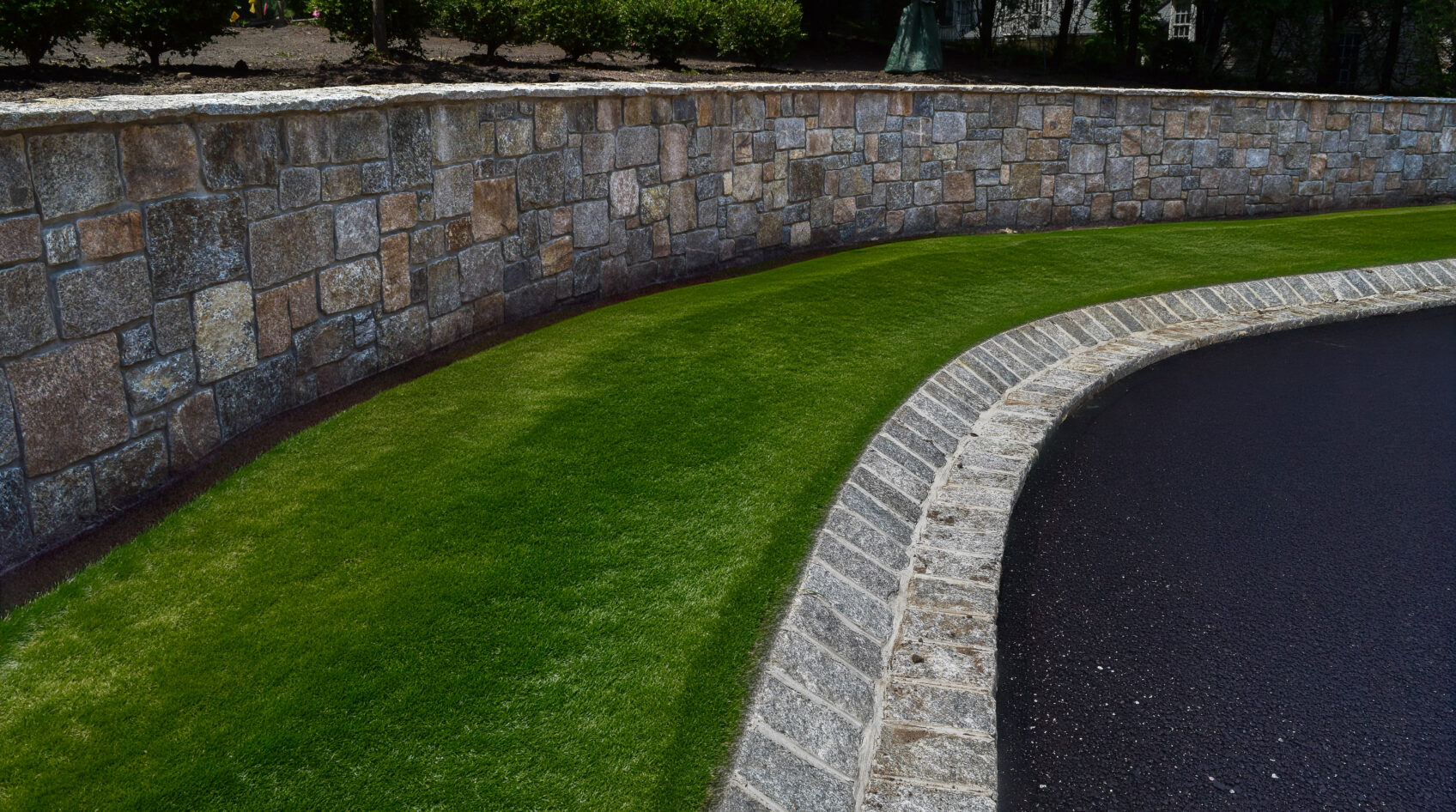
Depending on the project, natural stone retaining walls may be constructed using appropriately selected wallstone, larger stone blocks, or other engineered stone systems.
For example, a natural stone wall surrounding a garden can create a rustic, organic look.
Larger stone blocks can make a bold statement in a sloped backyard, while carefully selected wallstone can complement traditional landscaping.
Natural stone is especially appealing for homeowners who prefer a less uniform appearance.
Each piece has its own color variations, texture, and character, giving the finished wall a distinctive look.
Why Natural Stone Is a Good Choice
Natural durability. Many appropriately selected stone products offer excellent resistance to outdoor weathering.
Timeless appearance. Natural stone can complement a wide range of home styles and landscaping designs.
Unique character. Variations in shape, texture, and color create an organic appearance that manufactured materials may not replicate exactly.
Design versatility. Natural stone can be incorporated into garden walls, terraced landscapes, and other retaining structures when properly designed.
However, not all natural stone is suitable for every retaining wall application.
Different stone types vary in strength, absorption, weather resistance, and installation requirements.
The wall’s structural design is especially important. A decorative dry-stacked garden wall and a tall retaining wall supporting a driveway have very different requirements.
Natural stone construction can also require specialized labor, particularly when individual stones must be selected and fitted.
Best for: Homeowners who want a distinctive, natural-looking retaining wall that complements their landscaping.
3. Poured Concrete: A Strong Option for Structural Applications
Poured concrete retaining walls are another option, particularly for projects requiring a more rigid structural system.
These walls are constructed by placing concrete into forms, often with steel reinforcement designed to resist the forces acting on the wall.
Poured concrete can be used for a variety of applications, including retaining walls near driveways, foundations, and other structures.
It can also create a clean, modern appearance.
For example, a smooth concrete retaining wall can complement contemporary architecture and minimalist landscaping.
Depending on the design, the surface may also be finished or faced with appropriate decorative materials.
Why Poured Concrete Is a Good Choice
Structural capabilities. Properly engineered reinforced concrete walls can support demanding retaining applications.
Modern appearance. Smooth or formed concrete surfaces can complement contemporary landscape designs.
Custom construction. Poured concrete can be designed to meet specific site conditions and structural requirements.
Finish options. Certain decorative treatments or suitable veneer systems can be used to customize the appearance.
However, poured concrete walls require careful engineering, foundation preparation, reinforcement, and drainage design.
Cracking can occur if the wall experiences excessive movement, shrinkage, or other stresses.
Construction may also involve more extensive excavation, formwork, and equipment than some segmental wall systems.
Best for: Projects with specific structural requirements or homeowners who prefer a modern, architectural appearance.
4. Concrete Masonry Units: Flexible Finishing Options
Concrete masonry units, often called CMUs or concrete blocks, can also be used to construct retaining walls when incorporated into an appropriately engineered and reinforced system.
These blocks are commonly used in masonry construction and can provide a structural foundation for different exterior finishes.
For homeowners who want a decorative retaining wall, a properly designed CMU structure may be finished with suitable natural or manufactured stone veneer.
For example, a reinforced concrete block wall with natural stone veneer can create a beautiful appearance that coordinates with an outdoor fireplace, patio, or home’s exterior.
Manufactured stone veneer can also offer a range of colors and textures.
However, it’s important to understand that the veneer is a decorative facing material, not the component responsible for retaining the soil.
The structural wall, reinforcement, foundation, waterproofing, and drainage must be designed for the application.
Best for: Homeowners who want a structural masonry wall with a customized decorative finish.
5. Timber Retaining Walls: A Natural Look with More Maintenance Considerations
Timber retaining walls can create a warm, rustic appearance that works well in certain landscape designs.
They are sometimes used for smaller garden terraces, raised planting areas, and other residential applications.
However, timber generally has different long-term maintenance and durability considerations than concrete or stone.
Even pressure-treated wood can deteriorate over time when exposed to moisture, soil contact, and changing weather conditions.
Wood may also be vulnerable to insect activity, warping, and other forms of deterioration.
For homeowners whose main priority is a long-lasting retaining wall with minimal maintenance, concrete retaining wall blocks or suitable natural stone may be more appealing options.
Best for: Smaller landscape projects where a natural wood appearance is preferred and periodic maintenance or eventual replacement is acceptable.
Comparing Retaining Wall Materials
When choosing a retaining wall material, consider more than just appearance.
Here’s how the most common options compare.
| Material | Appearance | Long-Term Considerations |
|---|---|---|
| Concrete retaining wall blocks | Modern, traditional, stone-inspired | Durable when properly specified and installed; versatile system options |
| Natural stone | Rustic, organic, timeless | Stone quality, structural design, and installation skill matter |
| Poured concrete | Clean, modern, architectural | Requires appropriate engineering, reinforcement, and drainage |
| Reinforced CMU | Customizable with decorative finishes | Requires structural design and proper moisture management |
| Timber | Warm, rustic, natural | More vulnerable to deterioration from moisture and soil contact |
For many residential landscaping projects, concrete retaining wall blocks and appropriately selected natural stone are excellent options because they combine durability with attractive design possibilities.
However, the best choice depends on the wall’s height, location, soil conditions, drainage, and intended function.
What Makes a Retaining Wall Last Longer?
Choosing quality materials is important, but even the strongest retaining wall blocks won’t perform properly if the wall isn’t designed and installed correctly.
A retaining wall must resist pressure from the soil behind it while managing water and remaining stable through changing weather conditions.
Here are some of the most important factors that influence long-term performance.
Proper Base Preparation
A retaining wall needs a stable foundation.
Depending on the wall system and site conditions, installation may require excavation, compacted aggregate, a concrete footing, or another engineered foundation.
A poorly prepared base can contribute to uneven settling, movement, and structural problems.
The appropriate foundation depends on the wall material, soil conditions, height, and design.
Effective Drainage
Water is one of the biggest challenges for retaining walls.
When water accumulates in the soil behind a wall, it can create additional pressure against the structure.
Without an appropriate drainage system, that pressure may contribute to bulging, movement, cracking, or failure.
Many segmental retaining wall systems use specified drainage aggregate and drainage pipes to help manage water behind the wall.
However, drainage design should also address surface runoff and site-specific groundwater conditions.
Simply placing gravel behind a wall isn’t a substitute for a complete drainage plan.
Proper Backfill Materials
The material placed behind a retaining wall is just as important as the blocks or stone used to construct it.
Depending on the design, properly graded aggregate and suitable compacted soils may be required.
Certain retaining walls also use geogrid reinforcement, which extends into the soil behind the wall to help create a stable reinforced mass.
The materials and installation methods should follow the approved wall design.
Professional Installation
Retaining walls aren’t just decorative landscape features. They’re structures that resist the forces created by soil and other loads.
Wall height, nearby slopes, driveways, buildings, fences, and other conditions can affect the engineering requirements.
For larger or more complex projects, a qualified engineer may be needed to evaluate the wall and develop an appropriate design.
Local permit requirements should also be checked before construction begins.
Investing in proper design and installation can help avoid expensive repairs later.
What Is the Best Retaining Wall Material for New Jersey Weather?
For homeowners in Northern New Jersey, seasonal weather is an important consideration.
Retaining walls are exposed to rain, snow, freezing temperatures, and repeated freeze-thaw cycles.
These conditions can affect both the wall materials and the soil surrounding the structure.
Concrete retaining wall blocks specifically manufactured for exterior retaining applications can be a practical choice.
Quality segmental retaining wall products are manufactured to meet performance specifications, including applicable requirements for strength, absorption, and freeze-thaw durability.
Natural stone can also perform well in New Jersey’s climate when the specific stone is appropriate for the application.
However, not all stone products have the same weathering characteristics.
Regardless of the material, drainage and proper installation remain essential.
A wall that doesn’t manage water properly may experience problems even when it’s constructed with durable materials.
For New Jersey homeowners, the best approach is to select materials designed for the intended use and work with a qualified contractor who understands local soil and weather conditions.
Which Retaining Wall Material Requires the Least Maintenance?
If you’re looking for a low-maintenance retaining wall, concrete retaining wall blocks and certain natural stone products are worth considering.
Properly installed concrete wall systems generally require routine inspections and occasional cleaning rather than extensive ongoing maintenance.
Natural stone walls can also be relatively low-maintenance, although their care requirements depend on the stone and construction method.
Poured concrete and reinforced masonry walls may require attention if cracks, drainage problems, or surface deterioration develop.
Timber walls generally require more consideration for moisture-related deterioration over time.
Regardless of the material, homeowners should periodically inspect their retaining walls for signs of movement, leaning, bulging, drainage problems, or displaced materials.
If you notice significant changes, consult a qualified professional rather than attempting cosmetic repairs that may not address the underlying issue.
How to Choose the Right Retaining Wall Material for Your Backyard
Before making your final decision, think about what you want your retaining wall to accomplish.
If you’re creating a small garden terrace, you may have more flexibility in choosing materials and finishes.
If you’re building a taller wall to support a steep slope or create a level patio, structural requirements will play a larger role in material selection.
You’ll also want to consider your home’s architectural style.
Natural stone can complement rustic and traditional landscapes, while smooth concrete retaining wall blocks may be a better fit for a modern home.
For a cohesive backyard design, consider coordinating your retaining wall with nearby patio pavers, walkways, steps, and other hardscape features.
Budget is another important factor.
The total cost of a retaining wall includes more than the visible materials. Excavation, drainage, foundation preparation, reinforcement, engineering, and labor can all influence the final price.
Instead of selecting the least expensive material upfront, focus on choosing a system that’s appropriate for your property and designed for long-term performance.
Build a Beautiful, Long-Lasting Retaining Wall with Braen Supply
A retaining wall is an investment in both the appearance and functionality of your outdoor space.
Whether you’re creating a level backyard, adding dimension to your landscaping, or building a beautiful garden terrace, choosing the right materials can make a big difference.
Concrete retaining wall blocks offer durability and design flexibility, while natural stone provides timeless character and a distinctive appearance.
No matter which option you prefer, proper drainage, structural design, and installation are essential to creating a wall that performs well over time.
At Braen Supply, we offer a selection of retaining wall blocks, natural stone, wall caps, aggregates, and other hardscape materials to help homeowners bring their landscaping projects to life.
Visit one of our showrooms to explore different colors, textures, and material options. Our team can help you compare products and find materials that complement your retaining wall design.
Frequently Asked Questions About Retaining Wall Materials
1. What is the most durable material for a retaining wall?
Properly specified concrete retaining wall systems, reinforced concrete, and certain natural stone products can all provide long-term durability. The best choice depends on the wall’s structural requirements, site conditions, drainage, and installation. No material can compensate for an improperly designed retaining wall.
2. How long does a retaining wall last?
A retaining wall’s lifespan depends on its material, construction quality, drainage, soil conditions, and maintenance. Well-designed concrete and stone retaining walls can perform for decades, but there is no guaranteed lifespan for every installation. Timber walls may require replacement sooner because of moisture-related deterioration.
3. Are concrete retaining wall blocks better than natural stone?
Neither is universally better. Concrete retaining wall blocks offer consistent dimensions, engineered system options, and a wide variety of finishes. Natural stone provides unique character and a timeless appearance. The right choice depends on your design preferences, budget, and structural requirements.
4. What causes retaining walls to fail?
Common contributing factors include inadequate drainage, poor foundation preparation, unsuitable backfill, insufficient reinforcement, and designs that don’t properly account for soil pressure or nearby loads. Proper engineering and installation are essential, especially for taller walls or challenging site conditions.
5. Do retaining walls need drainage behind them?
Retaining walls generally need a drainage strategy appropriate to their design and site conditions. Water buildup behind a wall can create additional pressure and contribute to structural problems. Drainage aggregate, pipes, surface grading, and other measures may be required depending on the wall system.