There’s something about sitting around a fire that makes spending time outdoors feel a little more special.
Whether you’re roasting marshmallows with the kids, enjoying a quiet evening with your spouse, or hosting friends for a backyard gathering, an outdoor fire feature can quickly become one of the most popular spots on your property.
But if you’re planning to add one to your backyard, you might be wondering: Should you choose a fire pit or an outdoor fireplace?
Both can add warmth, character, and a beautiful focal point to your outdoor living space. However, they offer very different experiences when it comes to seating, design, cost, and everyday use.
A fire pit often creates a casual gathering space where people can sit around the flames, while an outdoor fireplace can make a patio feel more like an extension of your indoor living room.
So which one is right for your backyard?
Let’s take a closer look at the differences between fire pits and outdoor fireplaces to help you decide.
What’s the Difference Between a Fire Pit and an Outdoor Fireplace?
Although both features provide an outdoor fire experience, their designs and functions are quite different.
A fire pit is typically a low, open fire feature that allows people to gather around the flames. Fire pits are available in round, square, and rectangular shapes, and they can be built into a patio or purchased as portable units.
Depending on the design, a fire pit may burn wood, natural gas, or propane.
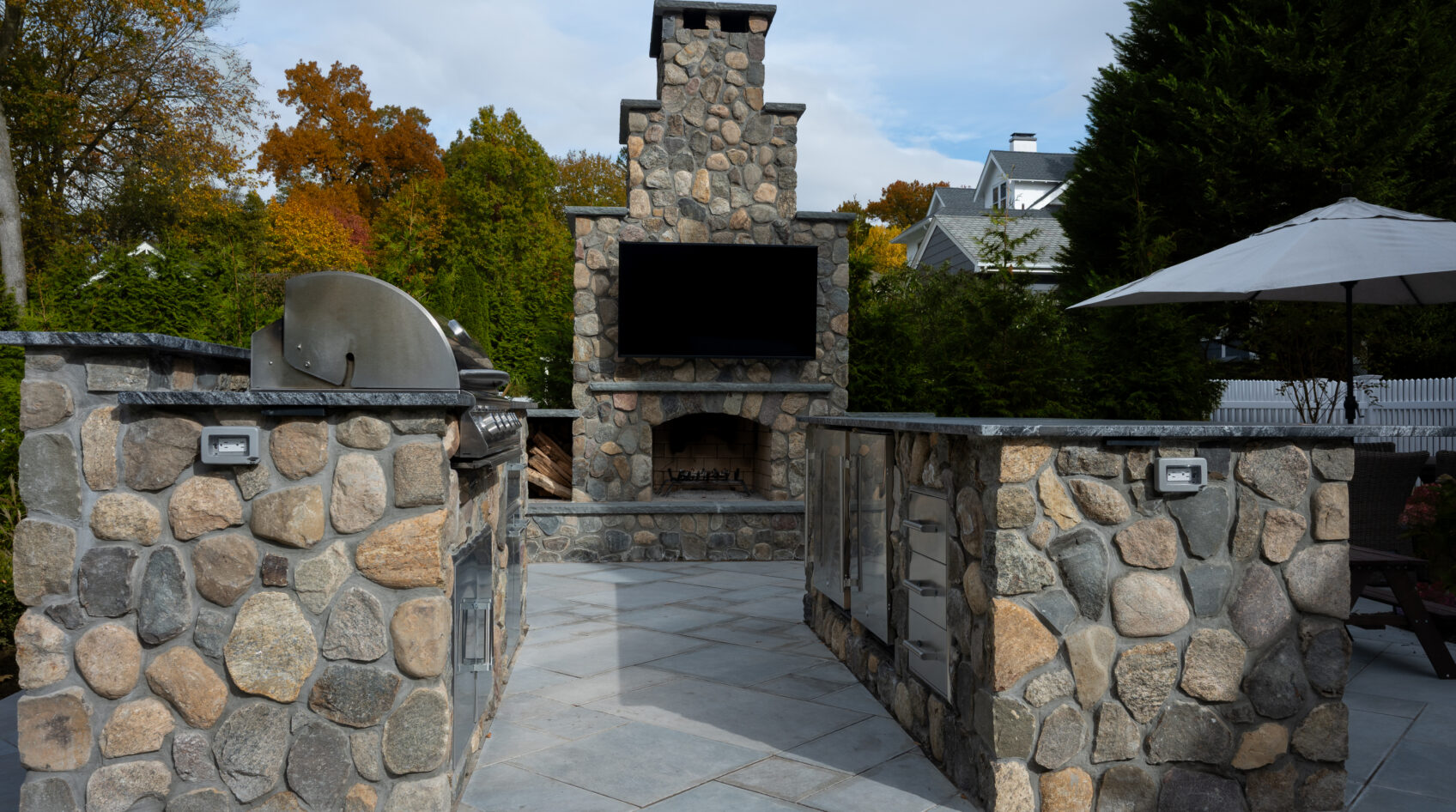
An outdoor fireplace, on the other hand, is generally a taller, more substantial structure with a defined firebox and chimney or approved venting system.
Unlike a fire pit, which can often be enjoyed from several sides, an outdoor fireplace typically directs its heat and visual focus toward a designated seating area.
Both options can complement a variety of backyard styles, from rustic and traditional to sleek and contemporary.
The biggest differences come down to how you want to use the space and the type of atmosphere you want to create.
1. Fire Pits Are Great for Casual Gatherings
If you love hosting friends and family, a fire pit might be the perfect addition to your backyard.
One of the biggest advantages of a fire pit is its open design.
Because people can gather around the flames from multiple sides, fire pits naturally encourage conversation.
You can arrange Adirondack chairs, outdoor lounge furniture, or built-in seating walls around the fire to create a welcoming gathering space.
Round fire pits are especially popular for this type of layout because they allow everyone to face one another.
Square and rectangular fire pits can also work well, particularly in contemporary outdoor spaces.
Another benefit is flexibility.
Fire pits are available in a wide range of sizes and styles, making it possible to find an option that fits your backyard and entertaining needs.
Best for: Homeowners who enjoy casual gatherings, family nights outdoors, and conversational seating arrangements.
2. Outdoor Fireplaces Create a More Defined Living Space
If your goal is to make your patio feel like an outdoor living room, an outdoor fireplace may be the better choice.
Unlike a fire pit, which typically sits in the center of a gathering area, an outdoor fireplace often becomes the architectural focal point of the space.
It can help define where furniture should go and create a natural gathering area for relaxing or entertaining.
For example, you might position an outdoor sofa and two lounge chairs facing a stone fireplace to create a comfortable seating arrangement.
Add a coordinating paver patio, outdoor lighting, and decorative landscaping, and the area can begin to feel like an extension of your home’s interior.
Outdoor fireplaces are also available in a variety of styles.
A fireplace finished with natural stone veneer can create a traditional, timeless appearance, while a manufactured stone veneer with clean lines may complement a more modern patio.
Because fireplaces are typically larger structures, they can make a strong visual statement even when they’re not in use.
Best for: Homeowners who want a dedicated outdoor lounge with a permanent architectural feature.
3. Fire Pits Usually Offer More Budget Flexibility
Cost is often one of the biggest factors when choosing between a fire pit and an outdoor fireplace.
In general, fire pits offer more options for homeowners working with different budgets.
A simple portable fire pit may require a relatively small upfront investment, while a custom-built fire pit surrounded by paving stones and seating walls can become a much larger project.
The cost depends on factors such as size, materials, fuel type, and installation requirements.
For example, a manufactured fire pit kit may offer a more straightforward installation than a custom-designed gas fire feature with built-in seating.
Outdoor fireplaces, on the other hand, are typically more expensive to construct because they’re larger and more complex.
They may require a suitable foundation, structural masonry or an approved fireplace system, a chimney or venting arrangement, and additional installation labor.
Custom stone veneer, decorative caps, and surrounding hardscape features can also affect the final cost.
That doesn’t mean an outdoor fireplace is automatically out of reach, but it’s important to compare the full scope of each project.
Best for: Fire pits generally offer more flexibility for budget-conscious homeowners, while outdoor fireplaces may appeal to those planning a larger outdoor living investment.
4. Outdoor Fireplaces Can Offer a More Sheltered Experience
If you’ve ever sat around a fire pit on a breezy evening, you know how quickly the direction of the wind can affect your comfort.
With an open fire pit, smoke and heat can shift depending on wind conditions.
This is especially noticeable with wood-burning fire pits, where smoke may blow toward different seating areas.
Outdoor fireplaces can provide a somewhat more sheltered experience because of their enclosed firebox and defined opening.
A properly designed wood-burning fireplace uses a chimney to help direct combustion gases upward, although wind and other conditions can still affect draft and smoke movement.
The fireplace structure may also block some wind from certain directions, depending on its placement.
However, neither option guarantees a smoke-free or wind-free experience.
Gas fire features can reduce smoke associated with burning wood, but they still need to be installed and operated according to the manufacturer’s requirements.
When deciding between the two, think about your backyard’s typical wind patterns and where you’ll place the seating.
Best for: Homeowners who prefer a more defined seating area and want to consider ways to reduce exposure to shifting smoke and wind.
5. Fire Pits Can Be Easier to Fit into Smaller Backyards
Not every backyard has room for a large outdoor fireplace.
If you’re working with a smaller patio or limited outdoor space, a fire pit may offer more flexibility.
Compact fire pits can fit into a variety of layouts, provided there is enough room for safe seating and the required clearances.
A small round fire pit with a few chairs can create a cozy gathering space without requiring a large masonry structure.
Portable fire pits may also offer more flexibility in certain settings, although they must only be used in locations approved by the manufacturer and local regulations.
Outdoor fireplaces generally require more planning because of their height, footprint, foundation requirements, and placement considerations.
However, a compact fireplace can still work beautifully in a smaller backyard when the design is carefully planned.
The most important factor is how much usable space remains once the fire feature and seating are in place.
You don’t want to create a beautiful fire feature only to discover that there’s not enough room to move around comfortably.
Best for: Fire pits are often easier to incorporate into smaller spaces, but the final choice depends on the layout and safety requirements.
6. Outdoor Fireplaces Can Create a More Luxurious Appearance
Both fire pits and outdoor fireplaces can make a backyard look beautiful, but they create different visual effects.
Fire pits often have a relaxed, inviting appearance.
They work especially well in casual outdoor gathering spaces, garden retreats, and open patios.
When surrounded by decorative concrete pavers, natural stone, or built-in seating walls, a fire pit can become a beautiful focal point.
Outdoor fireplaces tend to create a more architectural statement.
Their height and structure can make them feel like a permanent extension of the home, particularly when finished with complementary stone veneer.
For example, a traditional home might feature an outdoor fireplace with natural stone veneer that coordinates with the home’s exterior.
A modern backyard could incorporate a sleek fireplace with a neutral finish and clean architectural lines.
Neither option is necessarily more attractive than the other.
The best choice depends on the atmosphere you’re trying to create.
Best for: Fire pits suit relaxed gathering spaces, while outdoor fireplaces are often ideal for homeowners who want a more formal or architectural outdoor living design.
7. Maintenance Depends on the Fuel Type and Materials
Before choosing a fire feature, it’s worth thinking about how much maintenance you’re comfortable with.
Wood-burning fire pits require regular ash removal, firewood storage, and occasional cleaning.
You’ll also need to monitor the condition of the fire pit’s interior components and surrounding materials.
Gas fire pits eliminate the need to store firewood and clean up wood ash, but they still require periodic inspections and maintenance of burners, connections, and other components.
Outdoor fireplaces have similar maintenance considerations, depending on whether they’re wood-burning or gas.
Wood-burning fireplaces may also require chimney inspections and cleaning to address soot, creosote, and other deposits.
The exterior materials matter, too.
Natural stone veneer, manufactured stone veneer, and masonry components should be maintained according to their manufacturers’ recommendations.
It’s important to remember that decorative stone veneer and standard patio wall blocks aren’t automatically suitable for direct flame exposure.
Fire features must be constructed with components designed for the intended temperatures and fuel type.
Best for: Gas fire features may appeal to homeowners looking for more convenient operation, while wood-burning options suit those who enjoy a traditional fire experience and don’t mind additional upkeep.
Fire Pit vs. Outdoor Fireplace: A Quick Comparison
| Feature | Fire Pit | Outdoor Fireplace |
|---|---|---|
| Seating | Usually arranged around the fire | Usually positioned facing the fire |
| Atmosphere | Casual and social | Cozy and room-like |
| Initial cost | Often lower, depending on design | Typically higher |
| Space requirements | More flexible sizes | Usually needs more planning and space |
| Design | Round, square, rectangular | Vertical architectural feature |
| Fuel options | Wood, propane, natural gas | Wood or gas, depending on system |
| Maintenance | Depends on fuel and materials | Depends on fuel, materials, and venting |
| Best use | Gatherings and conversation | Outdoor living rooms and lounge areas |
Can You Have Both a Fire Pit and an Outdoor Fireplace?
Absolutely, if your backyard has enough space and the design meets applicable safety requirements.
Some homeowners choose to incorporate both features into larger outdoor living spaces.
For example, an outdoor fireplace might serve as the focal point of a covered or open-air lounge, while a separate fire pit creates a more casual gathering area farther into the backyard.
This approach can give you different places to relax and entertain.
However, it’s important to plan the layout carefully.
Fire features must be appropriately separated from structures, combustible materials, and one another.
Covered installations require particular attention because many fire pits and fireplaces aren’t approved for use beneath roofs, pergolas, or other overhead structures.
Always follow the manufacturer’s instructions and applicable local regulations.
If you’re planning a larger outdoor living project, a landscape designer or qualified contractor can help determine whether incorporating both features makes sense.
How to Choose the Right Fire Feature for Your Backyard
Still having trouble deciding?
Start by asking yourself how you plan to use your outdoor space.
If you love entertaining groups of friends and want everyone to gather around the flames, a fire pit may be the better fit.
If you’re dreaming of a cozy outdoor living room where you can relax on a sofa and enjoy the warmth of a fire, an outdoor fireplace might be more appealing.
Next, consider your available space.
A compact fire pit may work well on a smaller patio, while a larger outdoor fireplace often requires more room and a carefully planned layout.
Your budget will also play an important role.
Fire pits offer a wide range of price points, while outdoor fireplaces generally involve more substantial construction costs.
Finally, think about how the fire feature will complement the rest of your backyard.
Coordinating the fire pit or fireplace with your patio pavers, natural stone, wall materials, and landscaping can help create a cohesive design.
Whichever option you choose, proper installation, appropriate clearances, and compliance with local fire regulations are essential.
Find the Right Fire Feature for Your Outdoor Living Space
Both fire pits and outdoor fireplaces can make your backyard a more inviting place to spend time.
The right choice comes down to your lifestyle, budget, available space, and the type of outdoor atmosphere you want to create.
If you prefer casual gatherings and flexible seating, a fire pit may be the perfect fit.
If you want a permanent architectural feature that makes your patio feel like an outdoor living room, an outdoor fireplace could be the better option.
At Braen Supply, we offer a variety of outdoor fire feature products, patio pavers, natural stone, and hardscape materials to help homeowners create beautiful outdoor living spaces.
Our team can help you explore your options, compare materials, and find products that complement your backyard design.
Frequently Asked Questions About Fire Pits and Outdoor Fireplaces
1. Is a fire pit or outdoor fireplace better for a small backyard?
A fire pit is often easier to incorporate into a smaller backyard because it’s available in more compact sizes and doesn’t typically require a large vertical structure. However, both options need appropriate clearances and enough room for safe seating and circulation. A compact outdoor fireplace may also work if the layout and installation requirements allow.
2. Is an outdoor fireplace more expensive than a fire pit?
In general, outdoor fireplaces cost more to build because they often require larger structures, foundations, venting systems, and more installation labor. Fire pits are available at a wider range of price points, from portable models to custom-built installations. The final cost depends on the materials, fuel type, size, and project complexity.
3. Which provides more heat: a fire pit or an outdoor fireplace?
Neither option is automatically warmer. Heat output depends on the fuel type, burner or firebox design, size, and operating conditions. Fire pits can provide warmth to people seated around multiple sides, while outdoor fireplaces typically direct more of the experience toward the seating area in front. Wind and seating distance also affect comfort.
4. Can you put a fire pit or outdoor fireplace on a paver patio?
Yes, both can be incorporated into paver patios when the installation is properly designed. However, standard patio pavers and wall blocks aren’t necessarily rated for direct flame or extreme heat exposure. The fire feature must use suitable components, and the patio may require a dedicated foundation, heat protection, or other installation details specified by the manufacturer.
5. Do you need a permit for an outdoor fire pit or fireplace in NJ?
Permit requirements vary depending on the municipality, fuel type, size, and whether the fire feature is permanent or portable. Gas installations, masonry fireplaces, and certain permanent structures may require building, plumbing, or other permits. Before installation, check with your local construction office and fire prevention authority to confirm applicable requirements and restrictions.