
There’s something special about gathering around a warm fire on a cool evening. Whether you’re roasting marshmallows with family, entertaining friends, or simply relaxing after a long day, an outdoor fireplace or fire pit can turn your backyard into a welcoming retreat.
Beyond providing warmth and ambiance, fire features can become beautiful focal points that enhance your outdoor living space. From rustic natural stone fireplaces to sleek, modern fire pits, there are countless ways to incorporate fire into your backyard design.
But before choosing materials or deciding on a style, there are several important factors to consider. Location, fuel type, safety, and surrounding hardscape materials all play a role in creating a fire feature that’s both beautiful and functional.
Here’s everything homeowners should know before starting an outdoor fireplace or fire pit project, along with some design inspiration to help bring their vision to life.
1. Start With a Plan for Your Outdoor Living Space
Before selecting a fireplace or fire pit, take a good look at your backyard and consider how you want to use the space.
Are you hoping to create a cozy gathering area for family and friends? Do you want a dramatic fireplace to anchor your outdoor patio? Or are you looking for a simple fire pit that adds warmth to an existing seating area?
Your answers will help determine the size, style, and location of your fire feature.
Other important considerations include:
- Available space: Determine how much room you have for the fire feature, surrounding seating, and safe circulation.
- Location: Consider proximity to your home, outdoor structures, trees, and landscaping.
- Wind direction: Think about how prevailing winds may affect smoke, flames, and seating comfort.
- Seating arrangements: Plan enough space for guests to gather comfortably while maintaining appropriate clearances from the fire.
- Existing hardscaping: Consider how your fire feature will coordinate with nearby patios, walkways, retaining walls, and outdoor kitchens.
- Local regulations: Check municipal requirements regarding open burning, gas installations, permits, and required setbacks.
A thoughtfully planned fire feature should feel like a natural extension of your backyard rather than an afterthought.
2. Understand Your Budget and Project Timeline
Outdoor fireplaces and fire pits can range from simple, prefabricated designs to elaborate custom-built structures, so establishing a realistic budget early in the process is essential.
The total cost of your project will depend on the size, materials, fuel type, installation requirements, and additional features you choose.
For example, a basic wood-burning fire pit constructed with compatible concrete wall blocks may be more budget-friendly than a custom natural stone fireplace with a chimney and built-in seating.
Beyond the fire feature itself, remember to account for expenses such as site preparation, foundations, patio materials, gas or electrical connections, drainage, and landscaping.
It’s also important to consider ongoing operating costs. Gas fire features may require professional servicing, while wood-burning options involve purchasing or storing firewood and regularly removing ashes.
If you’re planning a larger outdoor living project, consider incorporating your fireplace or fire pit into the initial design. This can help reduce the need for additional excavation or hardscape modifications later.
Project timelines vary depending on the complexity of the design, material availability, permits, and contractor scheduling.
Planning ahead, especially before the busy spring and summer construction seasons, can help make the process smoother.
3. Choose Between an Outdoor Fireplace and a Fire Pit
One of the first decisions you’ll need to make is whether an outdoor fireplace or fire pit is the better fit for your backyard.
Both options can create an inviting atmosphere, but they offer different experiences and design possibilities.
Outdoor Fireplaces: A Statement Feature
An outdoor fireplace can serve as a dramatic focal point, helping define a dedicated outdoor living area.
Because fireplaces typically have a more vertical structure, they can create the feeling of an outdoor room, especially when incorporated into a patio or covered living space designed for that type of installation.
Fireplaces are often positioned along the edge of a seating area, allowing guests to gather in front of the flames.
They can also complement outdoor kitchens, dining spaces, and lounge areas.
For homeowners who want a more permanent architectural feature, a custom outdoor fireplace can be an attractive choice.
Fire Pits: Casual and Inviting
Fire pits offer a more open, social gathering experience.
Because seating can often be arranged around multiple sides, fire pits encourage conversation and create a relaxed atmosphere.
They also offer plenty of design flexibility, with options ranging from traditional circular designs to modern square and rectangular styles.
Fire pits can be incorporated into both large and small backyards, making them a popular option for homeowners looking to add warmth and character to an outdoor space.
When deciding between the two, think about how you entertain, the amount of available space, and the overall atmosphere you want to create.
4. Select the Right Fuel Type for Your Fire Feature
The fuel type you choose will affect everything from the appearance of your fire feature to its maintenance requirements and everyday convenience.
Wood-Burning Fire Features
For homeowners who love the traditional campfire experience, wood-burning fire pits and fireplaces offer the familiar crackling sounds, glowing embers, and natural ambiance of a real wood fire.
Wood-burning designs can complement rustic, traditional, and natural stone outdoor living spaces.
However, they require proper ventilation, regular ash removal, and appropriate firewood storage.
Smoke can also be a consideration, particularly in smaller backyards or areas where homes are close together.
Before choosing a wood-burning design, check local ordinances and any applicable restrictions on recreational fires.
Natural Gas Fire Features
Natural gas fireplaces and fire pits offer convenience and consistent operation.
Many models can be ignited with a switch or electronic control, eliminating the need to build a wood fire.
They’re especially appealing for homeowners who entertain frequently and want a fire feature that’s easy to use.
Natural gas systems require an appropriate gas supply and professional installation, so it’s important to account for these requirements during the planning phase.
Propane Fire Features
Propane is another convenient option, particularly for homeowners who don’t have access to a natural gas connection.
Some propane fire pits use concealed tanks, while larger built-in systems may require a separate tank location.
Propane features can offer design flexibility, but fuel storage, tank access, ventilation, and manufacturer requirements must be considered.
No matter which fuel type you choose, always use a fire feature specifically designed and approved for its intended fuel and installation location.
5. Choose the Right Materials for Your Fireplace or Fire Pit
Your material selection plays an important role in the appearance, durability, and maintenance of your outdoor fire feature.
The right materials should complement your home’s architecture and surrounding hardscaping while being appropriate for the heat and weather conditions they’ll experience.
Here are some popular options to consider.
Natural Stone Veneer: Timeless Beauty and Character
Natural stone veneer is a beautiful choice for outdoor fireplaces and fire pit surrounds.
Its unique textures, natural color variations, and timeless appearance can complement everything from rustic backyard retreats to sophisticated outdoor entertaining spaces.
Natural stone thin veneer can be used as a decorative finish over an appropriately constructed fireplace or fire pit structure.
For a traditional appearance, consider irregular stone profiles in warm earth tones. For a more contemporary design, linear stone profiles in shades of gray or charcoal can create a sleek, refined look.
It’s important to remember that decorative stone veneer is not a substitute for the fire-rated materials required inside a firebox or other areas directly exposed to flames.
Concrete Wall Blocks: Versatile and Design-Friendly
Concrete wall blocks and compatible fire pit systems are popular choices for homeowners looking to create a coordinated outdoor living space.
Available in a variety of colors, textures, and shapes, these materials can complement nearby patios, retaining walls, and seating areas.
Many manufacturers offer fire pit kits or systems designed to coordinate with their hardscape collections.
For a cohesive appearance, consider selecting wall blocks that complement your patio pavers.
Be sure to use an approved fire pit system, including any required heat-resistant inserts, liners, and clearances, rather than assuming standard landscape wall blocks can withstand direct fire exposure.
Brick: Classic and Welcoming
Brick offers a traditional appearance that works beautifully with colonial, farmhouse, and classic backyard designs.
Its warm colors and familiar texture can create an inviting atmosphere, especially when paired with natural stone patios and landscaping.
Brick can be used as a decorative exterior material, while the firebox itself must be constructed with appropriate fire-rated components.
Porcelain and Natural Stone Accents
For homeowners who prefer a modern appearance, porcelain and natural stone accents can add contrast and visual interest to a fire feature.
For example, a contemporary fireplace might incorporate a smooth stone hearth, linear veneer, or a contrasting mantel.
However, not all porcelain or natural stone products are suitable for high-temperature applications.
Always confirm that the selected material and installation system are approved for the specific location and expected heat exposure.
6. Don’t Overlook Safety, Ventilation, and Placement
A beautiful fire feature should also be safe and comfortable to use.
Before installation begins, carefully evaluate where the fireplace or fire pit will be located and how it will interact with surrounding structures and landscaping.
Wood-burning features need appropriate smoke management and clearances, while gas systems require properly designed fuel connections and ventilation.
Fire features should never be installed beneath pergolas, roofs, or other overhead structures unless the specific appliance is approved for that application and all required clearances and ventilation provisions are satisfied.
Your contractor should also evaluate the stability of the foundation, nearby combustible materials, and the placement of seating areas.
If you’re incorporating a fire feature into a patio, it’s important to select compatible materials and protect surrounding surfaces from excessive heat.
In New Jersey, local fire regulations and building requirements may affect where and how outdoor fire features can be installed.
Working with qualified professionals and following manufacturer instructions can help ensure your finished project is safe and enjoyable.
7. Fire Pit and Outdoor Fireplace Design Inspiration
Once you’ve worked through the practical details, it’s time to explore the creative possibilities!
Whether you’re drawn to cozy, rustic spaces or modern outdoor entertaining areas, a fireplace or fire pit can help define your backyard’s personality.
Create a Cozy Gathering Space With a Natural Stone Fire Pit
For a warm, welcoming backyard retreat, consider a circular fire pit surrounded by comfortable seating and natural stone accents.
A patio featuring earth-toned concrete pavers or natural stone can create a relaxed atmosphere that feels connected to the surrounding landscape.
Add Adirondack chairs, soft outdoor cushions, and subtle landscape lighting to complete the look.
This design is especially appealing for homeowners who enjoy casual evenings with family and friends.
Make a Statement With a Grand Outdoor Fireplace
If you’re looking for a dramatic backyard focal point, a custom outdoor fireplace can make a lasting impression.
Consider a tall natural stone veneer fireplace positioned at the end of a spacious patio.
A substantial mantel, coordinating stone hearth, and comfortable lounge furniture can create the feeling of an outdoor living room.
For a polished appearance, carry similar stone colors and textures into nearby retaining walls, columns, or outdoor kitchen features.
Embrace Modern Design With a Linear Fire Pit
Modern outdoor living spaces often emphasize clean lines, neutral colors, and minimalist features.
A rectangular gas fire pit can complement this aesthetic beautifully.
Consider surrounding it with large-format concrete or outdoor-rated porcelain pavers in shades of gray, charcoal, or warm beige.
Pair the fire feature with streamlined outdoor furniture, simple landscaping, and subtle lighting for a sophisticated appearance.
A linear fire feature can also help visually separate dining and lounging areas within a larger patio.
Incorporate Built-In Seating Around Your Fire Pit
Built-in seating can make your fire pit area feel more permanent and intentional.
Consider incorporating a curved or straight seating wall constructed with coordinating landscape wall blocks.
Seat walls can help define the gathering area while reducing the need for additional outdoor furniture.
For a cohesive look, select wall caps and pavers that complement your fire pit materials.
Be sure to maintain appropriate distances between the seating wall and the fire feature so guests can sit comfortably without excessive heat exposure.
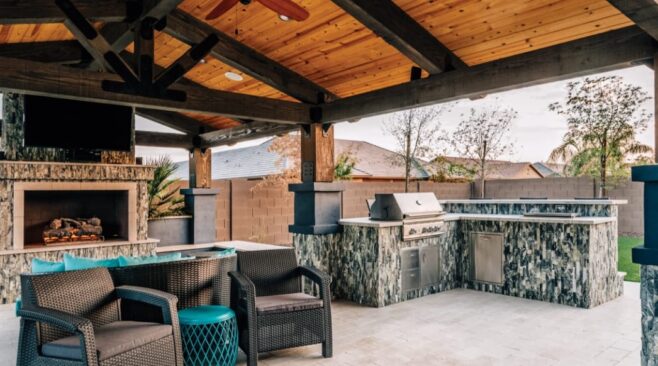
Pair Your Fireplace With an Outdoor Kitchen
If you love entertaining, consider designing your outdoor fireplace alongside an outdoor kitchen or dining area.
An outdoor kitchen provides a convenient place to prepare meals, while a nearby fireplace creates a comfortable space for guests to relax before or after dinner.
Using complementary stone veneer, countertops, and patio materials can help connect the two areas visually.
For larger backyards, consider creating separate cooking, dining, and lounging zones connected by coordinating paver walkways.
Create a Rustic Retreat With Natural Materials
For homeowners who prefer an organic, nature-inspired aesthetic, natural stone is an excellent starting point.
Imagine a rustic stone fireplace surrounded by a bluestone patio, lush landscaping, and warm outdoor lighting.
Wood-inspired furniture, neutral cushions, and decorative planters can enhance the cozy atmosphere.
This style works particularly well in wooded backyards or properties with established landscaping.
Maximize a Small Backyard With a Compact Fire Pit
You don’t need an enormous backyard to enjoy an outdoor fire feature.
A compact fire pit can become the centerpiece of a smaller patio without overwhelming the available space.
Consider a simple square or circular design paired with a few comfortable chairs.
Using a consistent paving material throughout the area can make the space feel more open and connected.
For smaller properties, a properly approved gas fire feature may offer convenient operation, although clearances and local regulations still determine whether the installation is appropriate.
8. Plan for Long-Term Maintenance
When choosing an outdoor fireplace or fire pit, it’s important to consider how much maintenance will be required.
Wood-burning features need regular ash removal and periodic inspection for damage caused by heat and weather.
Outdoor fireplaces with chimneys may also require professional cleaning and inspection.
Gas fire features should be maintained according to manufacturer recommendations, including periodic inspection of burners, ignition components, and fuel connections by qualified professionals.
The surrounding masonry may also need occasional cleaning and inspection.
Natural stone veneer, concrete wall blocks, and brick can experience weathering over time, especially in climates with freezing temperatures.
Regularly checking mortar joints, caps, and other exposed components can help identify maintenance needs before they become larger problems.
Selecting durable materials and following recommended care practices can help preserve your outdoor fire feature for years to come.
9. Work With Experienced Contractors and Material Suppliers
A successful outdoor fireplace or fire pit project requires more than attractive materials.
Proper construction, safe fuel connections, appropriate foundations, and careful attention to heat exposure are all essential.
Before hiring a contractor, ask about their experience installing the type of fire feature you’re considering.
Review previous projects and discuss the materials, installation requirements, permits, and warranties involved.
It’s also helpful to work with a knowledgeable masonry and landscape materials supplier who can guide you through different stone veneers, wall blocks, pavers, and decorative finishes.
Seeing materials in person can make a big difference when coordinating your fire feature with an existing patio or planning an entirely new outdoor living space.
Ready to Bring Warmth to Your Backyard?
An outdoor fireplace or fire pit can transform your backyard into a comfortable gathering place that you’ll enjoy throughout the seasons.
Whether you’re envisioning a rustic natural stone fireplace, a sleek modern fire pit, or a complete outdoor entertaining area, thoughtful planning and quality materials can help bring your ideas to life.
At Braen Supply, we’re here to help you create an outdoor space you’ll love. Explore our selection of natural stone veneer, concrete pavers, wall blocks, fire feature materials, and complementary hardscaping products.
Visit one of our showrooms in Wanaque, Haledon, or Randolph, NJ, to explore materials in person and get inspired for your next outdoor living project.
From cozy evenings by the fire to unforgettable gatherings with family and friends, your dream backyard starts with the right design.
Frequently Asked Questions About Outdoor Fireplaces and Fire Pits
1. What should I consider before installing an outdoor fireplace or fire pit?
Before installing an outdoor fireplace or fire pit, consider your backyard’s size, layout, budget, and how you plan to use the space. You’ll also want to choose between wood-burning, natural gas, and propane options, evaluate safe placement and ventilation requirements, and select materials appropriate for outdoor conditions and heat exposure. Checking local regulations and working with experienced professionals can help ensure a successful project.
2. Is an outdoor fireplace or fire pit better for my backyard?
The best option depends on your available space, entertaining preferences, and desired design. Outdoor fireplaces create a dramatic focal point and can help define a dedicated outdoor living area. Fire pits offer a more casual gathering experience, allowing guests to sit around multiple sides of the fire. Both can enhance your backyard when properly planned and installed.
3. What are some popular outdoor fireplace and fire pit design ideas?
Popular design ideas include natural stone fireplaces, modern rectangular gas fire pits, circular fire pits with built-in seating, and fire features coordinated with outdoor kitchens. Homeowners are also incorporating large-format patio pavers, natural stone veneer, and landscape lighting to create inviting outdoor spaces. Choosing complementary colors and materials can help achieve a cohesive appearance.
4. What materials are best for an outdoor fireplace or fire pit?
Natural stone veneer, brick, and compatible concrete wall block systems are popular choices for outdoor fireplaces and fire pits. Natural stone provides timeless character, while concrete wall blocks offer design flexibility and can coordinate with surrounding hardscaping. Regardless of the exterior finish, fire-rated components and approved construction methods are essential in areas exposed to high temperatures.
5. How can I make my outdoor fireplace or fire pit area look more luxurious?
You can elevate your outdoor fire feature by incorporating natural stone veneer, decorative wall caps, coordinated patio pavers, and thoughtfully designed seating areas. Large-format pavers, built-in seating walls, subtle landscape lighting, and comfortable outdoor furniture can create a sophisticated atmosphere. For a cohesive, high-end appearance, coordinate your fireplace or fire pit materials with nearby outdoor kitchens, retaining walls, and other hardscape features.