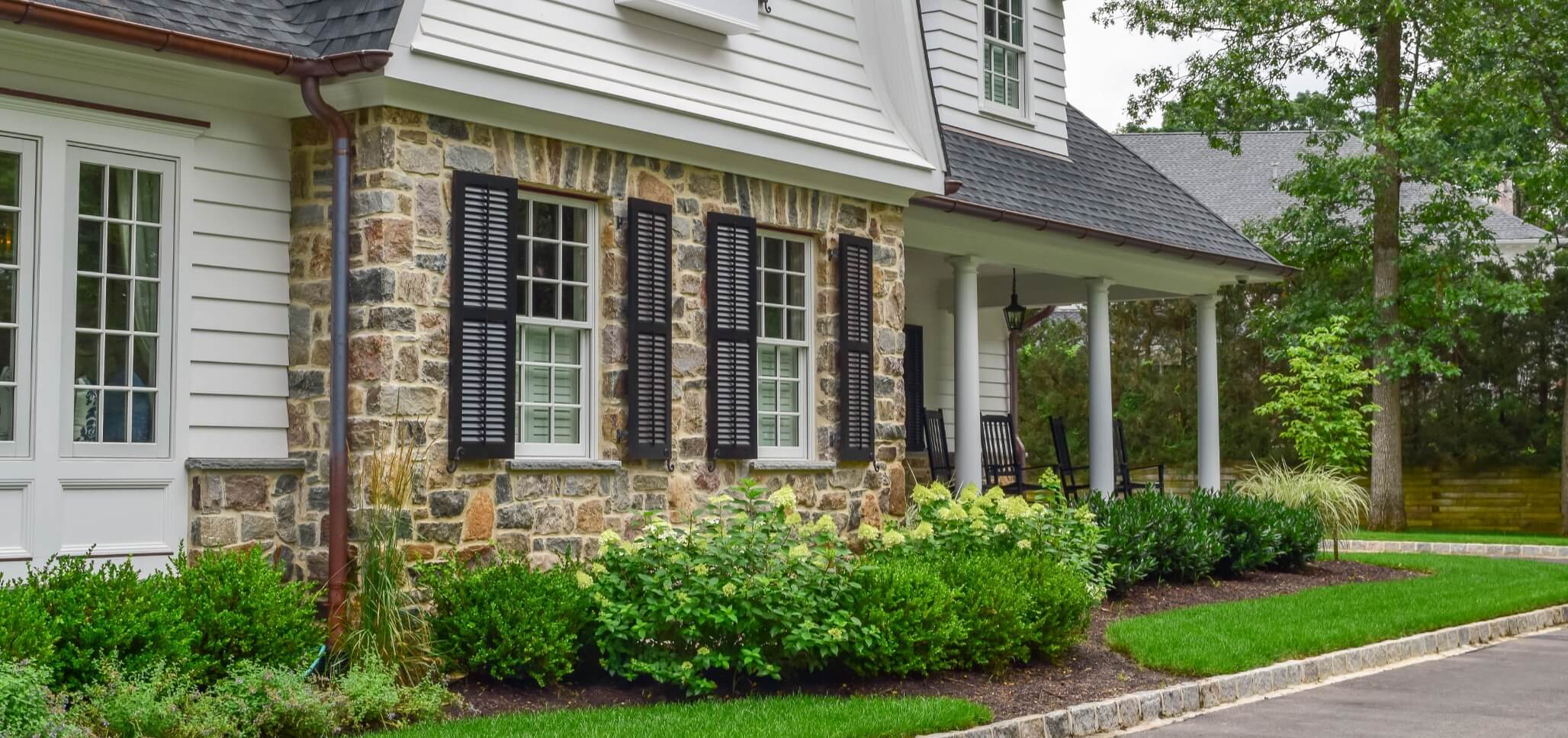
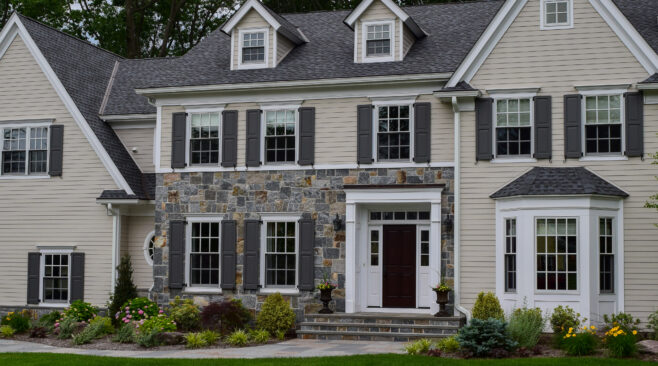
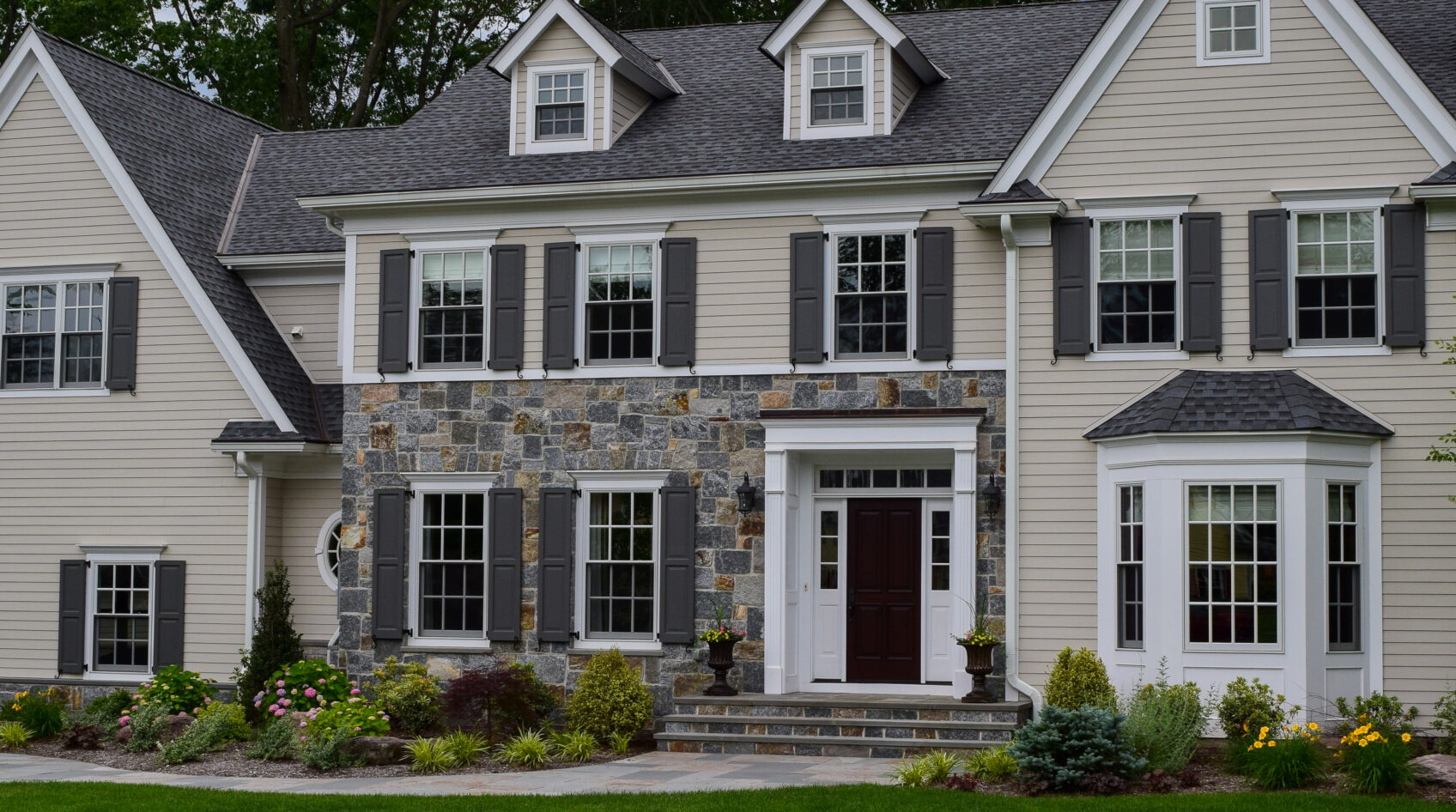
Thin veneer offers the classic look of solid stone or brick without the bulk and cost. Slices of natural material, about an inch thick, weigh less than 15 pounds per square foot, so they can be attached to walls that would never be able to hold full-bed masonry. Modern cutting techniques can also produce veneer in long planks and large panels with a variety of textures and shapes. Lightweight and versatile thin veneer is now a go-to choice for designers seeking both contemporary polish and old-world charm.
Modern Appeal
Contemporary architecture celebrates simple forms and contrasting materials. Thin stone veneer suits this aesthetic because it adds texture while preserving clean lines. Oversized slate or limestone planks emphasize horizontality and pair beautifully with glass or steel. Subtle finished, like flamed or chiseled textures, also introduce softness and dimension. In modern design spaces, stick to neutral colors like gray or charcoal and use veneer as an accent. A thin-stone kitchen or fire pit outdoors ties the landscape to a modern home and stands up to the elements.
Timeless Tradition
Thin veneer also replicates the richness of traditional masonry. Natural thin stone is typically less than 1 1/2 inches thick and weighs around 10-15 pounds per square foot, making it suitable for retrofitting older houses. Rustic ledgestone and rubble profiles lend cottages and farmhouses an aged, hand-built feel as well. Alternatively, manufactured lines modeled after 19th-century foundation stones feature irregular shapes and earthy tones giving new builds instant heritage. Thin brick veneer (slices of real brick about 3/4 to 1 1/4 inch thick) creates classic running bond or herringbone patterns on colonials or farmhouses and installs easily on wood or concrete walls. Because thin stone is so light, installation is faster and shipping costs are lower, keeping renovation budgets manageable when compared to solid stone construction. Adding a stone wainscot, wrapped column or refreshed chimney enhances curb appeal without heavy construction.
Versatility and Interiors
Designers appreciate thin veneer’s ability to bridge styles. Matching stone colors across a modern addition and a historic core creates unity, while mixing smooth planks with rougher textures adds depth. Natural stone veneer ages gracefully and doesn’t off-gas or fade like some manufactured products, making it a sustainable choice that provides long-term value. Indoors, thin veneer is popular for accent walls, backsplashes, and fireplace surrounds, while brick veneers suit trends like exposed loft walls, whitewashing and German-schmear finishes.
Whether your tastes trend modern or traditional, thin veneer opens a world of design possibilities. It gives you authentic stone or brick character without the structural demands of full masonry. Contemporary homes benefit from large, smooth planks and restrained palettes, while cottages and historic houses gain warmth from irregular ledgestone and classic brick patterns. By using thin veneer to refresh exteriors and highlight interiors, you can bring both current style and timeless character to your home. Whether you’re renovating an older dwelling or breaking ground on a contemporary retreat, this adaptable material helps you craft a facade that expresses your personality and stands the test of time.
Quality design deserves quality materials. Partner with Braen Supply to source reliable stone, veneer, and pavers tailored to your project requirements.
About the Author
Written in the voice of Braen Supply’s in-house expert persona, Gabriel Shaw. Shaw embodies the collective knowledge of our team and shares practical, straightforward tips to help landscape professionals make the most of their landscaping and masonry projects – drawing on decades of experiences serving New Jersey and the tri-state area.