There’s nothing quite like having a beautiful patio to enjoy right outside your back door. Whether you’re sipping your morning coffee, hosting a summer barbecue, or relaxing after a long day, a patio can make your backyard feel like an extension of your home.
But when you’re planning a new outdoor living space, there’s one big decision to make: Should your patio be covered or uncovered?
A covered patio can provide shade, shelter, and a cozy outdoor living atmosphere. An uncovered patio, on the other hand, offers an open-air experience with plenty of sunshine and flexibility.
Both options have their advantages, and the best choice depends on your backyard, budget, and how you plan to use the space.
Let’s take a closer look at covered vs. uncovered patios to help you decide which one is right for your home.
What Is a Covered Patio?
A covered patio is an outdoor living area with a permanent or semi-permanent overhead structure designed to provide some degree of shade or weather protection.
Depending on the design, a covered patio might feature a solid roof, pavilion, attached roof extension, or pergola.
However, not every patio cover provides the same level of protection.
A solid roof can offer substantial shelter from direct sunlight and rain, while an open pergola generally provides partial shade without fully blocking precipitation.
Covered patios are popular among homeowners who want to create an outdoor living area that feels more like an extension of their indoor space.
For example, a covered paver patio with comfortable seating, outdoor lighting, and a dining table can create a welcoming place to gather throughout much of the year.
Benefits of a Covered Patio
Protection from the elements. Depending on the roof design, a covered patio can provide shade and shelter from rain, allowing you to enjoy the space in a wider range of weather conditions.
A comfortable entertaining space. Covered patios can make outdoor dining and lounging more comfortable during hot summer afternoons.
More opportunities for outdoor living features. Lighting, ceiling fans, and certain outdoor-rated furnishings may be easier to incorporate beneath an appropriately designed cover.
A defined outdoor living area. An overhead structure can make your patio feel like a dedicated outdoor room.
Potential Drawbacks of a Covered Patio
Covered patios typically involve additional construction costs.
Depending on the design, the project may require structural footings, roofing materials, drainage systems, electrical work, and permits.
A covered patio can also reduce the amount of direct sunlight reaching the space.
If your backyard is already heavily shaded, a large roof structure may make the area feel darker.
Maintenance is another consideration.
Roofing, gutters, structural components, and other features may require periodic inspection and upkeep.
What Is an Uncovered Patio?
An uncovered patio is an open-air outdoor living area without a permanent overhead roof or covering.
It may feature concrete pavers, porcelain pavers, natural stone, or other exterior-rated hardscape materials.
Uncovered patios are popular because they provide a direct connection to the surrounding landscape.
They allow homeowners to enjoy sunshine, fresh air, and an unobstructed view of the sky.
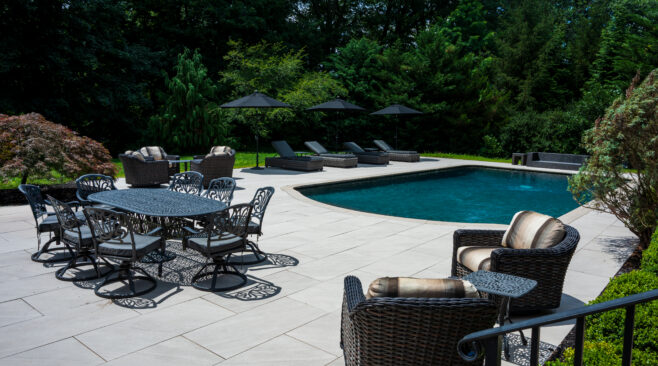
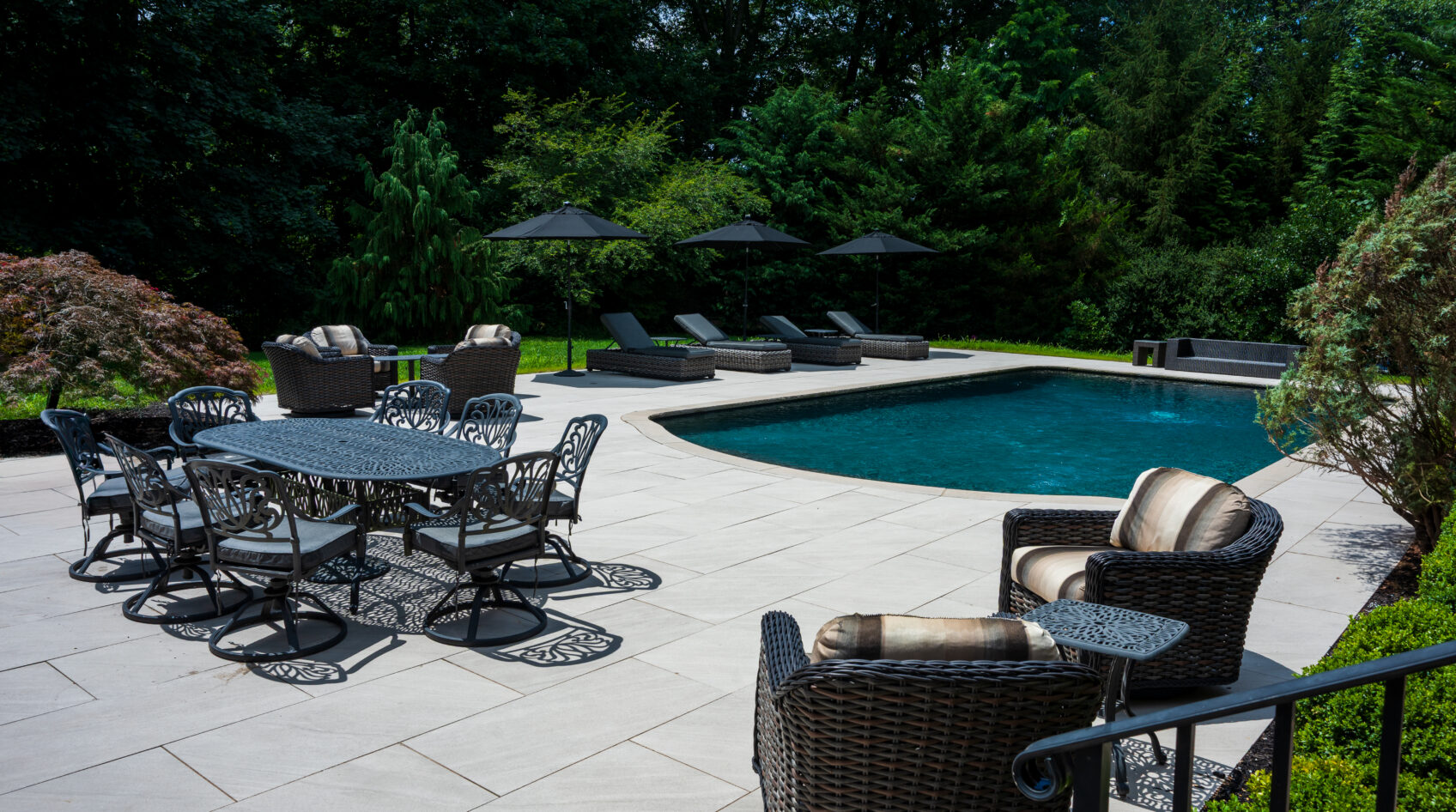
For example, an uncovered bluestone patio surrounded by garden beds can create a peaceful backyard retreat.
A large concrete paver patio with outdoor dining furniture and a fire pit can provide an inviting space for entertaining.
Because uncovered patios don’t require an overhead structure, they can also offer more flexibility when arranging furniture and landscaping.
Benefits of an Uncovered Patio
An open, airy atmosphere. Uncovered patios allow you to enjoy natural sunlight and views of the surrounding backyard.
Often a lower initial cost. Without the need for a roof or permanent overhead structure, an uncovered patio may be less expensive to build.
Flexible design options. Open patios can accommodate a variety of furniture arrangements, garden features, and gathering areas.
A natural connection to landscaping. An uncovered patio can blend beautifully with surrounding lawns, trees, and garden beds.
Potential Drawbacks of an Uncovered Patio
The biggest drawback is exposure to the weather.
Direct sunlight can make the patio uncomfortable during hot summer afternoons, especially if the space receives little natural shade.
Rain may also limit when you can use the area.
Furniture, cushions, and other outdoor accessories are generally exposed to more direct sunlight and precipitation.
Depending on the patio’s location, leaves, pollen, and other debris may also accumulate on the surface.
Covered vs. Uncovered Patios: What’s the Difference?
Both patio styles can create beautiful outdoor living spaces, but they offer different experiences.
| Feature | Covered Patio | Uncovered Patio |
|---|---|---|
| Sun protection | Partial to substantial, depending on cover | Limited without added shade |
| Rain protection | Varies by roof type | Generally exposed |
| Initial cost | Often higher | Often lower |
| Natural light | May be reduced | More direct sunlight |
| Design flexibility | Defined by cover structure | More open arrangement |
| Maintenance | Patio plus overhead structure | Primarily patio and furnishings |
| Outdoor entertaining | More sheltered gathering space | Open-air gathering space |
| Installation | May require additional permits and structural work | Usually less structural complexity |
Neither option is automatically better. The right choice depends on how you envision using your backyard.
Which Patio Is Better for Outdoor Entertaining?
If you love hosting family gatherings, outdoor dinners, and summer parties, both covered and uncovered patios can work beautifully.
A covered patio can be especially appealing if you want a more predictable entertaining space.
For example, a solid roof may allow guests to remain outside during light rain and provide shade during sunny afternoons.
It can also create a comfortable setting for an outdoor dining table, lounge furniture, or television designed for exterior use.
An uncovered patio offers a different kind of experience.
It creates an open atmosphere that’s ideal for sunny afternoons, evening gatherings, and enjoying the surrounding landscape.
Uncovered patios can also work well with outdoor fire pits, provided the installation follows all applicable clearance and safety requirements.
Our recommendation: If you frequently entertain during the day or want additional protection from changing weather, a covered patio may be worth considering. If you prefer open-air gatherings and enjoy spending time in the sun, an uncovered patio may be the better fit.
Which Patio Is Better for a Small Backyard?
When working with a smaller backyard, the right patio design can make a big difference.
An uncovered patio can help a compact space feel more open because there’s no overhead structure visually enclosing the area.
For example, a small patio featuring large-format pavers in a light neutral color can create a clean, spacious appearance.
A covered patio can also work in a small backyard, particularly if the structure is thoughtfully scaled.
A compact pergola or small roof extension may help define an outdoor dining or seating area without overwhelming the space.
However, you’ll want to consider how the structure affects natural light, views, and circulation.
Our recommendation: For small backyards, focus on proportion and layout. A thoughtfully designed covered patio can be just as attractive as an uncovered one, but the overhead structure should complement rather than dominate the space.
Are Covered Patios More Expensive Than Uncovered Patios?
In many cases, yes.
Covered patios generally require a larger investment because they include an overhead structure in addition to the patio surface.
Depending on the design, costs may include structural footings, framing, roofing, drainage, electrical work, and professional installation.
A solid-roof patio cover will typically involve different construction requirements than an open pergola.
Uncovered patios may be more budget-friendly because the project focuses primarily on site preparation, drainage, patio materials, and installation.
However, the total cost of either option depends on several factors.
A large uncovered patio featuring premium natural stone could cost more than a smaller covered patio with standard concrete pavers.
When comparing designs, consider the entire project rather than the roof alone.
It’s also helpful to think about long-term use.
If a covered patio allows you to enjoy your outdoor space more frequently, the additional investment may be worthwhile for your lifestyle.
What Are the Best Materials for Covered and Uncovered Patios?
Whether your patio is covered or uncovered, choosing appropriate hardscape materials is important.
Concrete Pavers
Concrete pavers are a versatile choice for both patio styles.
They’re available in a wide range of colors, sizes, and textures, allowing homeowners to create everything from traditional gathering spaces to modern outdoor living areas.
Large-format concrete pavers can create a streamlined appearance, while smaller pavers offer flexibility for decorative patterns and borders.
For uncovered patios, choose products suitable for exterior exposure and the intended use.
Proper base preparation and drainage are important for both covered and uncovered installations.
Porcelain Pavers
Outdoor-rated porcelain pavers can be an attractive option for homeowners who prefer a refined, contemporary appearance.
They come in styles that resemble natural stone, concrete, and wood.
Certain porcelain products have low water absorption and are designed for outdoor applications.
However, it’s important to choose products with appropriate surface characteristics and follow the manufacturer’s installation requirements.
For uncovered patios, pay particular attention to wet slip resistance and freeze-thaw suitability.
Natural Stone
Natural stone can bring timeless character to both covered and uncovered patios.
Bluestone, for example, is a popular choice for outdoor living spaces because of its distinctive colors and natural appearance.
Depending on the finish and layout, natural stone can complement rustic, traditional, or contemporary designs.
Because different stone products have different performance characteristics, choose materials appropriate for the intended application and local climate.
Stone Veneer and Wall Materials
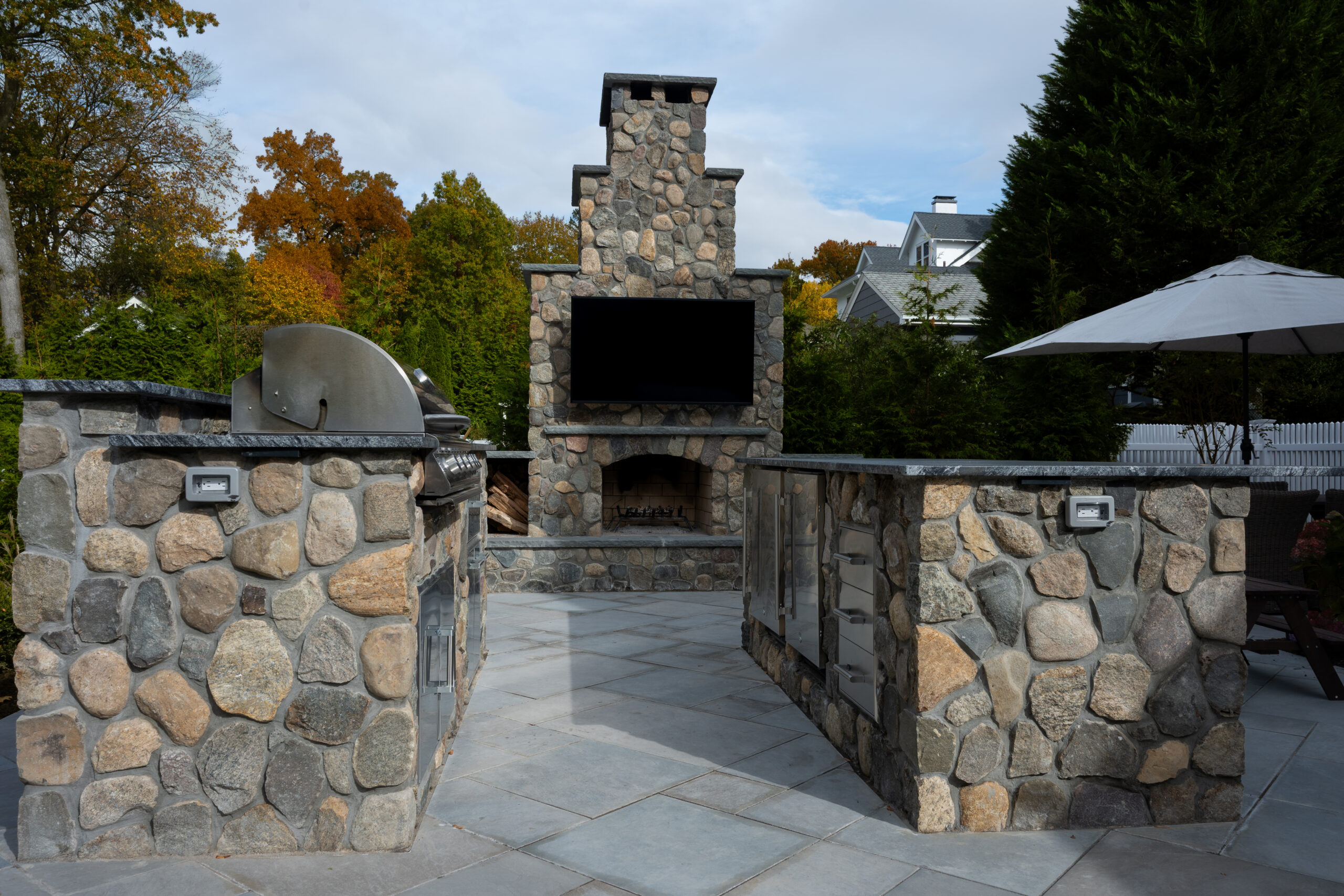
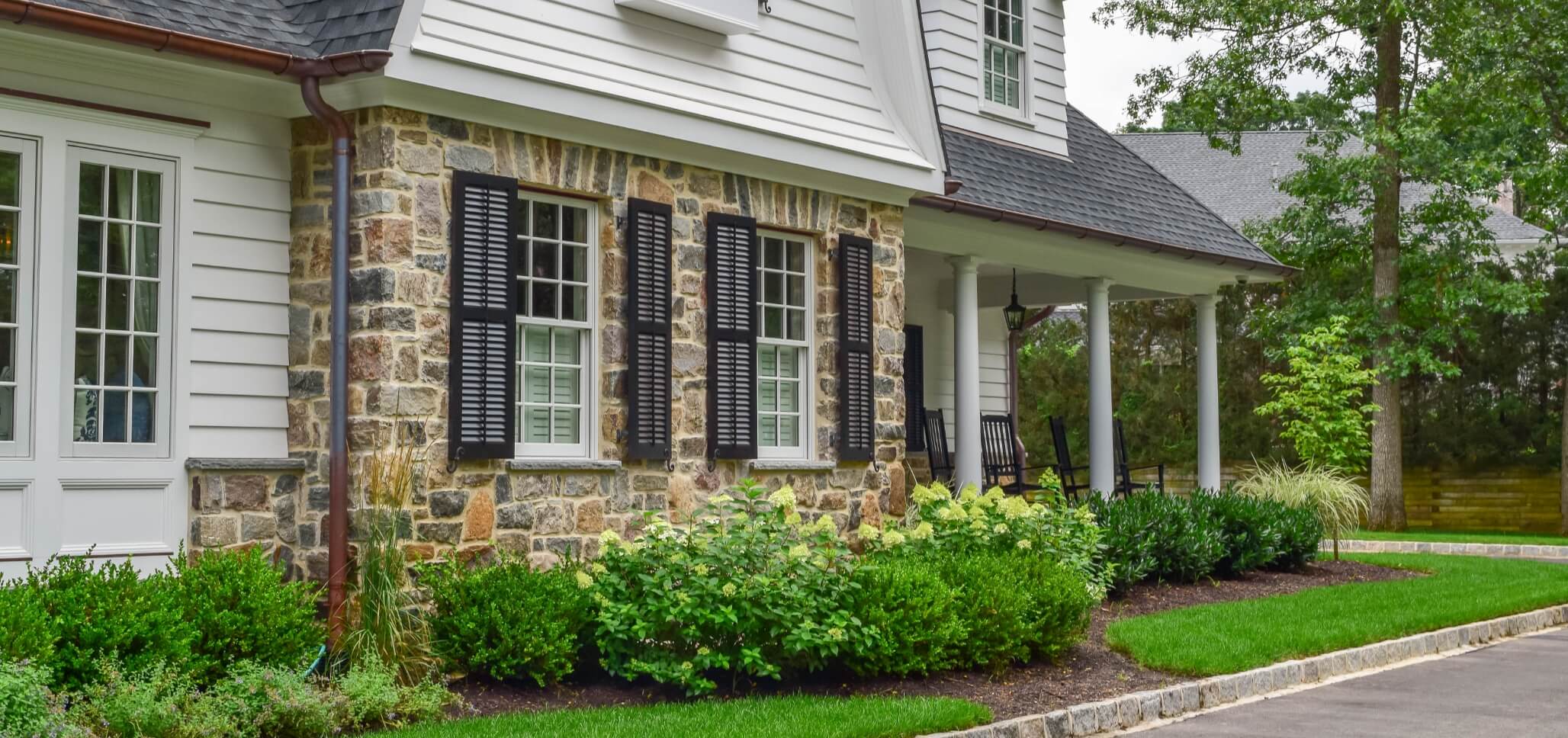
If you’re planning a covered patio with columns, an outdoor fireplace, or a built-in seating area, stone veneer can help tie the design together.
Natural or manufactured stone veneer can complement the patio pavers while creating a cohesive outdoor living space.
Coordinating wall materials and caps can also be used to define seating areas or create decorative features.
All materials should be selected and installed according to their intended structural, exterior, and heat-exposure requirements.
Can You Combine a Covered and Uncovered Patio?
Absolutely! In fact, combining both styles can be a great way to enjoy the benefits of each.
For example, you might create a covered dining area directly outside your home and connect it to an uncovered lounge space.
The covered portion could feature an outdoor dining table, comfortable seating, and lighting.
The uncovered area might include a fire pit, lounge chairs, or surrounding landscaping.
This arrangement allows homeowners to enjoy shade and shelter when needed while still having an open-air space.
Using the same patio pavers throughout both areas can help create a cohesive appearance.
You can also introduce a contrasting paver border or different laying pattern to visually distinguish the spaces.
For larger backyards, this approach can create a more dynamic outdoor living environment with separate areas for different activities.
What Should New Jersey Homeowners Consider?
For homeowners in Northern New Jersey, weather plays an important role in patio planning.
Hot summer temperatures, heavy rainfall, snow, and freeze-thaw cycles can all affect how outdoor spaces are used and maintained.
A covered patio may provide welcome shade during the summer and some protection from rain.
However, an overhead structure must be designed for applicable local wind, snow, and structural loads.
Proper drainage is also essential.
A covered patio still needs an appropriately prepared base and drainage system, even if the roof limits direct rainfall on part of the surface.
Uncovered patios require careful attention to grading and water management because they’re fully exposed to precipitation.
For either design, select patio materials appropriate for exterior use in New Jersey’s climate.
If you’re considering an attached roof, pavilion, or other permanent overhead structure, check local permit and zoning requirements before construction begins.
Create Your Ideal Patio with Braen Supply
When it comes to covered vs. uncovered patios, the best choice is the one that fits your backyard and the way you want to enjoy it.
A covered patio can create a comfortable outdoor room with added shade and shelter.
An uncovered patio offers an open-air experience that connects naturally to your landscaping.
And if you can’t decide between the two, combining covered and uncovered areas may give you the best of both worlds.
No matter which style you choose, the right hardscape materials can help bring your vision to life.
At Braen Supply, we offer a wide selection of concrete pavers, porcelain pavers, natural stone, stone veneer, and other outdoor living materials to help homeowners create beautiful backyard spaces.
Our team can help you compare colors, textures, and product options to find materials that complement your patio design.
Frequently Asked Questions About Covered and Uncovered Patios
1. Is a covered patio worth the extra cost?
A covered patio may be worth the investment if you want additional shade, shelter from rain, and a more defined outdoor living area. The value depends on how frequently you plan to use the space, your budget, and your backyard’s layout.
2. Does a covered patio add more value to a home than an uncovered patio?
Both covered and uncovered patios may contribute to a home’s appeal, but there’s no guarantee that one will provide a greater return on investment. The impact depends on construction quality, design, local buyer preferences, and the overall property.
3. Can you add a roof to an existing patio?
In some cases, yes. However, an existing patio may not have the structural support needed for roof columns or other overhead features. A qualified contractor or structural professional should evaluate the site and determine whether dedicated footings or additional construction are required.
4. Are uncovered patios harder to maintain?
Uncovered patios are exposed to more direct sunlight, rain, leaves, and other debris, which may increase certain cleaning needs. Covered patios may have less direct exposure on the surface but require maintenance of the overhead structure. Overall upkeep depends on the materials and surrounding environment.
5. What is the best patio material for a covered or uncovered space?
Concrete pavers, outdoor-rated porcelain pavers, and suitable natural stone can all work well for covered and uncovered patios. The best choice depends on your preferred appearance, budget, maintenance expectations, and installation requirements. For uncovered areas, exterior durability, drainage, and wet slip resistance are particularly important.